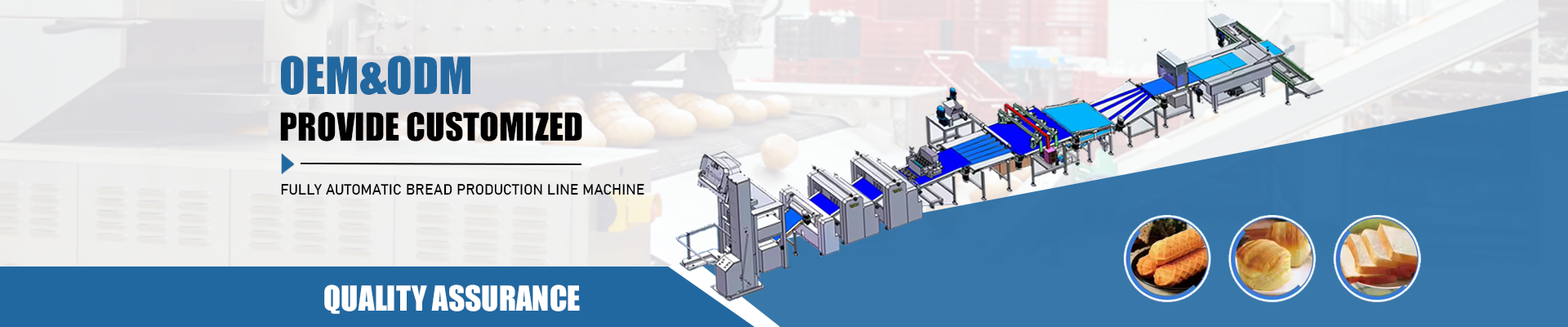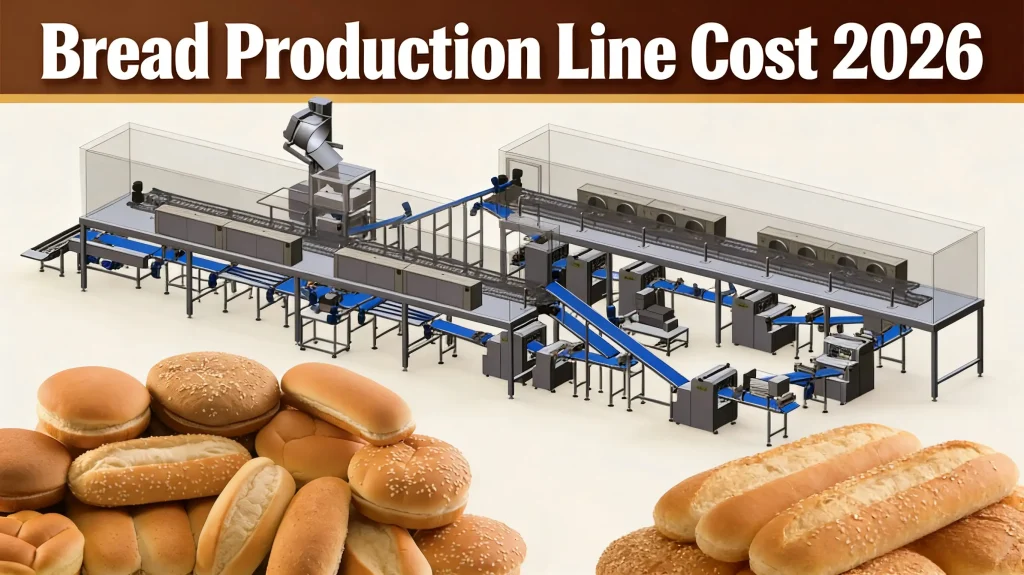
Bread production line cost has become one of the most critical considerations for bakery investors and manufacturers in 2026. As automation continues to reshape the global baking industry, understanding the true cost of a modern bread production line is essential for making informed investment decisions.
From small-scale operations to fully automated industrial systems, the total bread production line cost can vary significantly depending on capacity, configuration, and level of automation. This article provides a comprehensive analysis of pricing structures, key cost factors, and return on investment (ROI) for modern bakery production systems.
What Determines Bread Production Line Cost?
The total bread production line cost is influenced by multiple technical and operational factors. Understanding these elements helps buyers choose the most suitable configuration without overspending.
1. Production Capacity
Capacity is the primary factor affecting bread production line cost.
Typical ranges include:
- Small line: 500–1,000 pcs/hour
- Medium line: 2,000–5,000 pcs/hour
- Industrial line: 10,000+ pcs/hour
Higher capacity requires larger equipment, more advanced control systems, and increased energy consumption, all of which raise the overall bread production line cost.
2. Level of Automation
Automation level has a direct impact on both initial investment and long-term savings.
- Semi-automatic systems → Lower upfront bread production line cost
- Fully automatic systems → Higher initial cost but lower labor expenses
- Smart automated lines → Highest cost with maximum efficiency
Modern bakeries increasingly prefer fully automated bread production line systems due to their stability and scalability.
3. Equipment Configuration
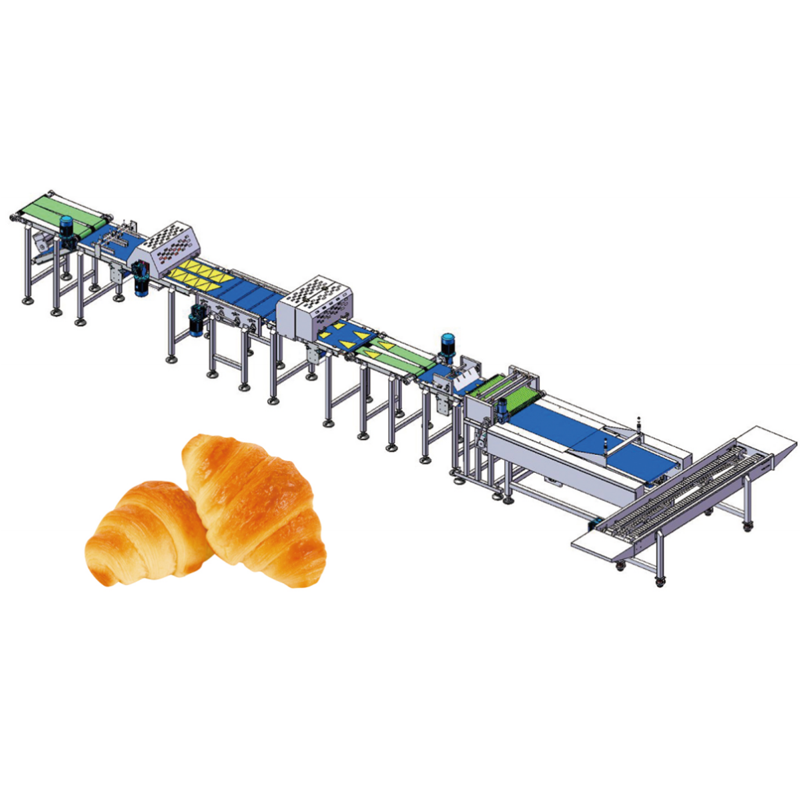
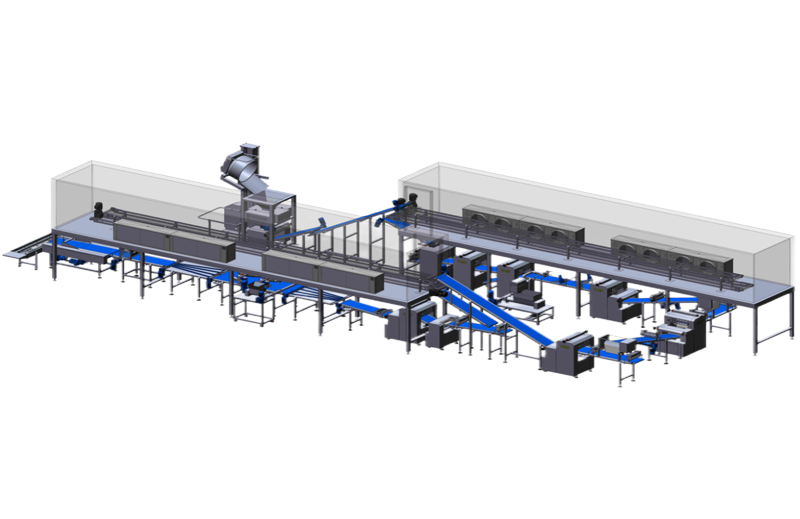
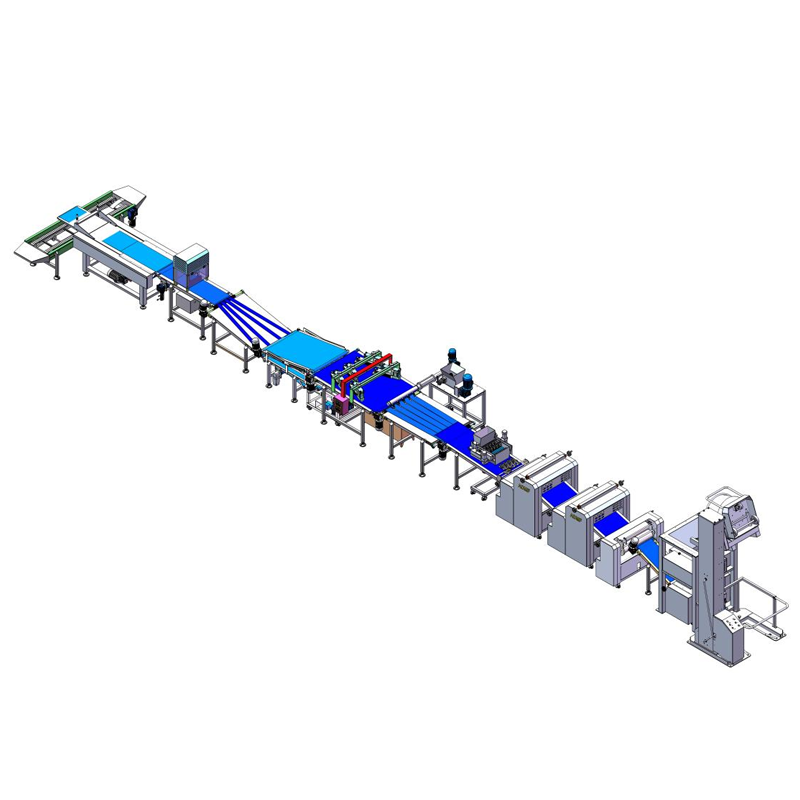
A complete bread production line typically includes:
- Dough mixer
- Divider and rounder
- Intermediate proofer
- Dough moulder
- Final proofer
- Tunnel oven
- Cooling conveyor
Additional modules such as tray handling systems, packaging machines, and robotic arms can significantly increase the total bread production line cost, but also enhance efficiency.
Bread Production Line Cost Breakdown
Below is a general cost comparison for different types of bread production line systems:
| Production Line Type | Capacity (pcs/hour) | Automatizazio maila | Estimated Cost (USD) |
| Small Bakery Line | 500–1,000 | Semi-Automatic | $20,000 – $80,000 |
| Medium Production Line | 2,000–5,000 | Fully Automatic | $80,000 – $300,000 |
| Industrial Bread Production Line | 10,000+ | High Automation | $300,000+ |
👉 The actual bread production line cost may vary depending on customization and regional requirements.
Beyond the equipment itself, several additional factors contribute to the total bread production line cost.
Installation and Commissioning
Installation services, transportation, and on-site setup can add 5–15% to the total investment.
Factory Layout and Infrastructure
Modifications to factory layout, electrical systems, and ventilation may increase the effective bread production line cost.
Training and Maintenance
Operator training and ongoing maintenance are essential for ensuring optimal performance of the bread production line.
ROI: Is a Bread Production Line Worth the Investment?
While the initial bread production line cost can be substantial, the long-term return on investment is often highly favorable.
Labor Cost Reduction
Automated systems significantly reduce the number of workers required.
Produkzioaren eraginkortasuna areagotzea
A modern bread production line can operate continuously with minimal downtime, increasing output and revenue.
Consistent Product Quality
Automation ensures uniform product size, texture, and appearance, improving market competitiveness.
Payback Period
In most cases, bakeries can recover their bread production line cost within:
- 1–2 years for medium lines
- 2–3 years for large industrial systems
How to Optimize Bread Production Line Cost
To maximize value, buyers should consider the following strategies:
Choose the Right Capacity
Avoid oversizing your bread production line, which can lead to unnecessary costs.
Focus on Core Equipment
Invest in essential modules first, then expand as needed.
Work with Experienced Manufacturers
A reliable supplier can help optimize configuration and reduce unnecessary bread production line cost.
Industry Trends Impacting Bread Production Line Cost
In 2026, several trends are influencing the pricing of bread production line systems:
- Increased demand for automation
- Rising material and component costs
- Growth of smart manufacturing technologies
- Expansion of global bakery markets
These factors are expected to continue shaping the bread production line cost structure in the coming years.
Bukaera
Understanding bread production line cost is essential for making smart investment decisions in today’s competitive bakery industry. From capacity and automation to configuration and long-term ROI, every factor plays a role in determining the overall value of a bread production line system.
As automation becomes the standard in modern baking, investing in a well-designed bread production line is not just a cost—it is a strategic step toward higher efficiency, better product quality, and sustainable business growth.
Frequently Asked Questions (FAQ)
1. What is the average bread production line cost in 2026?
It ranges from $20,000 for small systems to over $300,000 for industrial lines.
2. Can I start with a small bread production line and upgrade later?
Yes, many systems are modular and allow future expansion.
3. What is the biggest factor affecting cost?
Production capacity and automation level are the most important factors.
4. Is a fully automatic bread production line worth it?
Yes, it reduces labor costs and improves efficiency, making it ideal for long-term investment.
References
The following sources provide insights into automation and industrial food processing:
1.PMMIView report
2.Food and Agriculture OrganizationOfficial website
3.FANUC AmericaLearn more

Admf arabera