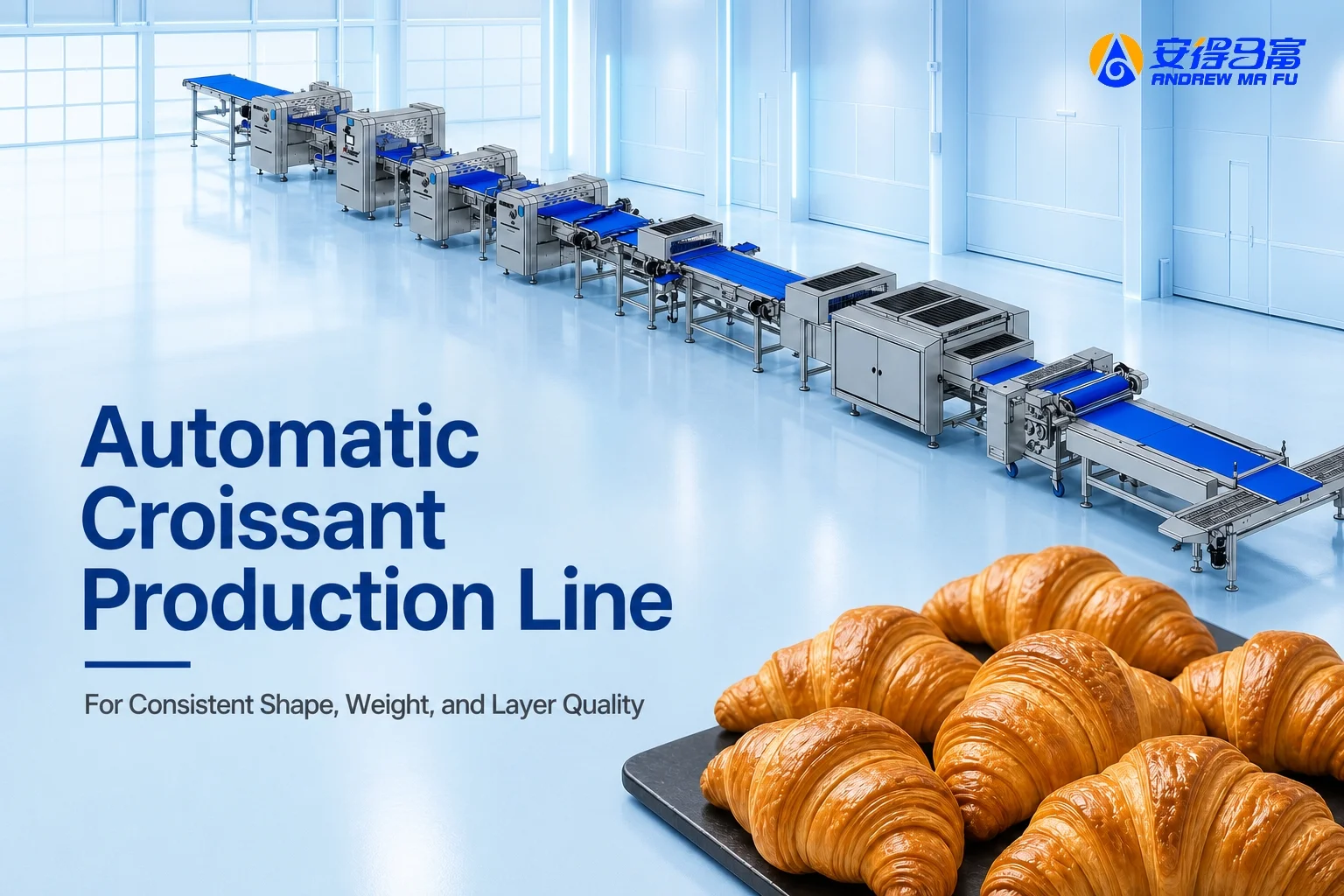
Croissants are known for their crisp exterior, buttery flavor, delicate texture, and distinctive laminated layers. Producing these characteristics consistently at commercial scale, however, requires careful control of dough processing and forming.
In manual production, differences in dough thickness, cutting size, butter distribution, rolling technique, and product weight can lead to variations between individual croissants. These differences become more difficult to manage as production volumes increase.
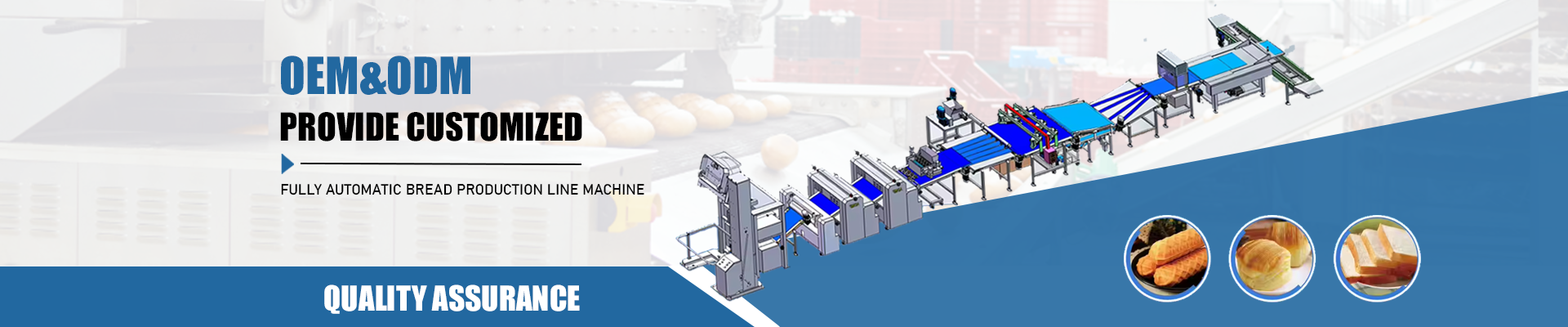
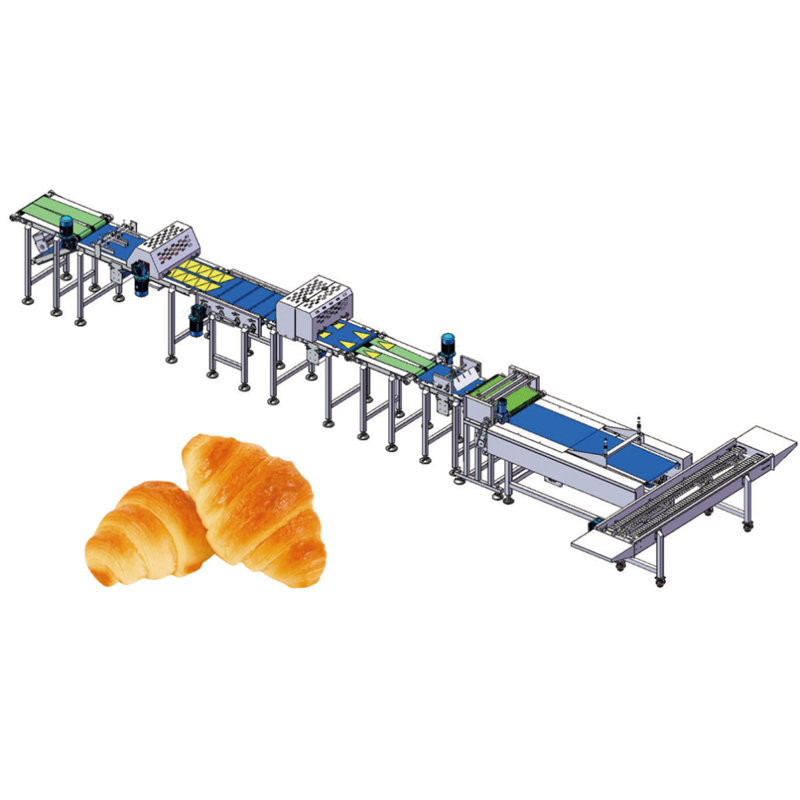
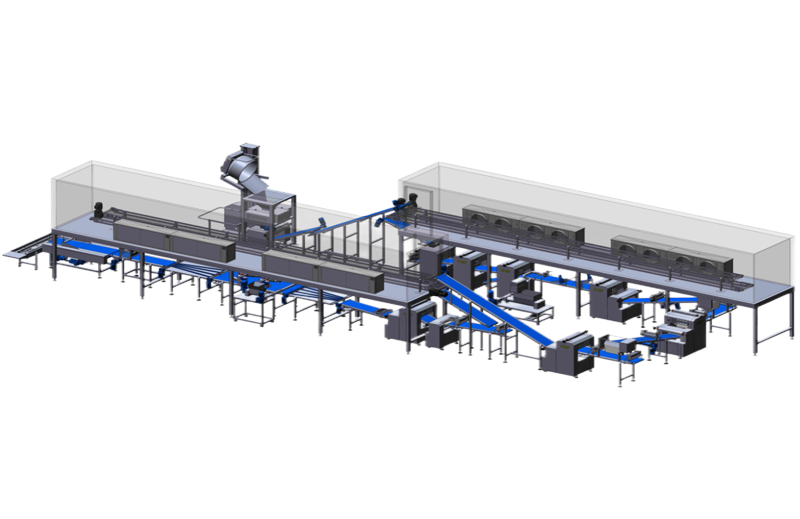
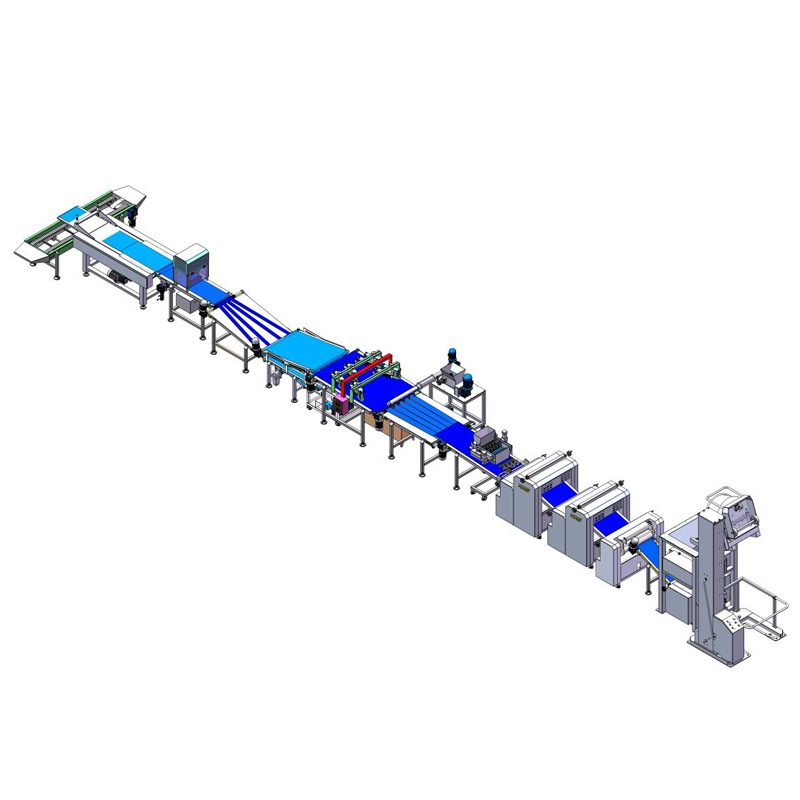
An Automatic Croissant Production Line helps standardize the major production stages through coordinated dough sheeting, lamination, cutting, filling, forming, conveying, and control systems.
For industrial bakeries, the objective is not simply higher output. Consistent shape, weight, and layer quality are equally important because these factors influence finished-product appearance, baking behavior, packaging efficiency, and customer expectations.
A typical production process includes:
Dough Preparation → Lamination → Dough Sheeting → Triangle Cutting → Filling → Croissant Forming → Tray Arrangement → Proofing → Baking
Each stage contributes to final product quality.
1. Precision Dough Sheeting
Dough thickness has a direct influence on the final laminated structure. An automatic sheeting system gradually reduces the dough to the required thickness while maintaining synchronized conveyor movement.
Controlled sheeting helps reduce variation between batches and provides a more stable foundation for subsequent cutting and forming.
2. Controlled Lamination
Croissant quality depends heavily on the relationship between dough and butter layers. During lamination, controlled processing helps maintain more uniform layer thickness.
Consistent lamination is particularly important when producing large quantities of croissants because irregular layers may affect product shape, volume, and texture after proofing and baking.
3. Accurate Triangle Cutting
After sheeting, the laminated dough is cut into triangular pieces. Consistent cutting dimensions help ensure that each piece contains a similar amount of dough and follows the same forming process.
Automatic cutting can improve: Piece dimensions, Product weight consistency, Dough utilization, Production speed.
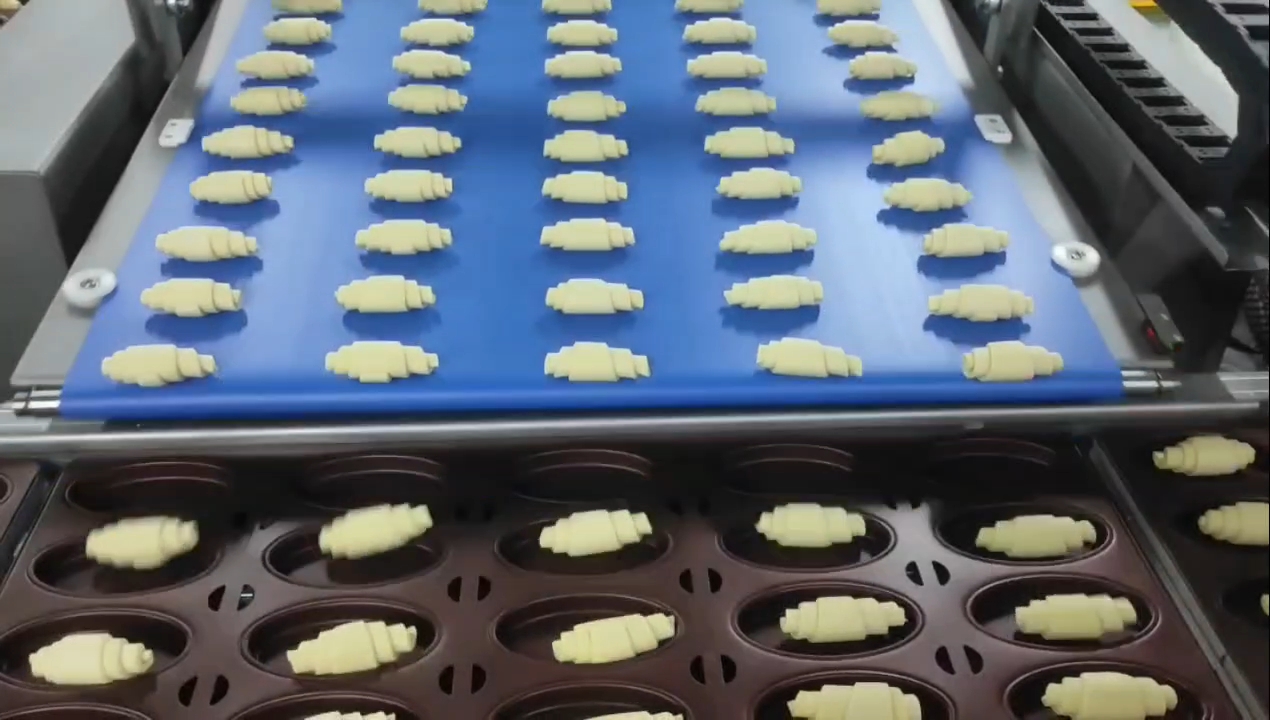
4. Automatic Croissant Forming
The cut dough triangles are transferred to the forming section, where they are rolled into croissant shapes.
Automated forming reduces differences caused by manual rolling and helps maintain a more consistent: Length, Width, Curvature, Overall appearance.
Technical Parameters
The following are reference parameters for an industrial automatic croissant production line. The final configuration should be determined according to dough formulation, product weight, croissant size, required capacity, and factory layout.
| Paramèt | Reference Specification |
| Kapasite pwodiksyon | 3,000–12,000 pcs/hour |
| Croissant Weight | Approx. 30–120 g |
| Dough Sheet Width | Approx. 600–1,200 mm |
| Dough Thickness | Approx. 2–30 mm, adjustable |
| Lamination | Multi-Layer Processing |
| Cutting | Automatic Triangle Cutting |
| Forming | Automatic / Servo-Controlled |
| Conveyor Speed | Approx. 5–25 m/min |
| Installed Power | Approx. 30–80 kW |
| Sistèm kontwòl | PLC + HMI |
| Machine Construction | SUS304 Stainless Steel where applicable |
| Conveyor Belt | Food-Grade PU |
| Compressed Air | Approx. 0.6 MPa |
| Production Mode | Continuous Automatic Operation |
These values are intended for technical reference rather than as fixed specifications for every Andrew Mafu Machinery project.
Consistent Croissant Weight
Weight consistency is important for both production economics and finished-product uniformity.
When dough pieces vary significantly in weight, the resulting croissants may also differ in size and baking performance. Automatic dividing, sheeting, cutting, and forming systems can work together to reduce these variations.
For manufacturers, accurate portioning can also help control ingredient consumption and reduce unnecessary product waste.
Consistent Shape and Appearance
Croissants are highly visual products. Differences in length, rolling position, or overall geometry can be immediately noticeable.
An automated production line coordinates: Dough positioning, Cutting dimensions, Transfer speed, Forming movement, Product spacing.
This allows the manufacturer to establish repeatable forming conditions and maintain a more consistent appearance across large production volumes.
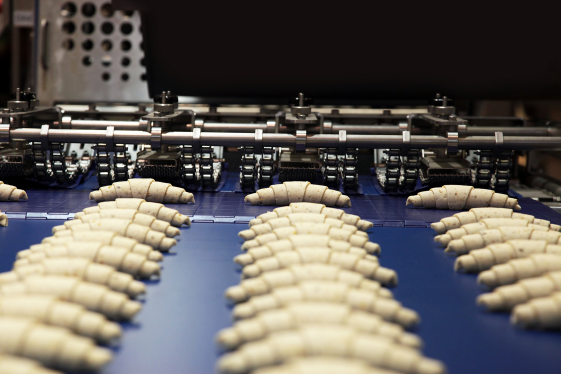
Maintaining Laminated Layer Quality
Layer structure is one of the defining characteristics of a croissant.
Mechanical stress, incorrect dough thickness, inappropriate processing conditions, or inconsistent butter distribution can negatively affect the laminated structure.
A modern production line therefore needs to coordinate sheeting and conveying carefully rather than treating each machine as an isolated unit.
The exact process settings should be established through product trials because dough formulation, butter characteristics, temperature, and production speed can vary between bakery applications.
Automation and Production Efficiency
Automation provides benefits beyond product consistency.
A connected production line can reduce repetitive manual operations and synchronize multiple processing stages. This can simplify production planning and make it easier to maintain stable operating conditions.
Depending on the configuration, PLC and HMI systems can also provide: Recipe storage, Parameter adjustment, Equipment status monitoring, Fault information, Production control.
For bakeries producing multiple croissant sizes or recipes, programmable control can support faster product changeovers.
Design ijyenik
Hygienic design is another important consideration when selecting industrial bakery equipment.
The European Hygienic Engineering & Design Group specifically publishes guidance for bakery equipment covering machinery design, production-line hygiene, materials, cleaning procedures, and common hygienic weak points.
The FDA Food Code also provides requirements and guidance concerning food-contact surfaces, equipment cleanliness, and cleaning frequency in applicable food operations.
For this reason, industrial croissant equipment should be evaluated for suitable food-contact materials, accessible cleaning areas, practical machine construction, and maintenance requirements.
Aplikasyon
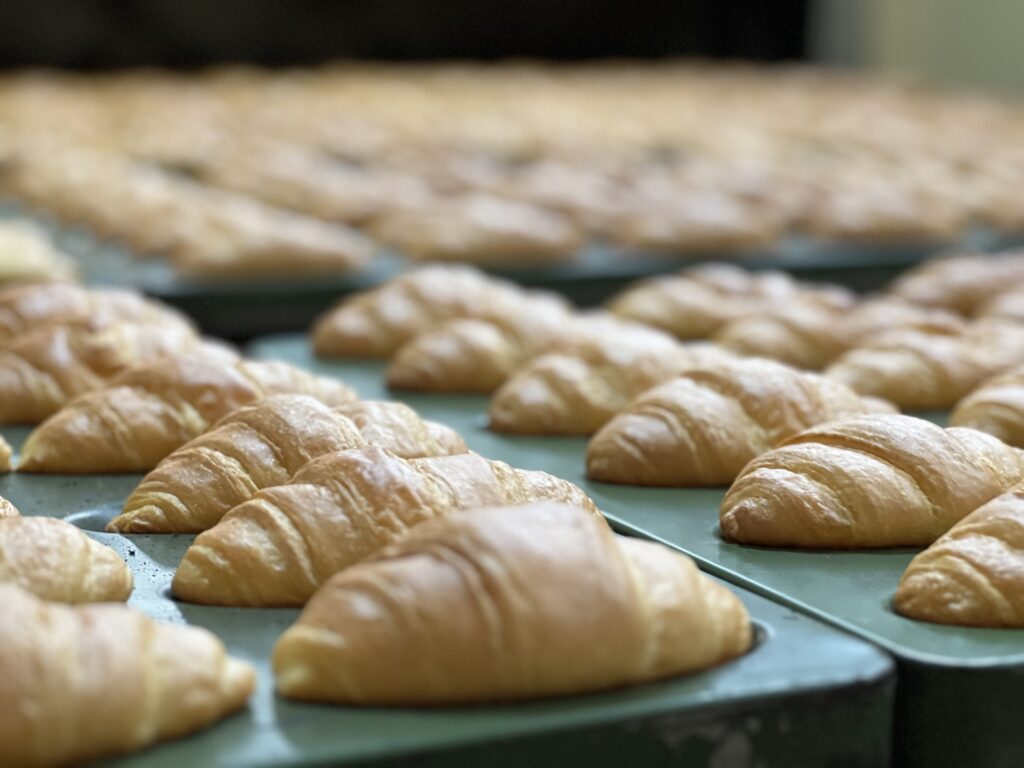
Automatic croissant production lines can be configured for different commercial applications, including: Plain croissants, Chocolate croissants, Cream-filled croissants, Fruit-filled croissants, Cheese-filled croissants, Frozen croissants, Retail bakery products, Central-kitchen production.
The appropriate configuration depends on the recipe, product dimensions, production capacity, and downstream process.
Konklizyon
An Automatic Croissant Production Line helps industrial bakeries establish a more consistent and controllable manufacturing process.
Through coordinated lamination, dough sheeting, cutting, filling, forming, and conveying, automation can help manufacturers achieve greater consistency in croissant shape, weight, and laminated layer structure.
The right system should be selected according to actual product requirements rather than capacity alone. Dough characteristics, product size, layer structure, production volume, available factory space, hygiene requirements, and future expansion should all be considered during equipment selection.
Andrew Mafu Machinery can develop customized croissant production solutions according to individual product specifications and production requirements.
FAQ
1. Why is consistent dough thickness important for croissants?
Consistent dough thickness helps establish more uniform laminated layers and provides stable conditions for cutting and forming.
2. Can filled croissants be produced automatically?
Yes. Filling systems can be integrated into the production line for applications such as chocolate, cream, jam, cheese, and other suitable fillings.
3. How does automation improve croissant shape consistency?
Automatic cutting and forming standardize dough-piece dimensions and forming movement, reducing variation associated with manual processing.
4. Can the production line be customized?
Yes. Line configuration, capacity, product size, forming method, and downstream equipment can be designed according to customer requirements.
5. Is the line suitable for frozen croissant production?
It can be configured for frozen bakery applications, depending on the complete processing, freezing, storage, and packaging requirements.
References
1. European Hygienic Engineering & Design Group (EHEDG) – Hygienic Design Requirements for Bakery Equipment
EHEDG Bakery Equipment Guideline
2. U.S. Food & Drug Administration – Food Code 2022
FDA Food Code 2022
3. FDA – Food Code 2022 Full Document
FDA Food Code Full Document

Pa ADMF