Baguettes are recognized worldwide for their elongated shape, crisp crust, and soft, airy interior. As demand for fresh bread continues to grow, commercial bakeries and industrial food manufacturers need production equipment that can deliver consistent product quality while improving manufacturing efficiency.
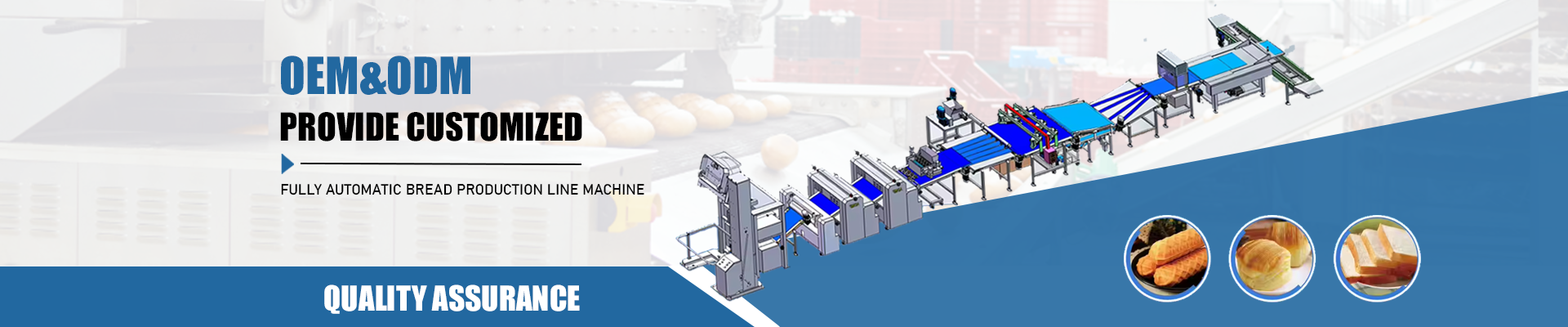
An Automatic Baguette Production Line provides an integrated solution for transforming prepared dough into evenly shaped baguettes. By combining dough dividing, rounding, rolling, and moulding processes, the production line helps bakeries reduce repetitive manual work and achieve a more standardized production workflow.
Andrew Mafu machin provides bakery machinery and customized production line solutions designed to meet different product requirements, production capacities, and factory layouts.
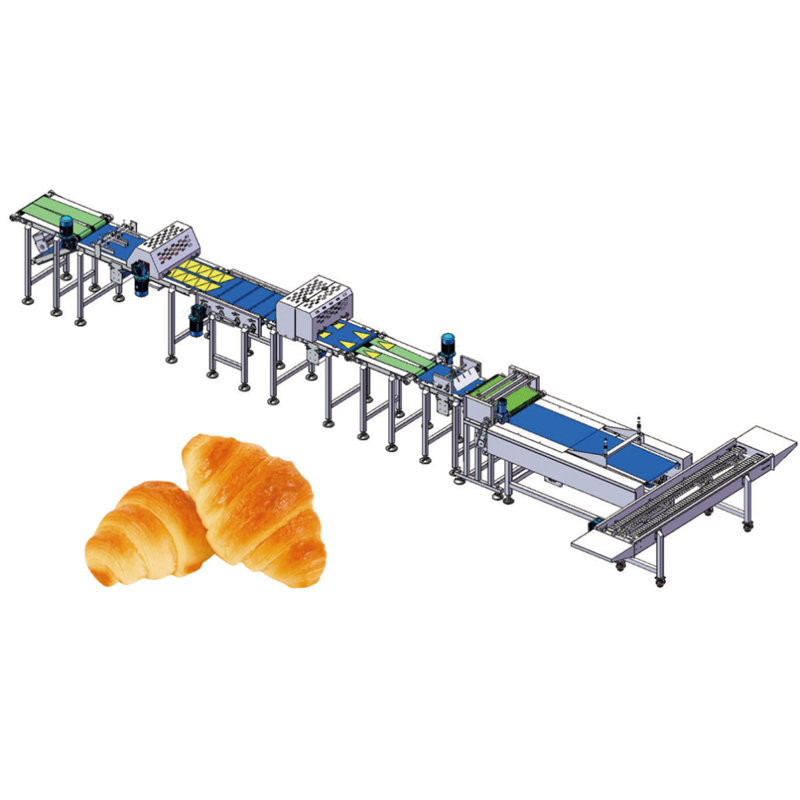
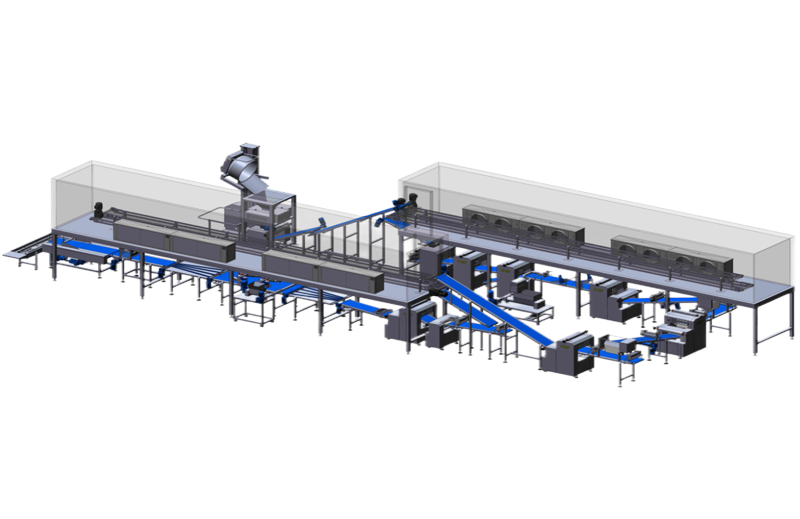
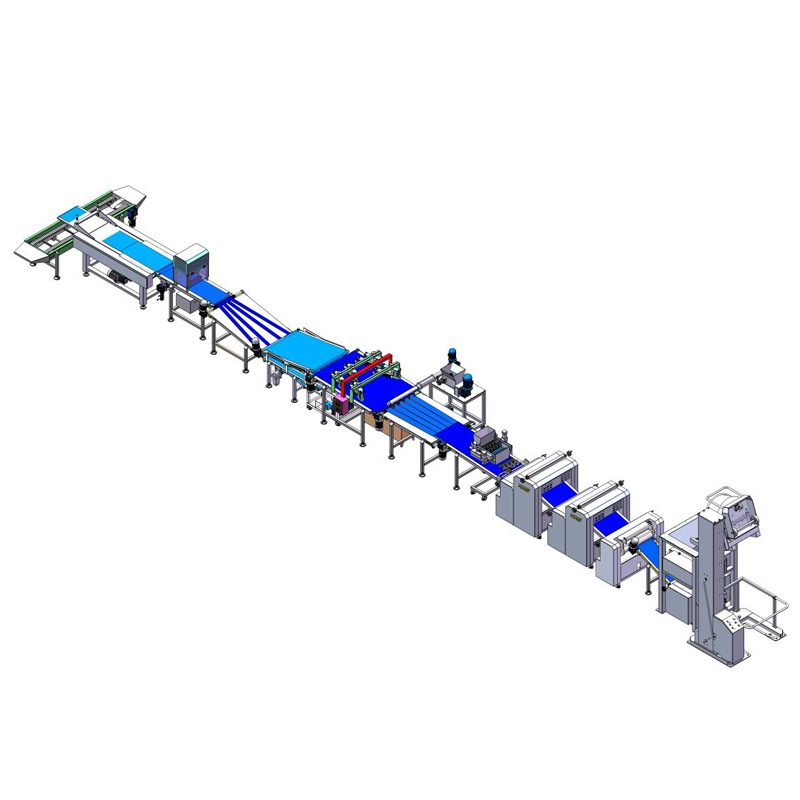
An Automatic Baguette Production Line is a coordinated system of bakery machines designed to process dough and form it into the characteristic long shape of French baguettes.
Depending on the production requirements, the line can include several processing sections:
Dough Preparation → Dough Dividing → Dough Rounding → Dough Resting → Dough Rolling → Baguette Moulding → Conveying
Each stage performs a specific function. When properly configured, these machines work together to improve production continuity, reduce manual handling, and maintain consistent dough portions and product dimensions.
The final configuration can be customized according to baguette weight, length, diameter, dough characteristics, and required hourly output.
2. How Does the Baguette Production Process Work?
Step 1: Dough Preparation
The process begins with dough mixing. Ingredients such as flour, water, yeast, and salt are mixed according to the bakery’s recipe. Proper dough development, temperature, and fermentation conditions are important for achieving the desired texture and bread structure.
Stable dough characteristics also help ensure smooth operation during subsequent forming stages.
Step 2: Automatic Dough Dividing
After preparation and fermentation, the dough is transferred to the dividing section. An automatic dough divider separates bulk dough into individual portions according to the required product weight.
Accurate portioning helps control the final baguette size and reduces weight variations between products. It also provides a consistent starting point for the forming process.
Step 3: Dough Rounding
The divided dough pieces enter the rounding section, where they are shaped into more uniform portions. This prepares the dough for resting and subsequent elongation.
Consistent rounding helps improve the stability of the forming process and supports uniform product appearance.
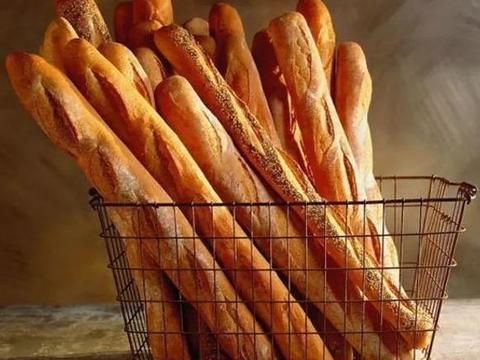
Step 4: Dough Rolling and Baguette Moulding
The dough pieces are gradually elongated through rolling and moulding equipment. Adjustable rollers, belts, and forming mechanisms help create the characteristic baguette shape.
Depending on the product specification, forming settings can be adjusted to achieve the required dough length and diameter. Gentle and controlled processing is particularly important for maintaining dough structure.
Step 5: Conveying and Downstream Processing
After forming, baguette dough pieces can be transferred to downstream equipment for proofing, baking, cooling, and packaging.
The overall production layout can be designed according to the available factory space and the customer’s desired level of automation.
3. Technical Parameters and Equipment Reference
The technical specifications of a baguette production line depend on its configuration and the individual machines selected. The following table presents publicly available specifications from different manufacturers as industry reference examples, rather than guaranteed specifications for an Andrew Mafu Machinery production line.
| Technical Parameter | Published Industry Reference |
| Dough weight range | Approx. 50–2,000 g, depending on model |
| Baguette moulder capacity | Approx. 1,200–2,500 pcs/hour |
| Moulder working width / cylinder length | Approx. 700 mm |
| Installed power of individual moulders | Approx. 0.55–0.75 kW |
| Example machine dimensions | Approx. 1,060 × 1,020 × 1,500 mm |
| Forming method | Adjustable roller and belt moulding |
| Product application | Baguettes and other long-shaped bread products |
| Line configuration | Customized according to production requirements |
4. Key Advantages of Automatic Baguette Production
Consistent Product Shape and Weight
Automated dividing and forming processes help maintain more uniform dough portions and baguette dimensions. This is important for bakeries supplying supermarkets, restaurant chains, and foodservice distributors.
Improved Production Efficiency
Integrating multiple processing stages reduces unnecessary manual transfers and repetitive operations. A coordinated production line can support a smoother and more continuous manufacturing workflow.
Flexible Product Specifications
Different bakeries may require different baguette lengths, diameters, and weights. Adjustable forming equipment and customized line configurations help accommodate these production needs.
Reduced Manual Handling
Automation reduces the amount of repetitive dough handling required from operators. Employees can focus more on production monitoring, quality control, and equipment management.
Easier Production Planning
A coordinated line allows manufacturers to organize dough processing and downstream operations more effectively. It can also provide a foundation for future production expansion.
5. How to Choose the Right Baguette Production Line
Before investing in an Automatic Baguette Production Line, manufacturers should evaluate several important factors:
- Product specifications: Confirm the required baguette weight, length, diameter, and product varieties.
- Production capacity: Define the target output per hour and expected daily production.
- Dough characteristics: Consider hydration level, elasticity, fermentation conditions, and dough handling requirements.
- Factory layout: Check available installation space and the connection between forming, proofing, baking, and packaging sections.
- Automation requirements: Determine whether you need a standalone forming system or a more integrated production solution.
- Cleaning and maintenance: Consider accessible components, hygienic construction, and routine maintenance requirements.
Working with an experienced bakery machinery manufacturer can help ensure that the selected equipment matches the actual production process.
6. Automatic Baguette Production Solutions from Andrew Mafu Machinery
At Andrew Mafu Machinery, we understand that every bakery has different production requirements. A suitable baguette production solution should be designed around the customer’s recipes, product dimensions, target capacity, and factory conditions.
From dough processing and portioning to rounding and baguette forming, the equipment configuration can be discussed and customized according to the intended application.
Whether you are upgrading an existing bakery or planning a new industrial bread manufacturing facility, Andrew Mafu Machinery is ready to discuss practical equipment solutions for your production needs.
Contact Andrew Mafu Machinery to share your baguette samples, required dough weight, target output, and factory layout. Our team can help evaluate a suitable production configuration for your business.
FAQ
1. What products can an Automatic Baguette Production Line make?
It is primarily designed for French baguettes and other elongated bread products. The actual product range depends on the forming equipment and its adjustable settings.
2. What is the production capacity of a baguette forming machine?
Capacity varies by model, dough weight, and product dimensions. Published individual baguette moulders commonly show capacities around 1,200–2,500 pieces per hour. A complete production line requires a separate capacity assessment.
3. Can the baguette length and weight be adjusted?
Yes. Many baguette moulders offer adjustable forming settings. The achievable weight and length ranges depend on the selected model and dough characteristics.
4. Can the production line be customized?
Yes. The equipment configuration can be planned according to the customer’s product specifications, required capacity, factory layout, and automation needs.
5. Can the baguette line connect to proofing and baking equipment?
Yes. Conveying and transfer sections can be designed to connect the forming process with downstream proofing, baking, cooling, and packaging equipment.
6. What information should I provide when requesting a quotation?
It is helpful to provide product photos or samples, dough weight, baguette length and diameter, target hourly capacity, and factory layout. These details help the manufacturer evaluate a suitable configuration.
References
- Mfitaly – Dough Moulder for Baguette
- Monofi – Dough Moulder
- Kolher – Baguette Moulder
- Cinelli – Baguette Moulder Technical Brochure
- Andrew Mafu Machinery – Bakery Production Line Solutions

Pa ADMF