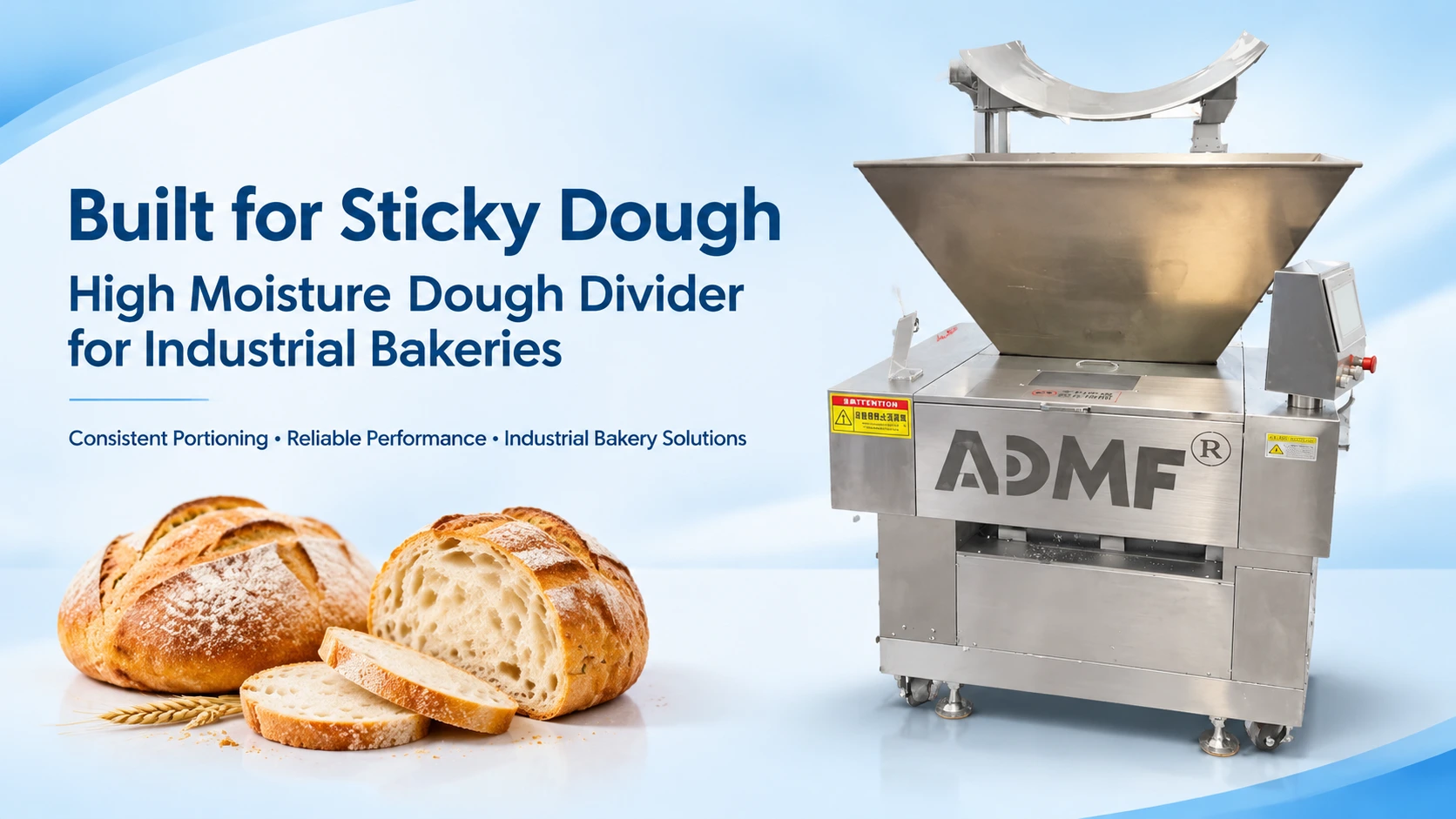
Introduction: Why Is High-Moisture Dough Difficult to Divide?
High-hydration bread has become increasingly popular among professional bakeries and industrial food manufacturers. Products such as ciabatta, artisan bread, focaccia, and soft high-moisture toast require dough with a relatively high water content to achieve their characteristic texture and structure.
However, processing this type of dough presents several challenges.
Compared with traditional bread dough, high-moisture dough is softer, stickier, and more difficult to handle. It can adhere to machine surfaces, lose its shape during portioning, and create inconsistencies in finished product weight.
Traditional dough dividing equipment may not deliver the desired performance when handling particularly wet or sticky dough.
This is why specialized High Moisture Dough Dividers are important for modern industrial bakeries. Andrew Mafu Machinery provides bakery equipment solutions designed to support high-moisture dough processing and improve production efficiency.
1. Designed for Soft and Sticky Dough
The biggest challenge in dividing high-hydration dough is maintaining stable processing without excessive sticking or deformation.
A suitable dough divider should consider the dough’s viscosity, elasticity, temperature, and fermentation condition.
Depending on the machine design, specialized features may include:
(1)Dough-contact surfaces designed to reduce adhesion
(2)Adjustable dividing pressure
(3)Controlled feeding and portioning mechanisms
(4)Suitable cutting structures for soft dough
(5)Easy-to-clean food-contact components
These features help manufacturers achieve a more stable dividing process while reducing unnecessary manual intervention.
2. More Consistent Dough Weight and Portioning
Consistent dough weight is essential for industrial bread manufacturing.
Uneven portions can lead to differences in finished product size, baking time, and final appearance. Accurate dividing also helps manufacturers control raw material consumption and production costs.
Modern volumetric dough dividers use controlled measuring chambers or piston systems to divide dough into portions. Some advanced machines also incorporate adjustable pressure and electronic control systems.
3. Improve Production Efficiency and Reduce Manual Handling
Manual dough dividing can become a bottleneck when production volumes increase.
An industrial High Moisture Dough Divider can help automate the portioning stage and create a more consistent workflow between dough mixing, dividing, intermediate processing, and final forming.
Depending on the configuration, the machine can support:
(1)Continuous dough feeding
(2)Automatic portioning
(3)Adjustable dividing speed
(4)Integration with conveyor systems
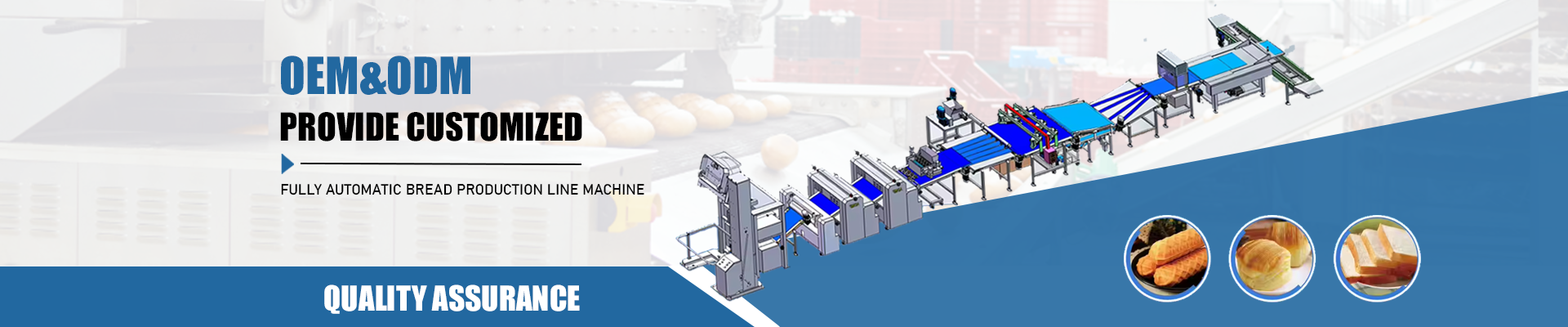
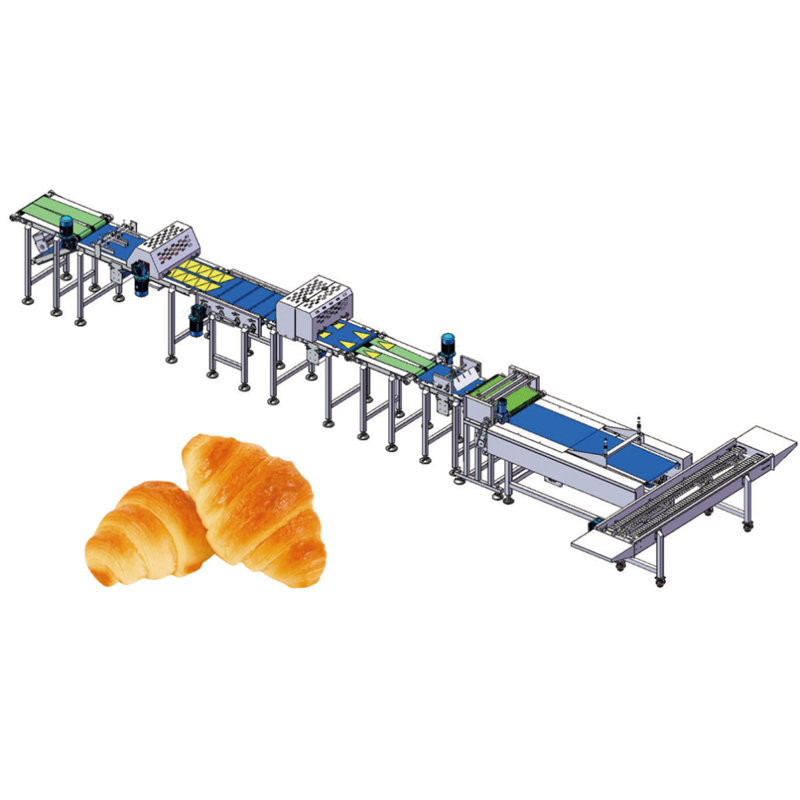
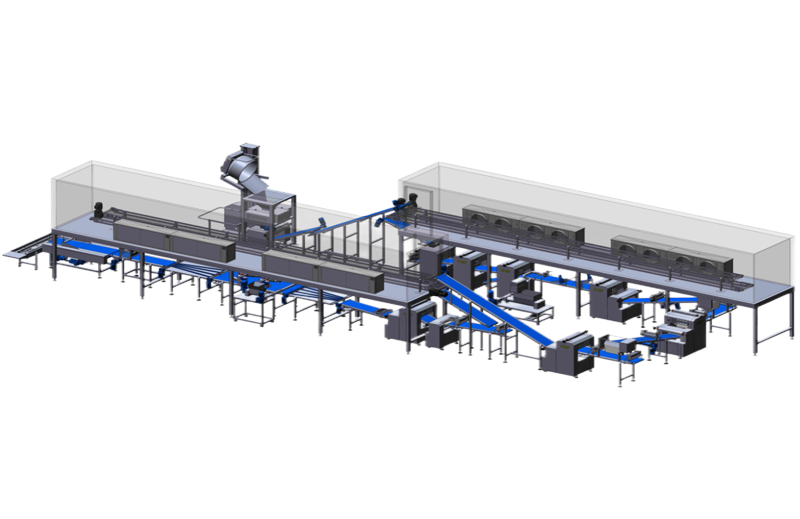
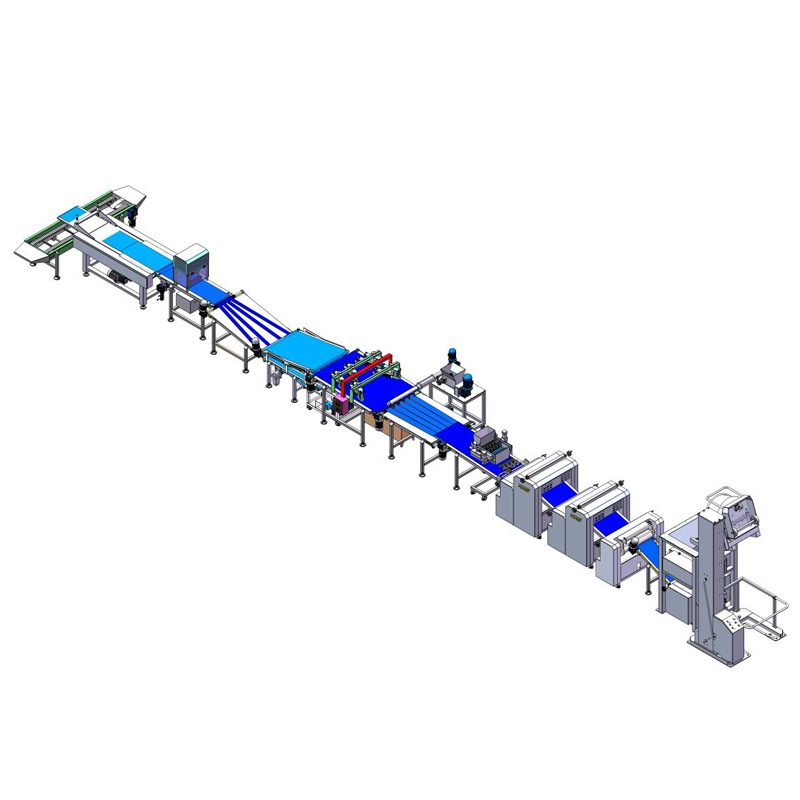
(5)Connection to downstream bread-forming equipment
For manufacturers operating large-scale production facilities, these improvements can help reduce repetitive labor and support more efficient production scheduling.
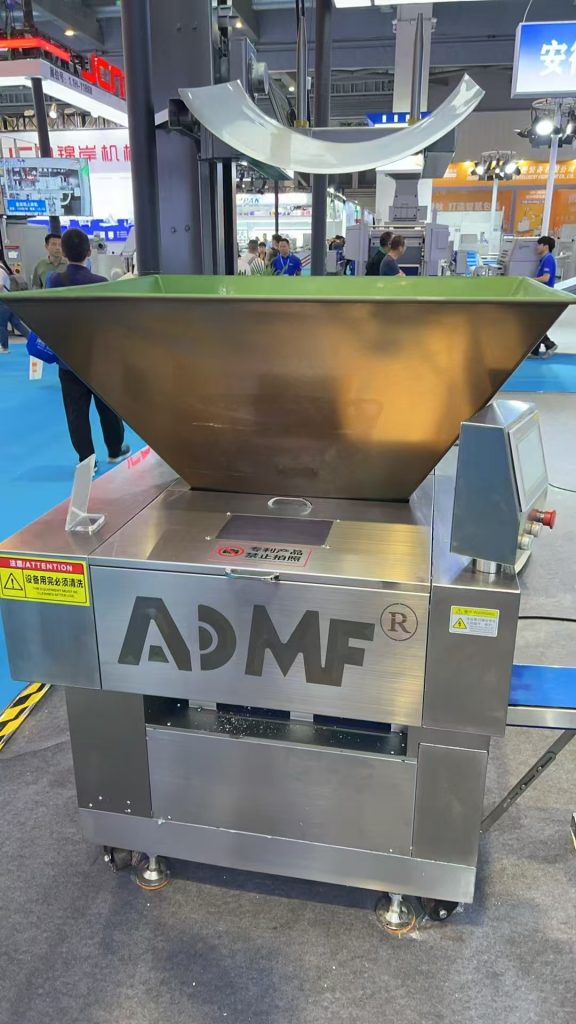
4. Technical Parameters to Consider Before Purchasing
The following table provides examples of published specifications from commercial dough-dividing equipment. They are useful industry references for evaluating high-hydration applications.
| Technical Parameter | Published Industry Reference | Selection Consideration |
| Dough hydration | 70% minimum for a specific dividing-moulding configuration | Confirm compatibility with the actual recipe |
| High-hydration application | Above 78% on a specialized volumetric divider | Verify performance using production dough |
| Dough weight range | Approximately 20–120 g on one specialized model | Match the required finished product weight |
| Production speed | Over 2,000 pcs/hour on a specific automated line | Confirm output at the target dough weight |
| Dividing weight range | 20–1,700 g across different Colbake models | Select the appropriate machine configuration |
| Weight deviation | Approximately 2% on specified Colbake models | Request test results for the actual dough |
5. What Should You Consider When Choosing a Dough Divider?
Before purchasing a High Moisture Dough Divider, manufacturers should evaluate several important factors.
Dough Hydration: Provide the actual water-to-flour ratio of your recipe. Higher hydration generally requires more specialized handling.
Target Dough Weight: Confirm the required portion range and acceptable weight variation.
Production Capacity: Calculate your target output in pieces per hour and consider future production growth.
Dough Characteristics: Share information about stickiness, elasticity, fermentation time, and dough temperature.
Cleaning and Maintenance: Check the accessibility of food-contact components, cleaning procedures, and replacement parts.
Production Line Integration: Consider how the divider will connect with mixers, conveyors, dough rounders, and bread-forming machines.
Providing these details helps equipment manufacturers recommend a more suitable solution.
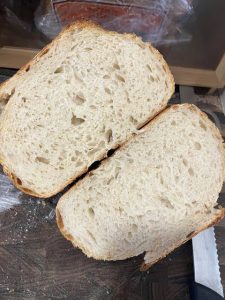
6. Supporting High-Moisture Bread Production with Andrew Mafu Machinery
At Andrew Mafu Machinery, we understand that different bakery products require different processing methods.
Our High Moisture Dough Divider is part of our bakery equipment solutions for manufacturers working with soft and high-hydration dough.
Whether you produce high-moisture toast, soft bread, or other specialty bakery products, selecting suitable dividing equipment is an important step toward building a reliable production process.
We welcome customers to share their product photos, dough recipes, required portion weights, and hourly capacity targets so our team can evaluate suitable equipment configurations.
Konklizyon
High-hydration dough offers excellent opportunities for developing distinctive bakery products, but its sticky and soft characteristics require appropriate processing equipment.
A specialized High Moisture Dough Divider can help improve portioning consistency, reduce manual handling, and support efficient industrial bakery operations.
With the right equipment configuration, manufacturers can build a more stable production process and prepare their factories for growing market demand.
Contact Andrew Mafu Machinery to discuss your high-moisture dough processing requirements and explore a suitable bakery equipment solution.
FAQ
1. What is a High Moisture Dough Divider?
It is a specialized bakery machine designed to divide soft, wet, and high-hydration dough into portions of a required weight for subsequent processing.
2. Why is high-hydration dough difficult to divide?
High-hydration dough is generally softer and stickier than conventional dough. It may adhere to machine surfaces and deform during handling, making consistent portioning more challenging.
3. What products can use a high-moisture dough divider?
Depending on the machine configuration, applications may include ciabatta, focaccia, artisan bread, soft bread, and high-moisture toast dough.
4. Can the machine adjust dough portion weight?
The adjustment range depends on the dividing mechanism and machine configuration. Customers should confirm their required minimum and maximum portion weights before ordering.
5. What information is required for an equipment quotation?
Please provide dough hydration, dough temperature, target piece weight, hourly production capacity, product photos, and factory layout if available.
6. Can a dough divider be integrated into an automatic bread production line?
Yes. Integration can be evaluated according to the upstream dough preparation process and downstream equipment, including conveyors, rounders, and forming machines.
References
1.Colbake – Volumetric Dough Dividers DR / DV — Published dividing weight ranges, dough hydration applications, and production information.
2.Mfitaly – Automatic Industrial Volumetric Dough Divider — Specialized equipment for high-hydration dough, including published weight ranges.
3.JAC / Erika Record – Tradiform Hydraulic Dough Divider — Technical information on dough hydration and dividing configurations.
4.MECATHERM – Hybrid Divider — Industrial dough dividing technology and production capacity information.

Pa ADMF