ADMF Slitted Filled Danish Bar Forming Line
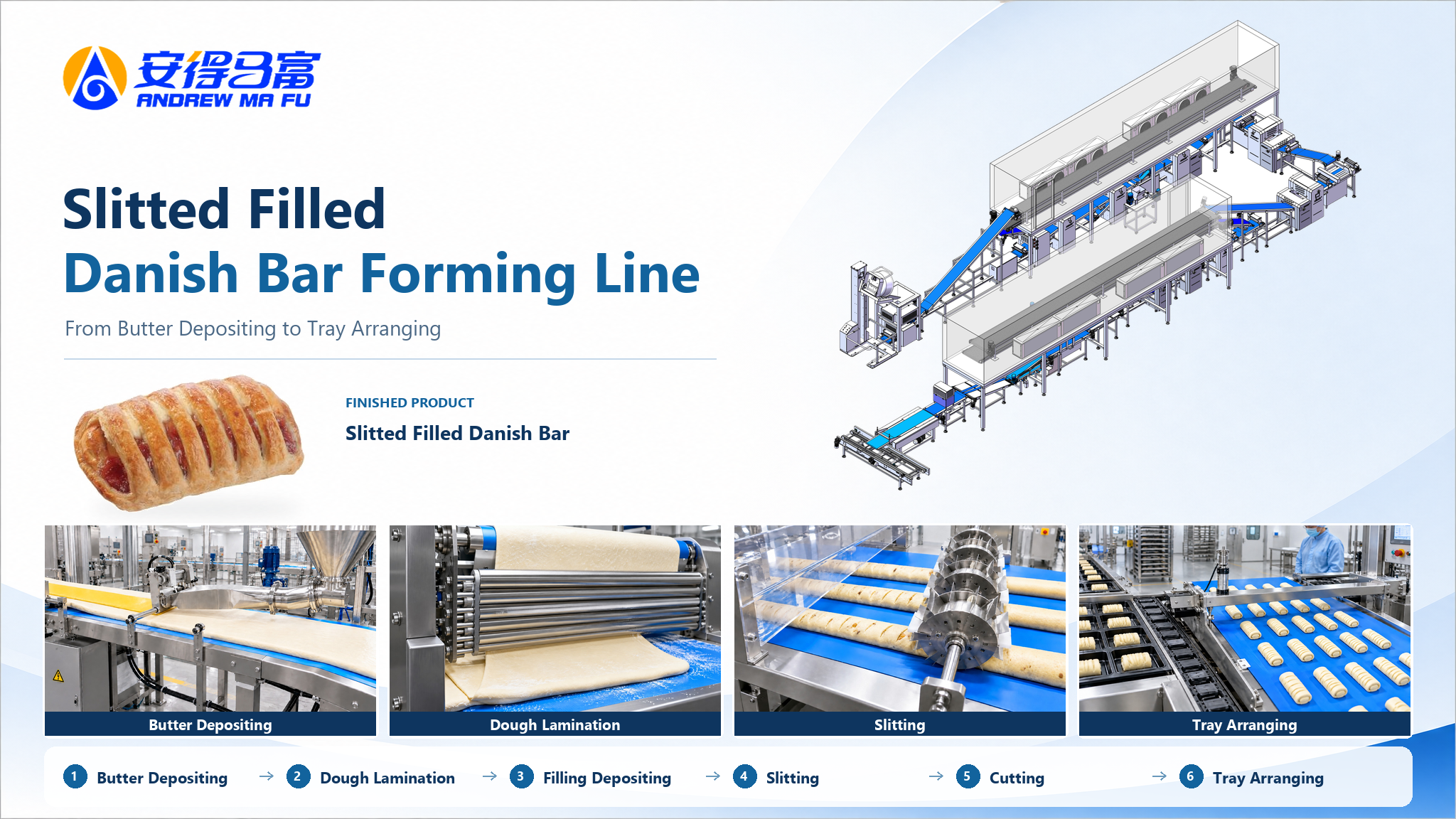
Producing a filled Danish bar involves more than cutting dough into a recognizable shape. Butter application, lamination, filling placement and final handling all need to work together. For bakeries evaluating equipment, understanding that sequence is a useful starting point before comparing capacity or factory layouts.
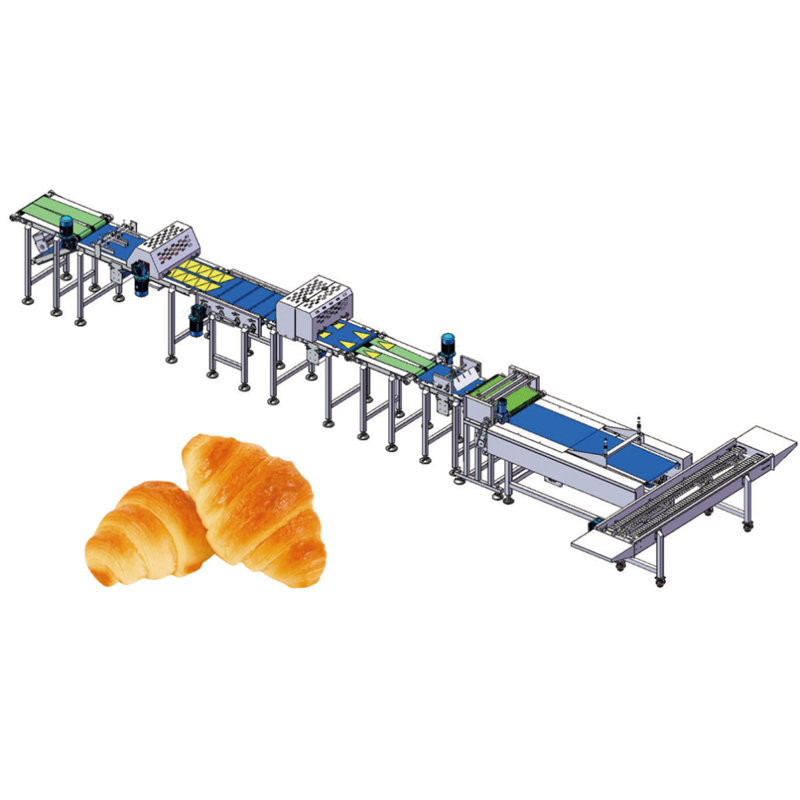
Andrew Mafu Machinery presents the Slitted Filled Danish Bar Forming Line through a production demonstration covering six stages: butter depositing, dough lamination, filling depositing, slitting, cutting and tray arranging. The accompanying finished-product photograph illustrates the baked pastry appearance; the production footage focuses on preparation and forming through to trays, rather than a complete baking process.
1. A Focused Application for Filled Danish Bars
The featured product is an elongated, filled pastry with a slitted upper surface. Its final appearance depends on the relationship between the laminated dough, deposited filling and cutting pattern. The product photograph should therefore be treated as a visual target, not as proof that every recipe will produce an identical result.
This application provides a starting point for industrial bakeries, central production kitchens and equipment distributors reviewing filled pastry projects. Define the target bar dimensions, dough formulation and filling before selecting equipment. A clear product brief makes it easier to discuss the required process instead of relying on a general machine category.
2. Why Process Coordination Matters in 2026
Recent industry reporting puts flexibility and controlled dough handling at the center of equipment discussions. In its July 30, 2026 feature, Baking Business highlights the importance of dough temperature, fat consistency, progressive reduction and synchronized transfers when incorporating lamination.
A separate June 22, 2026 report emphasizes defining doughs, fillings and product formats before choosing a flexible sweet-goods line. These are industry considerations, not performance measurements for the ADMF equipment. Their practical relevance is straightforward: evaluate the whole workflow and the actual recipe, rather than assuming that one headline speed figure describes finished-product output.
3. How the Six-Stage Production Process Works
Butter Depositing → Dough Lamination → Filling Depositing → Slitting → Cutting → Tray Arranging
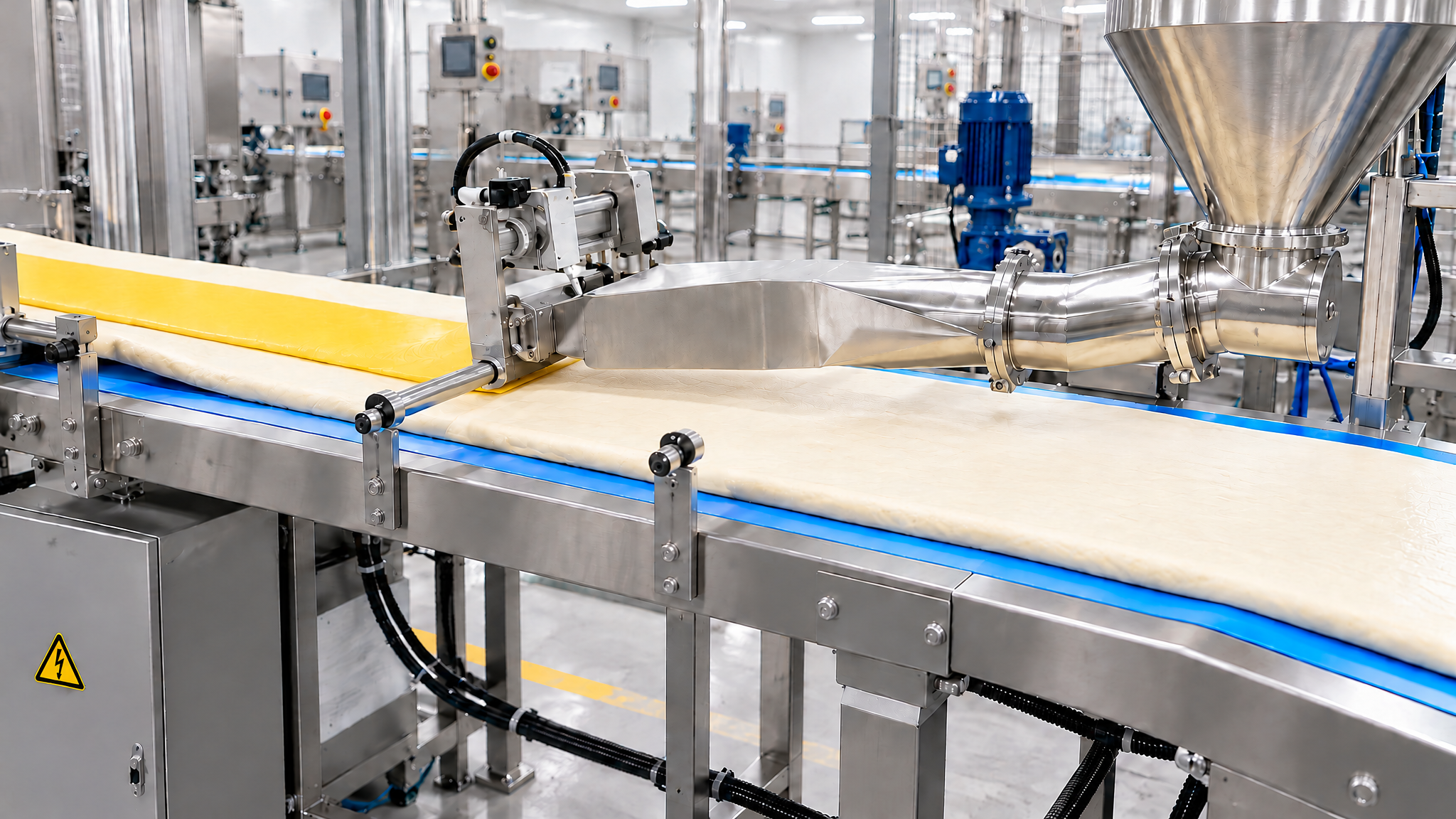
Step 1: Butter Depositing
Butter is introduced to the dough before lamination. The purpose of this stage is to supply the fat required by the selected pastry formulation. During project evaluation, discuss butter consistency, feeding conditions and the intended dough-to-butter relationship. ADMF’s fat and butter pump introduction provides related background; that separate machine’s specifications do not automatically describe the unit in this demonstration.
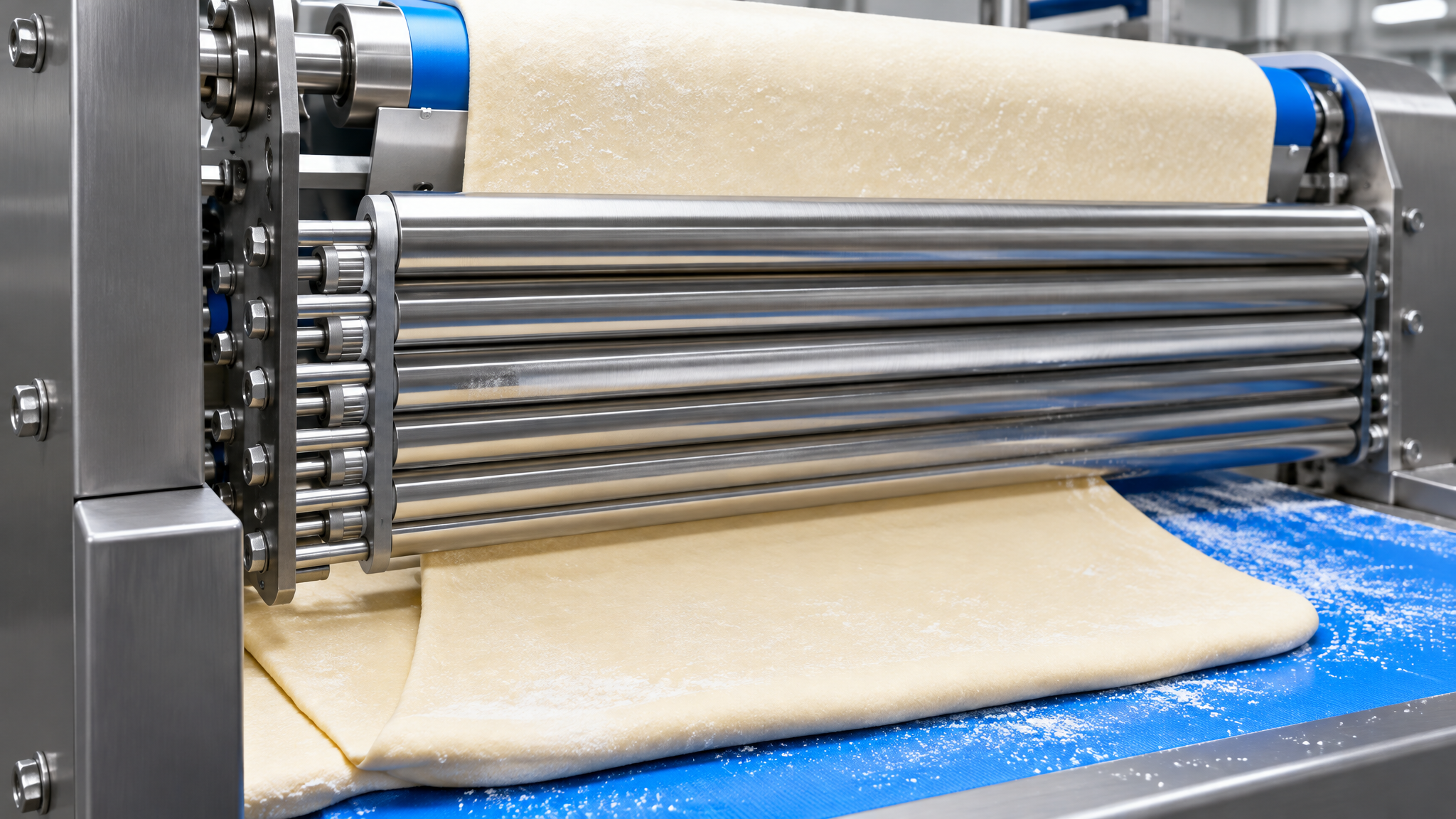
Step 2: Dough Lamination
The dough and butter are worked into layers, preparing a sheet for downstream processing. Layer preservation should guide the reduction sequence and handling arrangements. Temperature, dough relaxation and fat condition are application variables to evaluate during trials. For related equipment information, see the pastry sheeter product page, which describes a separate equipment category rather than the complete featured line.
Step 3: Filling Depositing
Filling is deposited onto the laminated dough sheet. Position and quantity need to suit the intended bar size and subsequent processing. A representative filling sample helps determine the appropriate depositing arrangement. Do not assume that fruit filling, cream and mixtures containing particles behave identically; compatibility should be checked for the actual formulation.
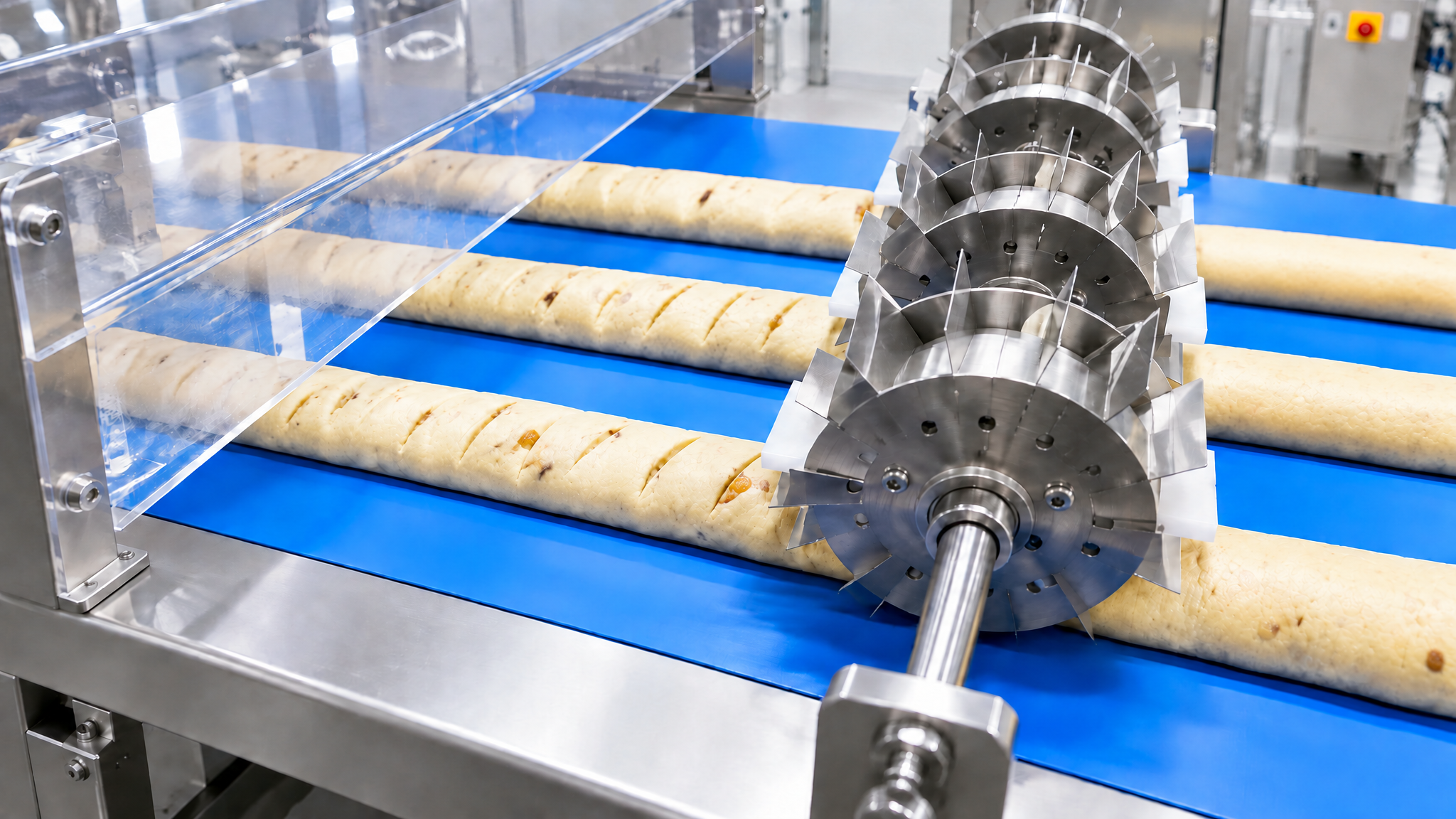
Step 4: Slitting
Slitting follows filling depositing in the specified production sequence. This stage creates the characteristic openings associated with the product design. The desired pattern should be reviewed against both unbaked samples and the finished reference. Tool selection and alignment must be discussed in relation to dough dimensions, rather than treating the photographed pattern as a universal tooling specification.
Step 5: Cutting
The cutting stage divides the prepared dough into individual portions. Agree on the target portion dimensions and how weight will be evaluated during a trial. Cutting performance should be assessed together with upstream sheet consistency and filling distribution. The relevant question is whether acceptable portions can be produced repeatedly under the agreed operating conditions.
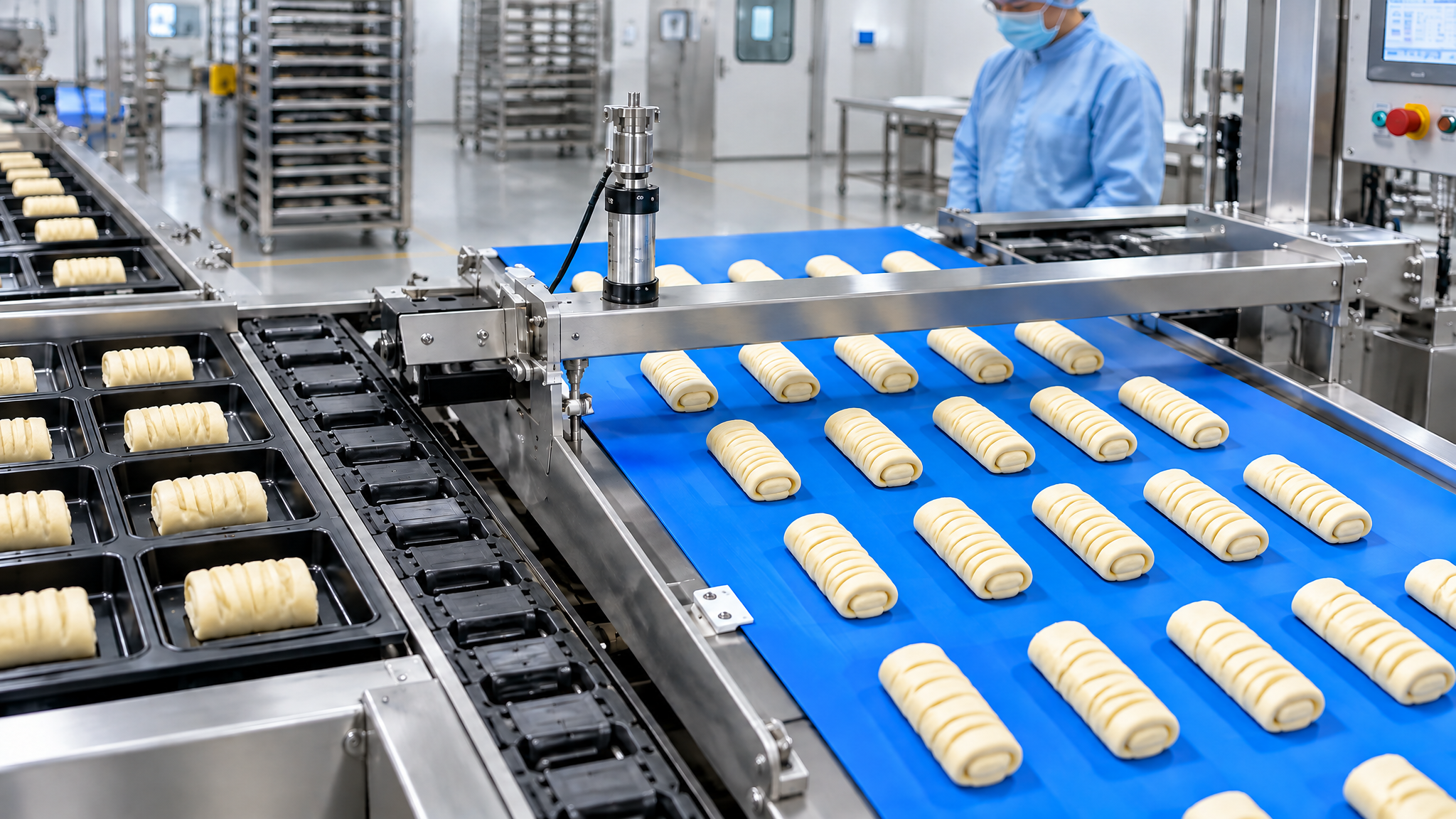
Step 6: Tray Arranging
The individual portions are arranged on trays for the next production stage. Tray dimensions, product spacing and the transfer arrangement should match the bakery’s workflow. Proofing, baking, cooling or freezing requirements depend on the recipe and project scope; their inclusion cannot be inferred simply because a baked product photograph accompanies the forming-line video.
4. Technical Parameters and Configuration Planning
Le Slitted Filled Danish Bar Forming Line should be specified around the target product and installation conditions. The table separates the described application from items that require a project quotation. It intentionally avoids transferring figures from other ADMF bread lines or standalone machines.
Note: Specifications above are reference values. Final parameters should be confirmed according to the customer’s product samples and production requirements. Entries marked for confirmation are not declared machine ratings.
5. Production Benefits to Evaluate
The value of a coordinated forming process should be assessed through observable results. Useful checkpoints include filling placement, portion consistency, slit appearance and orderly transfer to trays. These checks connect the equipment discussion to the product that the bakery actually needs to sell.
For investment planning, record acceptable output, rejected pieces, operator interventions and changeover time during representative trials. Compare those results with the current process using the same product criteria. This is a more useful basis for estimating labor requirements and ingredient losses than assuming a guaranteed saving from automation alone. No fixed output increase or payback period is claimed here.
6. Matching the Line to Your Bakery
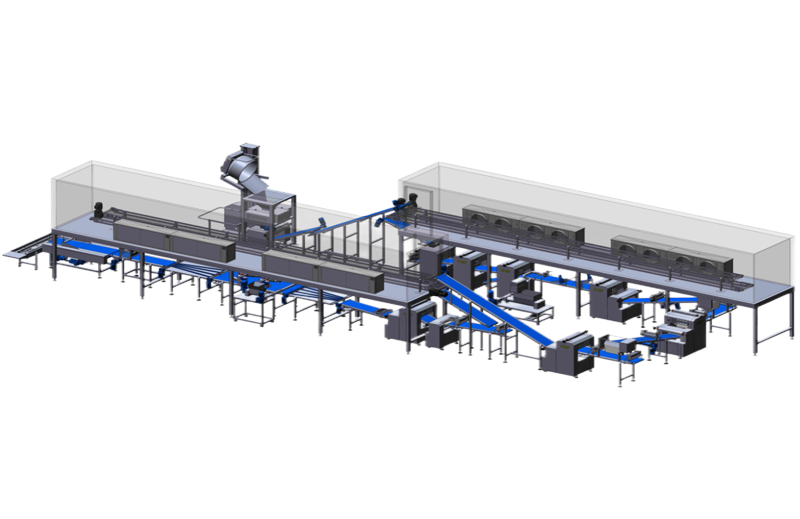
Begin the layout discussion with the product flow into and out of the forming section. Identify where prepared dough enters, how butter and filling reach their respective stations, and where loaded trays travel next. Include access for operators, cleaning and maintenance, not only the equipment footprint.
For a new project, agree on the boundaries between forming equipment and downstream processing. For an existing bakery, provide a dimensioned floor plan and information about nearby equipment. Andrew Mafu Machinery can be contacted with this information to discuss a project-specific configuration; compatibility and the final supply scope should be confirmed in writing.
7. Hygiene, Operation and Product Trials
Cleaning and operator procedures deserve attention alongside product appearance. Ask how the selected configuration provides access to filling-contact parts, belts, tools and transfer areas. Review ingredient-change procedures and maintenance requirements with the technical team rather than inferring hygienic performance from a stainless-steel appearance.
AIB International provides food-safety training and inspection resources for food operations. These are background resources, not evidence of certification for this line. For a meaningful product trial, bring the intended dough, butter and filling, document operating conditions, and evaluate the baked sample as well as the unbaked portions leaving the equipment.
8. Discuss Your Danish Pastry Project
Le Slitted Filled Danish Bar Forming Line brings the discussion back to a clear six-stage workflow, from butter depositing to tray arranging. A successful equipment brief connects that sequence with an agreed product sample, factory layout and acceptance criteria.
To discuss your project with Andrew Mafut masini, prepare a finished-product photograph, target dimensions and weight, filling information, required output and tray size. Add your factory layout and electrical supply details. Send a technical inquiry to begin reviewing the appropriate configuration and the information needed for a quotation.
Frequently Asked Questions
1. What is the production sequence for this Danish bar line?
The specified sequence is butter depositing, dough lamination, filling depositing, slitting, cutting and tray arranging. Butter depositing and pastry-filling depositing are separate stages.
2. What is the hourly production capacity?
A verified capacity for the exact demonstrated configuration has not been stated in this article. Request a quotation based on product weight, dimensions, filling and required operating conditions rather than using another machine’s rating.
3. Can different fillings or product sizes be considered?
Submit the required recipes, filling samples and dimensions for technical review. Suitability, tooling and any configuration changes need confirmation; the demonstration does not establish compatibility with every filling or pastry format.
4. Does the shown process include proofing and baking?
The featured workflow ends with tray arranging. The baked product photograph is an appearance reference. Confirm any proofing, baking, freezing or cooling equipment separately in the proposed supply scope.
5. What should we confirm about operation and after-sales support?
Before ordering, agree on operator training, documentation, cleaning procedures, commissioning arrangements, spare parts and service terms. Record these items in the quotation or contract rather than assuming a standard package.
References
- Baking Business — Combined Sheeting, Laminating Lines Add Flexibility, Efficiency. July 30, 2026. Industry background on lamination, dough handling and line integration.
- Baking Business — How Flexible Sweet Goods Production Can Protect Plant Efficiency. June 22, 2026. Industry background on product definition, flexibility and project planning.
- AIB International — Food Safety Training, Inspections and Consulting. General food-safety resource; accessed October 28, 2026. No product certification or endorsement is implied.

E ala i le faafanua