Ingredient distribution is an important step in many modern bakery and food-production processes. Whether the material is sauce, slurry, cream, particulate filling, or another food ingredient, uneven application can affect product appearance, weight, taste, and downstream assembly.
For manufacturers producing sandwiches, pocket bread, toast-based products, pastries, and other filled bakery products, manual spreading can become difficult as production volumes increase. Operators may apply different quantities, creating variation between products and increasing material waste.
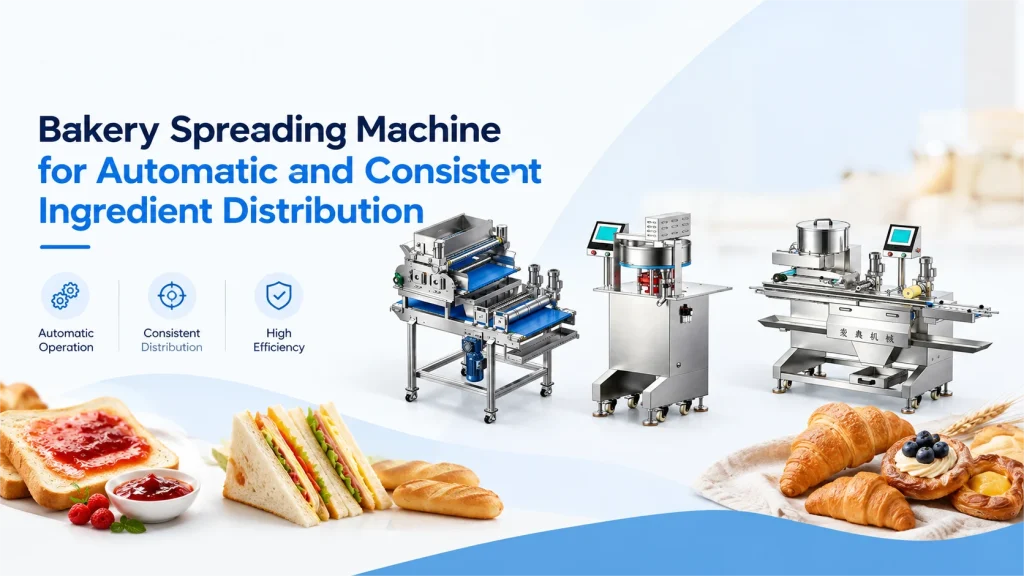
A Bakery Spreading Machine provides an automated solution for controlled and consistent ingredient distribution. By integrating feeding, dosing, spreading, conveying, and control systems, the machine can help manufacturers improve process consistency while reducing repetitive manual operations.
For modern food manufacturers, this type of automation also aligns with a broader industry focus on labor efficiency, sanitation, integrated machinery, and data-driven process control. PMMI’s 2026 processing-industry report identifies workforce challenges, hygienic design, automation, and digital tools as important areas of equipment investment.
A Bakery Spreading Machine is designed to distribute a food ingredient evenly onto a product or production surface.
Depending on the application, it can be used for:
1.Sauce spreading
2.Slurry application
3.Cream or paste distribution
4.Particulate ingredient dispensing
5.Sandwich preparation
6.Pocket bread production
7.Bakery filling applications
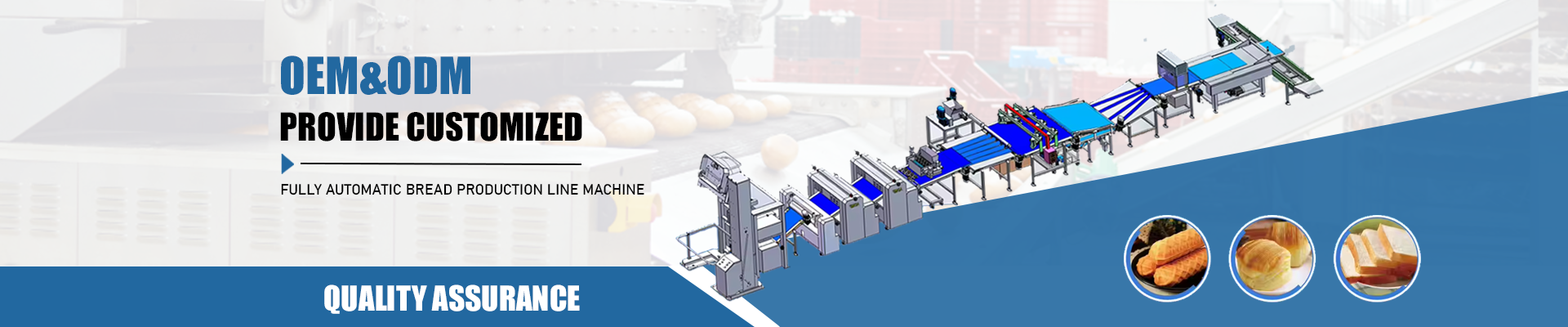
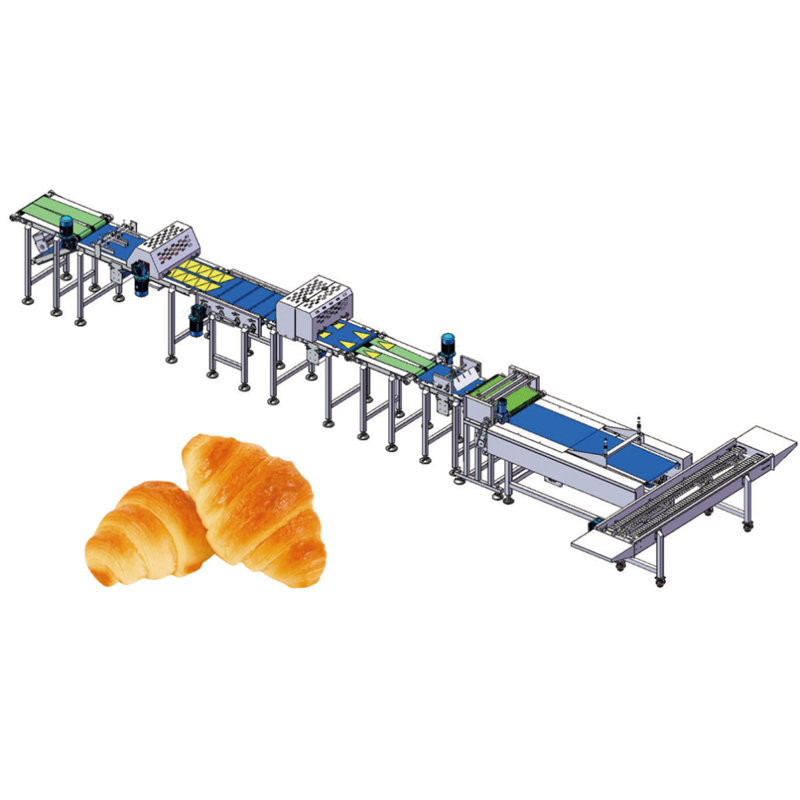
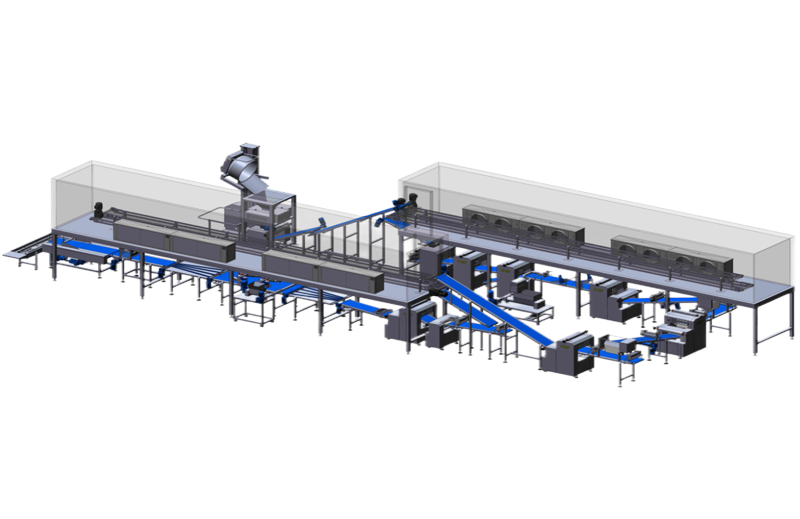
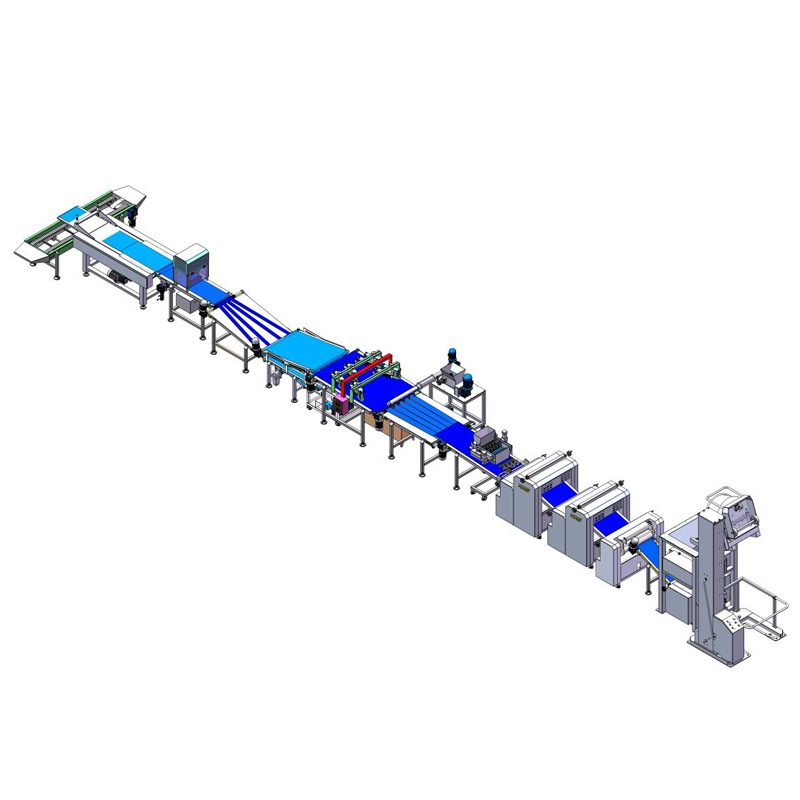
The machine can be installed as a standalone unit or integrated into a complete automated production line.
For applications where the material needs to be accurately positioned on a moving product, synchronization between the dosing mechanism and conveyor is particularly important.
How Does an Automatic Spreading System Work?
A typical automatic spreading process consists of four stages:
Ingredient Feeding → Controlled Dosing → Product Spreading → Continuous Conveying
The ingredient is first loaded into the feeding system. A dosing mechanism then controls the amount of material supplied to the product. The spreading section distributes the ingredient across the required area, while the conveyor continuously transfers the product to the next production stage.
For Andrew Mafuck masini reference configuration, the spreading unit can be arranged with dual channels, photoelectric positioning, screw-based output for particulate ingredients, servo-controlled dosing, and a food-grade PU belt with cleats and variable-frequency-drive control, depending on the application.
This configuration makes the spreading system suitable for automated sandwich and pocket bread production where ingredient placement and product positioning need to remain synchronized.
Tulaga faapitoa
The following are reference specifications for a Bakery Spreading Machine. Final parameters should be customized according to the ingredient characteristics, product dimensions, required output, and complete production-line configuration.
| Tulaga tau | Reference Specification |
| Application | Bakery Ingredient / Sauce Spreading |
| Spreading Channels | 1–2 Channels |
| Dosing Method | Servo-Controlled / Customized |
| Ingredient Feeding | Screw Feeding / Pump Feeding |
| Product Detection | Photoelectric Sensor |
| Conveyor Belt | Food-Grade PU Belt |
| Conveyor Type | Cleated Conveyor |
| Speed Control | VFD |
| Pulea faiga | PLC + HMI |
| Machine Frame | Stainless Steel |
| Material Compatibility | Sauce, Slurry, Paste, Particulate Ingredients |
| Production Mode | Continuous Automatic Operation |
| Installation | Standalone or Production-Line Integration |
| Product Positioning | Sensor-Controlled |
| Tuufaatasiga | Available |
Why Consistent Ingredient Distribution Matters
1. Stable Product Quality
Uneven ingredient distribution can create obvious differences between finished products. Automated dosing and spreading help manufacturers maintain more consistent coverage.
2. Better Weight Control
Ingredient cost can become significant at industrial production volumes. Precise dosing can help reduce over-application and improve material utilization.
3. Reduced Manual Labor
Automation eliminates repetitive spreading operations and allows operators to focus on line monitoring and quality control.
4. Higher Production Efficiency
A continuous spreading system can operate together with upstream and downstream equipment, reducing manual transfers and improving overall line synchronization.
Applications in Bakery Production
A Bakery Spreading Machine can be integrated into different production systems.
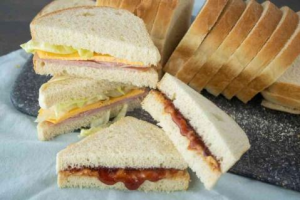
1.Sandwich Production
The system can distribute sauce, mayonnaise, cream cheese, or other spreadable ingredients before sandwich assembly.
2.Pocket Bread Production
For toast-based pocket bread production, controlled spreading can be integrated between toast feeding and slice assembly.
3.Filled Bakery Products
The system can be configured for different fillings or food materials depending on viscosity, particle size, and application requirements.
4.Multi-Channel Production
Multiple spreading channels can improve throughput when several products are processed simultaneously.
Hygienic Design and Easy Cleaning
Because spreading equipment directly handles food ingredients, hygienic design is a critical consideration.
EHEDG’s guidance specifically addresses hygienic design requirements for bakery equipment and emphasizes appropriate materials, cleaning procedures, and reduction of hygienic weak points in production equipment.
In addition, the FDA Food Code requires food-contact surfaces to be kept clean and provides requirements concerning equipment construction, cleaning, and contamination control.
For industrial bakery applications, manufacturers should therefore consider stainless-steel construction where appropriate, food-grade conveyor materials, accessible components, and a machine structure that supports routine cleaning and maintenance.
Integrating the Spreading Machine into a Complete Production Line
One of the major advantages of an automatic spreading system is its ability to connect with other bakery equipment.
For example, in an automated pocket bread production process, the spreading machine can be positioned after:
Toast Peeling → Toast Slicing → Toast Feeding
and before:
Toast Slice Assembly → Pocket Bread Forming
This allows the spreading process to operate continuously with the surrounding equipment rather than functioning as an isolated step.
For manufacturers planning a new production line, integration should take into account conveyor speed, product spacing, dosing timing, sensor position, material characteristics, and downstream equipment requirements.
Faaiuga
A Bakery Spreading Machine provides an efficient way to automate ingredient distribution while improving consistency, production efficiency, and process control.
Its value is particularly clear in high-volume bakery applications where manual spreading can create inconsistent coverage, excessive labor requirements, and material waste.
By combining controlled dosing, accurate product detection, synchronized conveying, and hygienic machine design, an automatic spreading system can become an important part of a modern bakery production line.
For applications such as sandwich manufacturing, pocket bread production, and other filled bakery products, Andrew Mafu Machinery can develop spreading solutions according to ingredient characteristics, product dimensions, production capacity, and complete line requirements.
FAQ
1. What products can a Bakery Spreading Machine process?
Depending on the configuration, the machine can handle sauces, slurries, pastes, creams, and selected particulate ingredients.
2. Can spreading quantity be adjusted?
Yes. Dosing parameters can be adjusted according to the ingredient and product requirements. Servo-controlled dosing can also be used in customized configurations.
3. Can the machine be integrated into a sandwich production line?
Yes. The spreading machine can be synchronized with bread feeding, slice assembly, forming, and other downstream equipment.
4. Can different ingredients be processed?
Yes, but the appropriate feeding and dosing method depends on viscosity, particle size, flow characteristics, and product formulation.
5. What should buyers consider before purchasing?
Important considerations include ingredient characteristics, dosing accuracy, product size, production speed, number of channels, cleaning requirements, and integration with the existing production line.
References
1.EHEDG – Hygienic Design Requirements for Bakery Equipment
EHEDG Bakery Equipment Guideline
2.EHEDG – Hygienic Design Principles
EHEDG Hygienic Design Principles
3.U.S. FDA – Food Code 2022
FDA Food Code 2022
4.PMMI – Processing State of the Industry 2026
PMMI Processing State of the Industry 2026
5.PMMI – Standards, Technical Reports, Regulations and Directives
PMMI Standards and Regulations

E ala i le faafanua