In modern industrial bakeries, dough processing technology continues to evolve to meet the growing demand for high-quality baked goods and efficient large-scale production. Among the most technically challenging tasks in bakery automation is sticky dough processing. High-hydration doughs used in products such as artisan bread, ciabatta, brioche, and premium toast require specialized equipment and engineering solutions to maintain product consistency while preventing dough adhesion to machinery.
As global bakeries increasingly move toward automation, manufacturers like Andrew Mafut masini are developing advanced sticky dough processing equipment ma le anti-adhesion dough technology designed specifically for industrial bakery environments.
This article explores the engineering challenges of sticky dough processing, modern solutions used in automated bakery production lines, and how industrial bakeries can optimize efficiency while maintaining dough integrity.
Understanding Sticky Dough in Industrial Baking
Sticky dough is typically characterized by high hydration levels, often ranging from 65% to 85% water content. While this moisture level contributes to better texture, improved fermentation, and superior bread quality, it also creates several production challenges.
Common problems in sticky dough processing include:
• Dough adhering to rollers, belts, and forming machines
• Difficulty maintaining consistent dough portions
• Reduced production speed due to cleaning requirements
• Product deformation during transfer between machines
• Increased maintenance and downtime
In traditional manual bakeries, experienced bakers handle sticky dough using specialized techniques. However, in industrial bakeries producing thousands of loaves per hour, manual handling is not practical. This is where automated dough processing lines equipped with anti-adhesion engineering become essential.
Companies such as Andrew Mafut masini have developed automated systems capable of processing sticky dough efficiently while preserving product structure and consistency.
Key Engineering Challenges in Sticky Dough Processing
Industrial bakeries face several mechanical and process engineering challenges when working with sticky dough.
1. Dough Adhesion to Machine Surfaces
High-hydration dough tends to stick to rollers, conveyor belts, cutting knives, and forming molds. This leads to inconsistent dough shapes and frequent cleaning cycles.
2. Dough Structure Preservation
Sticky dough is delicate and sensitive to excessive mechanical stress. Improper handling can damage gluten structure, resulting in poor loaf volume and uneven crumb texture.
3. High-Speed Production Requirements
Large bakeries require continuous production speeds that may exceed 1,000–6,000 pieces per hour, which makes sticky dough handling even more challenging.
4. Hygiene and Food Safety
Adhered dough residue can lead to hygiene risks, making easy cleaning and sanitation an essential design consideration.
To address these challenges, modern bakery machinery incorporates advanced materials, surface engineering, and intelligent process control.
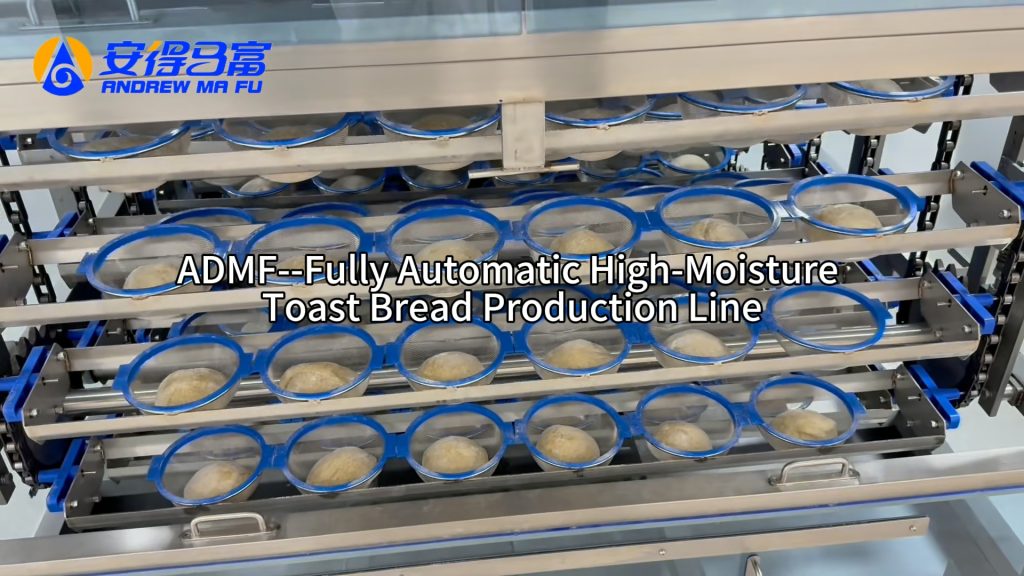
Anti-Adhesion Technology in Modern Bakery Equipment
Advanced anti-adhesion dough technology is the core solution for sticky dough processing.
Several technologies are commonly used in industrial bakery machinery:
Non-Stick Surface Coatings
Food-grade coatings reduce friction between dough and machine components. These coatings prevent dough residue from accumulating on rollers and forming systems.
Oil Mist or Dusting Systems
Automated oil spraying or flour dusting systems create a thin separation layer between dough and machinery surfaces.
Special Conveyor Belt Materials
Modern bakery production lines use anti-stick PU belts or specialized silicone-coated belts designed for sticky dough transport.
Vevela pulea
Controlling dough temperature can significantly reduce stickiness and improve machinability.
Intelligent Dough Handling Systems
Automated forming lines precisely control dough pressure, roller gap, and conveyor speed, ensuring gentle dough handling.
These engineering solutions allow modern bakery machines to process sticky dough while maintaining product consistency and minimizing downtime.
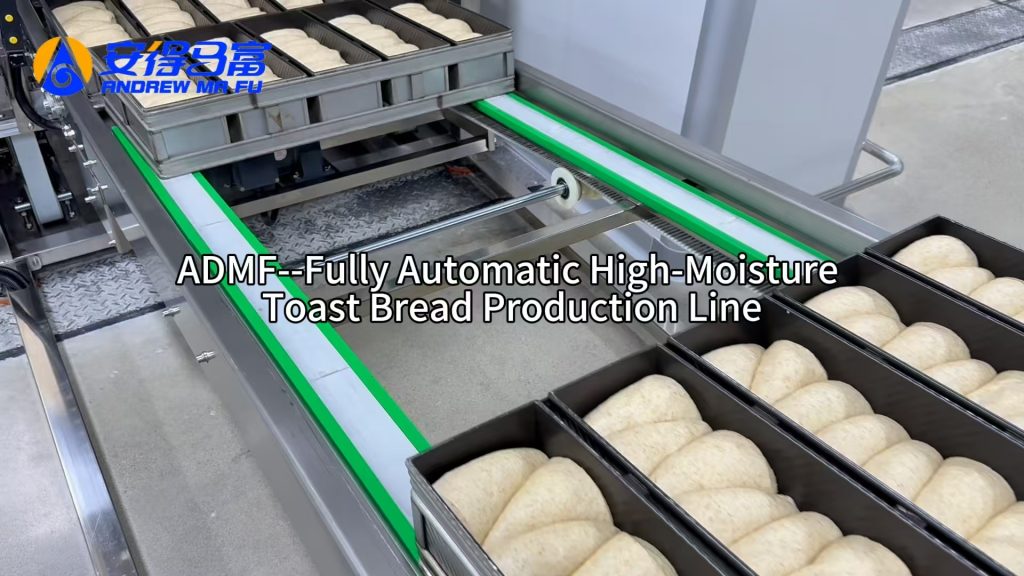
Andrew Mafu Machinery Sticky Dough Processing Solutions
As a specialized manufacturer of bakery automation equipment, Andrew Mafut masini develops integrated solutions designed for high-hydration dough applications.
Their production lines typically include:
• Dough mixing and fermentation systems
• High-hydration dough forming machines
• Automated tray arrangement systems
• Demolding equipment
• Automatic return tray systems
• Cooling towers and packaging conveyors
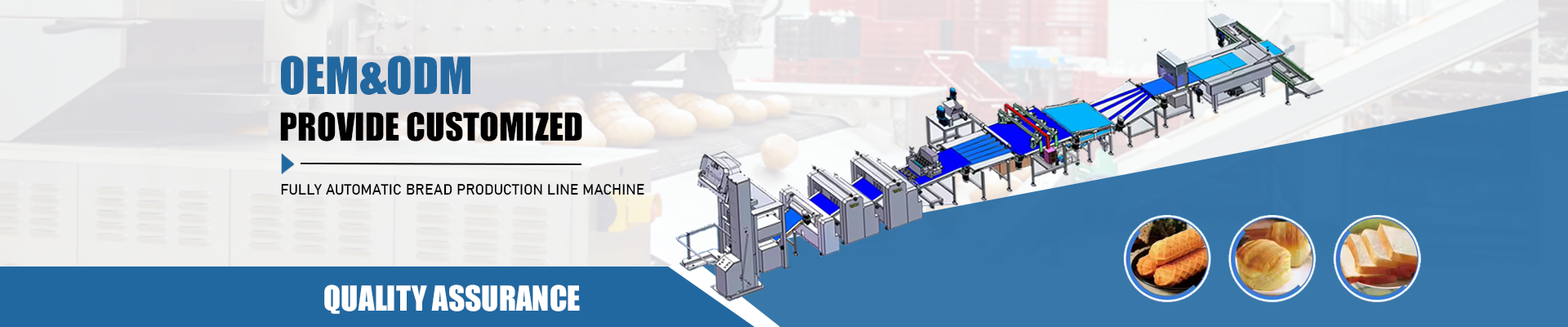
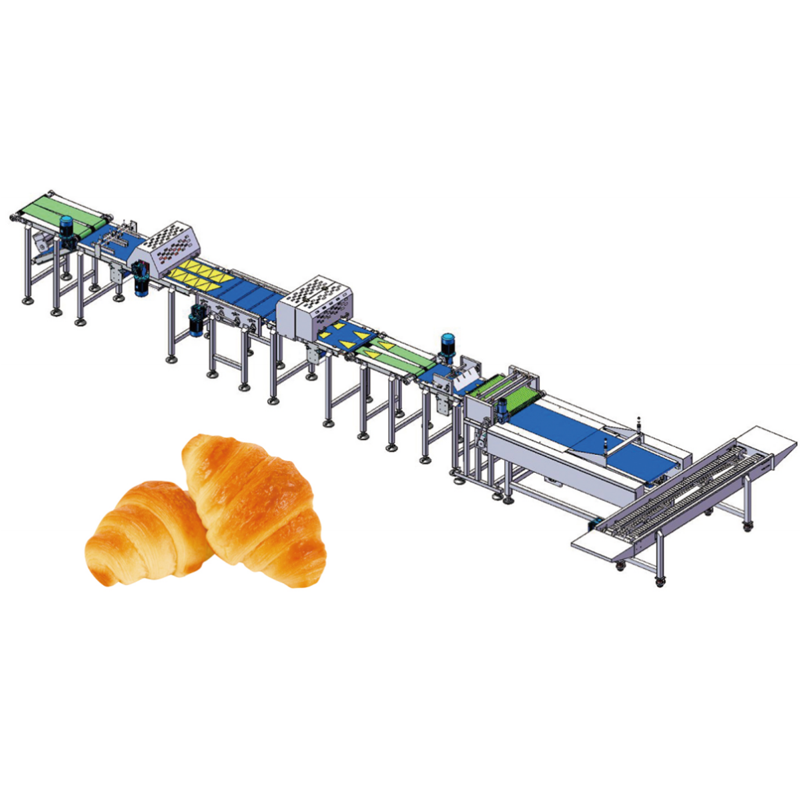
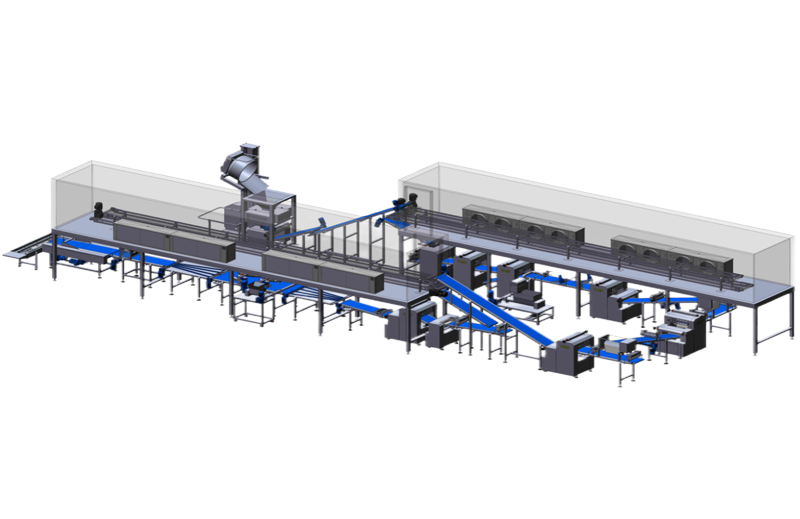
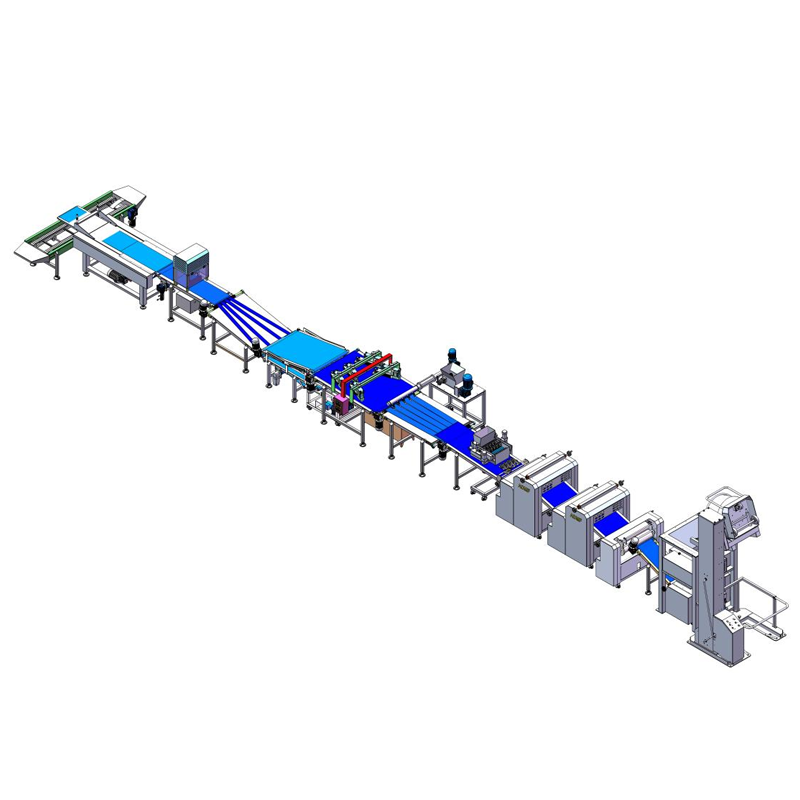
These systems work together to form a fully automated bread production line, reducing labor requirements while improving product uniformity.
Technical Parameters of Sticky Dough Processing Line
Below is an example of a typical industrial sticky dough processing system configuration.
| Tulaga tau | Faamatalaga |
| Gaosiga gafatia | 1.0 – 1.5 tons per hour |
| Dough Hydration Range | 65% – 85% |
| Conveyor Speed | 0.5 – 3.0 m/min adjustable |
| Dough Portion Accuracy | ±2% |
| Forming Width | 400 – 800 mm |
| Power Supply | AC 380V / 50hz |
| Total Installed Power | 75 – 110 kW |
| Machine Length | 18 – 30 meters |
| Pulea faiga | Industrial PLC + HMI |
| Hygiene Standard | Faleoloa-Gen Petey Shinless Steel |
This equipment configuration is commonly used in toast bread production lines, artisan bread systems, and ciabatta production lines.
Automation Benefits for Industrial Bakeries
Investing in sticky dough processing equipment offers several advantages for large-scale bakery operations.
Improved Production Efficiency
Automated dough handling eliminates many manual processes, allowing bakeries to maintain stable high-volume production.
Mea e le talafeagai
Precise control of dough portioning and forming ensures uniform loaf size and shape.
Reduced Labor Costs
Automation significantly reduces the number of operators required on production lines.
Enhanced Food Safety
Modern machines are designed with hygienic stainless-steel structures and easy-clean components.
Lower Downtime
Anti-adhesion engineering reduces dough buildup and maintenance requirements.
These advantages make automation essential for bakeries seeking to expand production while maintaining quality standards.
The Future of Sticky Dough Processing Technology
As bakery automation continues to evolve, several trends are shaping the future of sticky dough processing.
AI-Driven Dough Monitoring
Advanced sensors and machine learning algorithms can monitor dough consistency and automatically adjust machine parameters.
Smart Cleaning Systems
Automated cleaning systems reduce sanitation time and improve food safety compliance.
Energy-Efficient Machinery
New generation bakery equipment focuses on reducing energy consumption while maintaining high performance.
Modular Production Lines
Modular machine designs allow bakeries to scale production capacity by adding additional modules.
Companies like Andrew Mafut masini continue to invest in research and development to deliver more efficient and intelligent bakery automation systems.
Faaiuga
Processing sticky dough in industrial bakeries requires a combination of advanced engineering, specialized materials, and intelligent automation. From anti-adhesion surfaces to automated dough handling systems, modern bakery machinery is designed to solve the unique challenges presented by high-hydration dough.
By adopting advanced sticky dough processing equipment, bakeries can significantly improve production efficiency, product quality, and operational reliability.
With innovative solutions developed by manufacturers such as Andrew Mafut masini, industrial bakeries around the world can confidently expand their production capabilities while maintaining the high-quality standards demanded by modern consumers.
FAQ – Sticky Dough Processing Equipment
What is sticky dough in industrial baking?
Sticky dough typically refers to dough with high hydration levels (65%–85%), commonly used in artisan bread and premium bakery products.
Why is sticky dough difficult to process automatically?
High moisture levels cause dough to adhere to machinery surfaces, making it difficult to transport, portion, and form consistently without specialized equipment.
What technology prevents dough from sticking to machines?
Anti-adhesion coatings, oil spraying systems, non-stick conveyor belts, and controlled dough handling systems help prevent dough sticking.
Can sticky dough be processed in fully automated production lines?
Yes. Modern bakery machinery with anti-adhesion engineering allows high-hydration dough to be processed in fully automated industrial bakery lines.
What production capacity can sticky dough equipment achieve?
Industrial bakery systems can typically process 1–1.5 tons of dough per hour, depending on product type and equipment configuration.
Which bakery products require sticky dough processing technology?
Common products include:
• Artisan bread
• Ciabatta
• Brioche
• Premium toast bread
• High-hydration baguettes
References & Sources:
Andrew Mafu Machinery – Official Website
Bakery & Snacks Industry News
Baking Business – Industrial Bakery Technology
IBA International Baking Industry Trade Fair