The Growing Demand for Bakery Automation
As global demand for high-quality baked goods continues to rise, industrial bakeries are increasingly investing in automation to improve efficiency, consistency, and scalability. Among the most popular bakery products worldwide, croissants remain one of the most technically challenging items to produce at scale due to their laminated dough structure and delicate shaping process.
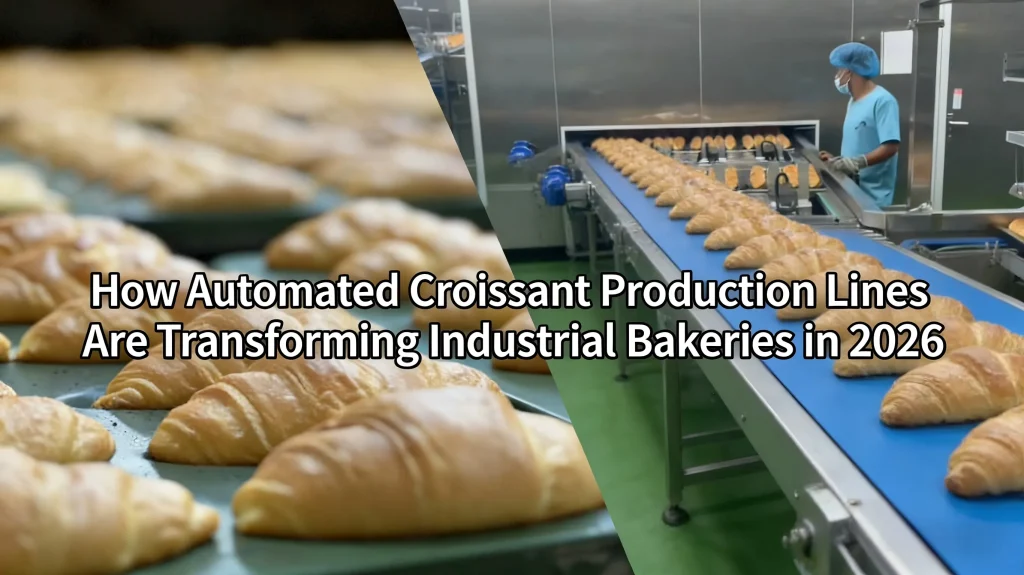
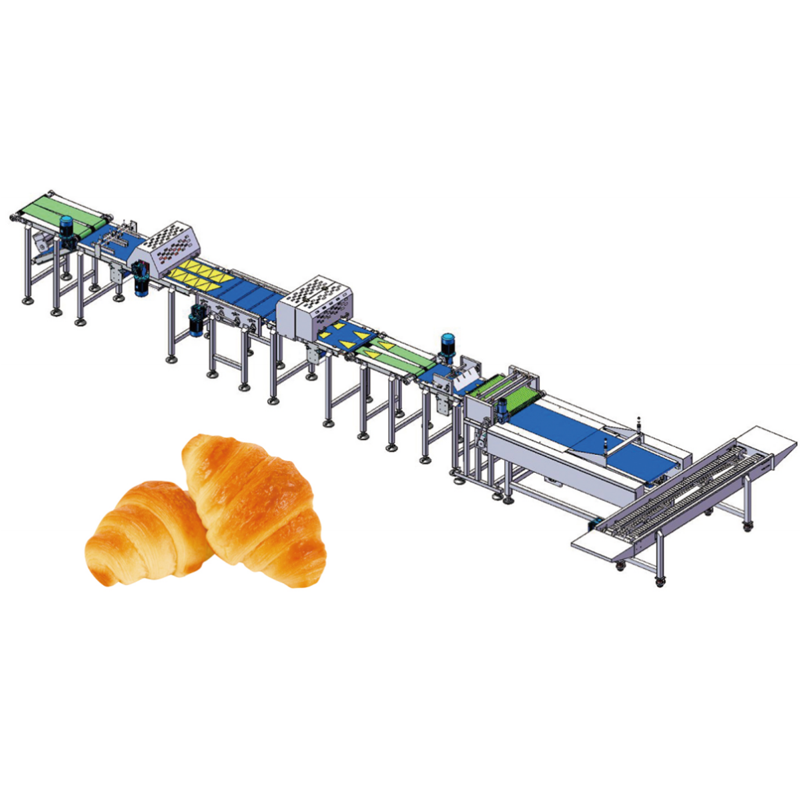
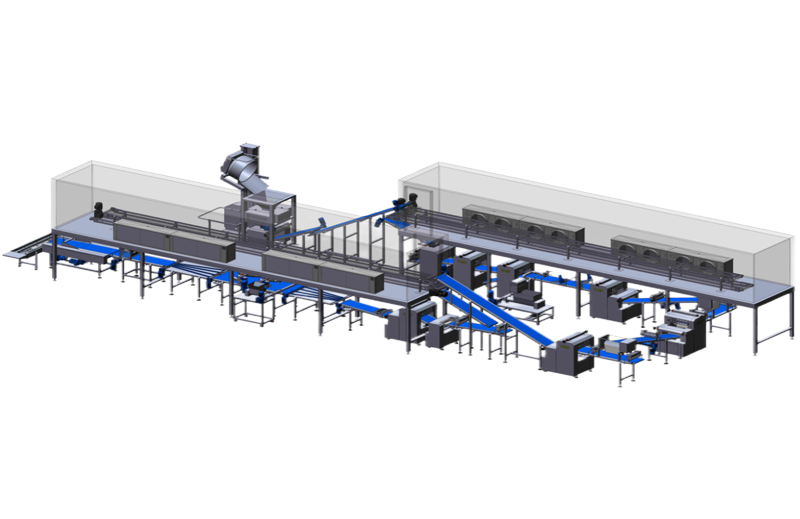
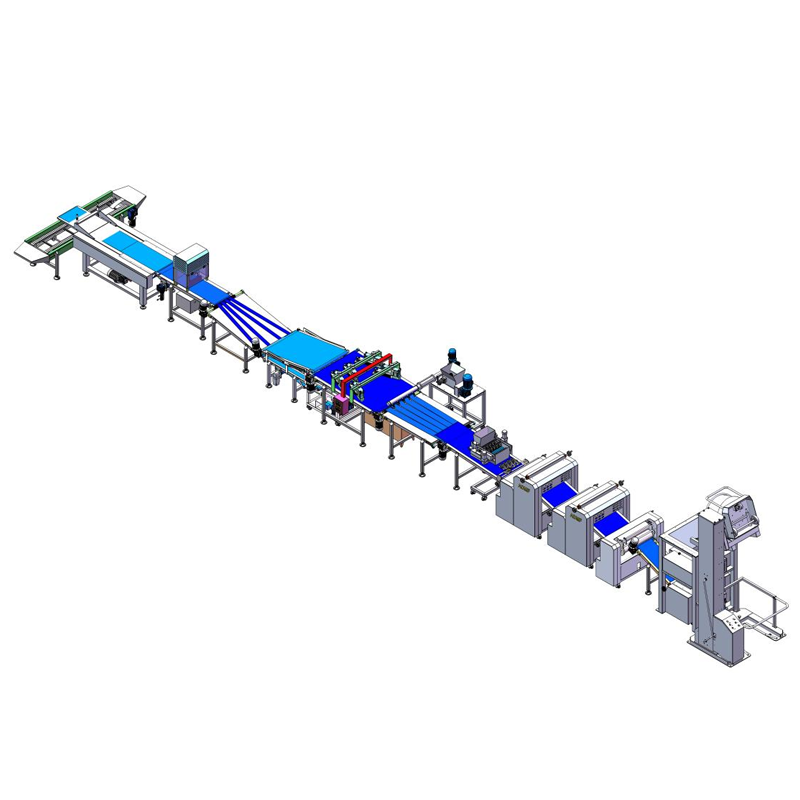
To address these challenges, many bakeries are now adopting fully automated croissant production lines, which integrate multiple processes such as dough sheeting, laminating, cutting, rolling, tray arrangement, and baking into a continuous production system.
I Andrew Mafut masini, advanced bakery automation technologies are designed to help industrial bakeries streamline production while maintaining the traditional quality and texture that consumers expect from laminated pastry products.
Automation not only increases production capacity but also significantly reduces labor requirements and ensures consistent product quality across large-scale production environments.
Key Components of an Automated Croissant Production Line
A modern croissant production line typically consists of several interconnected machines designed to process laminated dough efficiently.
The process begins with dough preparation and continues through laminating, shaping, and baking stages. Each stage must be precisely controlled to maintain the delicate structure of croissant dough.
Typical Production Flow
- Dough Mixing
- Paluga le pipii
- Laminating (Butter Layering)
- Dough Cutting
- Croissant Rolling
- Tray Arrangement
- Proofing
- Lafo
- Cooling
Automation allows these steps to operate continuously, ensuring higher production efficiency and stable product quality.
Technical Features of a Croissant Production Line
Below is an overview of the key equipment typically used in an automated croissant production line.
Croissant Production Line Equipment Overview
| Equipment | Galuega | Production Benefit |
| Dough Mixer | Mixes flour, water, yeast, and other ingredients | Ensures consistent dough quality |
| Dough Sheeter | Flattens dough into uniform sheets | Maintains precise dough thickness |
| Laminating Machine | Creates butter layers within the dough | Produces flaky croissant texture |
| Dough Cutting Unit | Cuts dough sheets into triangular shapes | Ensures uniform croissant size |
| Croissant Rolling Machine | Rolls dough triangles into croissant shapes | High-speed automated shaping |
| Tray Arrangement Machine | Automatically places croissants onto trays | Improves efficiency and hygiene |
Technical Specifications of an Industrial Croissant Production Line
Industrial bakeries require reliable equipment capable of operating continuously for long production cycles. The following table provides typical technical parameters for a modern croissant production line.
Production Line Technical Parameters
| Tulaga tau | Faamatalaga |
| Gaosiga gafatia | 4,000 – 12,000 croissants per hour |
| Dough Sheet Width | 400 – 800 mm |
| Line Length | 18 – 35 meters |
| Power Supply | AC 380V / 50hz |
| Aofai Malosiaga | 80 – 120 kW |
| Pulea faiga | PLC + Industrial Touchscreen |
| Machine Material | Food-grade Stainless Steel |
Benefits of Automated Bakery Production Lines
Industrial bakeries around the world are turning to automation for several key reasons.
1. Increased Production Efficiency
Automated production lines operate continuously, significantly increasing production capacity compared to manual or semi-automated processes.
2. Consistent Product Quality
Precision equipment ensures consistent dough thickness, uniform cutting, and standardized shaping, resulting in products with identical appearance and quality.
3. Reduced Labor Costs
Automation reduces the need for manual handling, allowing bakeries to operate efficiently even in regions with rising labor costs.
4. Improved Food Safety
Automated systems reduce human contact with products during production, improving hygiene standards.
5. Scalable Production Capacity
Modular production line designs allow bakeries to expand production capacity as demand grows.
The Future of Industrial Bakery Automation
With the rapid development of smart manufacturing technologies, bakery production lines are becoming more intelligent and data-driven.
Advanced bakery automation systems now include:
- Real-time production monitoring
- Automated quality control systems
- Energy-efficient equipment
- Remote diagnostics and maintenance
Manufacturers like Andrew Mafu Machinery continue to invest in research and development to create more efficient, reliable, and flexible bakery equipment for industrial production environments.
These innovations are helping bakeries worldwide transition toward fully automated production systems, enabling them to meet growing market demand while maintaining high product standards.
FAQ – Automated Croissant Production Lines
What is a croissant production line?
A croissant production line is a fully automated system designed to produce croissants at large scale. It integrates dough processing, laminating, cutting, shaping, and tray arrangement into a continuous production process.
How many croissants can an automated production line produce per hour?
Depending on configuration, industrial croissant production lines can produce between 4,000 and 12,000 croissants per hour.
What are the advantages of automated bakery production lines?
Automated bakery lines improve efficiency, reduce labor costs, ensure consistent product quality, and allow bakeries to scale production capacity.
Can croissant production lines produce other laminated pastries?
Yes. Many laminated dough production lines can also produce Danish pastries, puff pastries, and other laminated bakery products.
What should bakeries consider when choosing a production line?
Bakeries should evaluate production capacity, automation level, equipment reliability, and after-sales support before selecting a bakery equipment supplier.
Faamatalaga & Punavai
Andrew Mafu Machinery – Industrial Bakery Automation Solutions
Bakery & Snacks – Global Bakery Industry News
Baking Business – Industrial Baking Technology
Food Engineering – Food Manufacturing Automation
IBA Trade Fair – International Baking Industry Exhibition