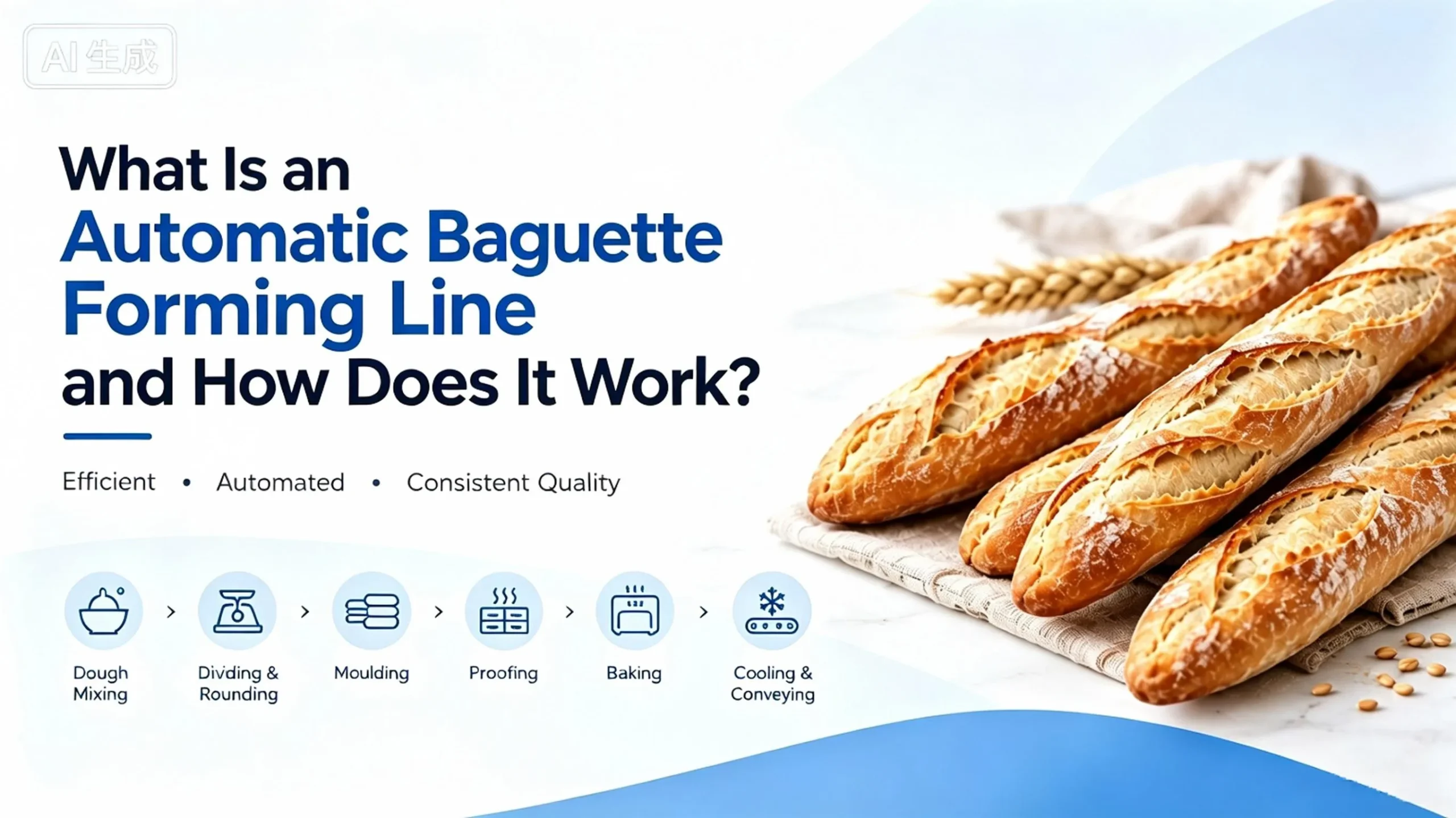
Baguette is one of the most recognizable bread products in the world, known for its long shape, crisp crust, and airy crumb. Although traditional baguettes are associated with artisan baking, modern bakeries increasingly require automated solutions to produce large quantities while maintaining consistent weight, shape, and quality.
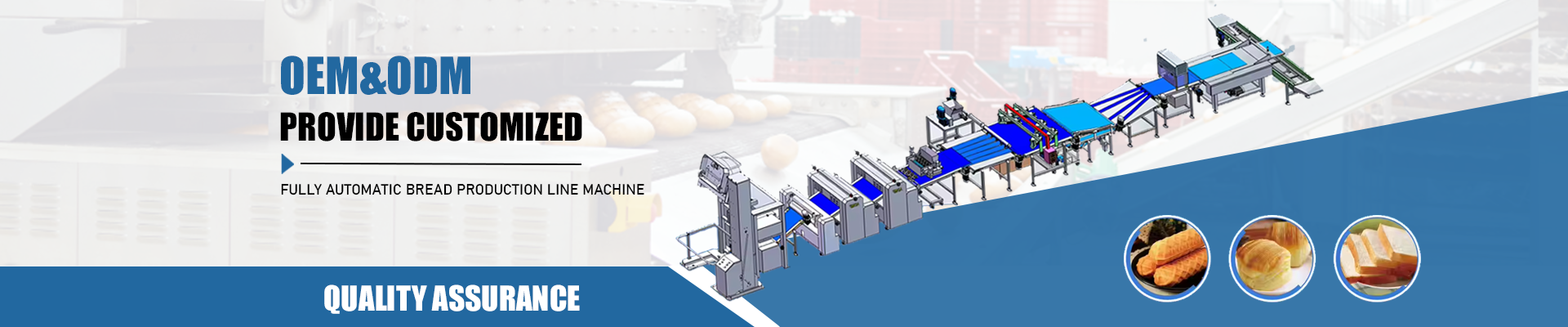
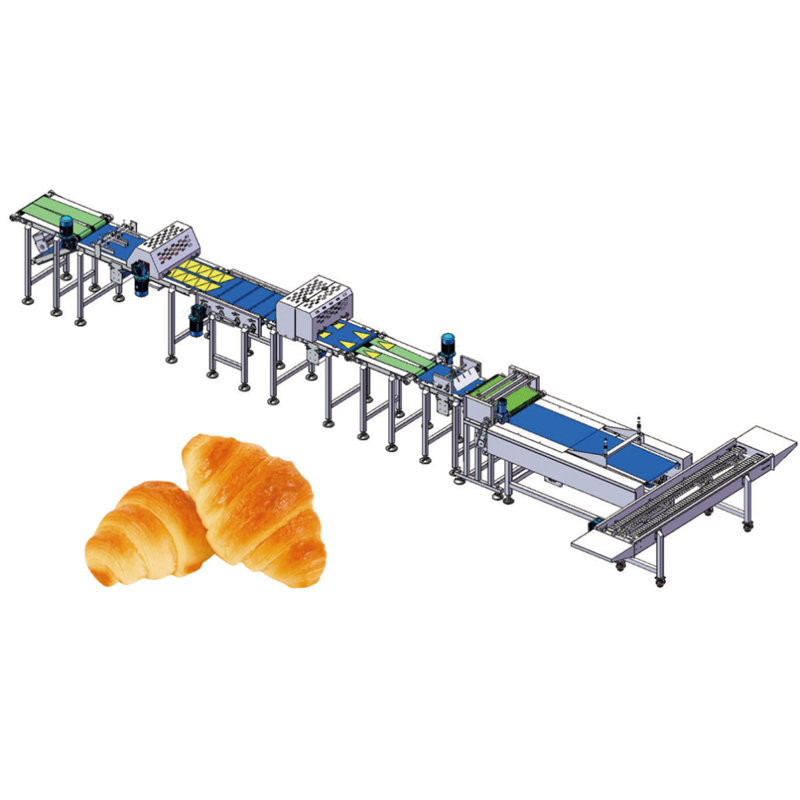
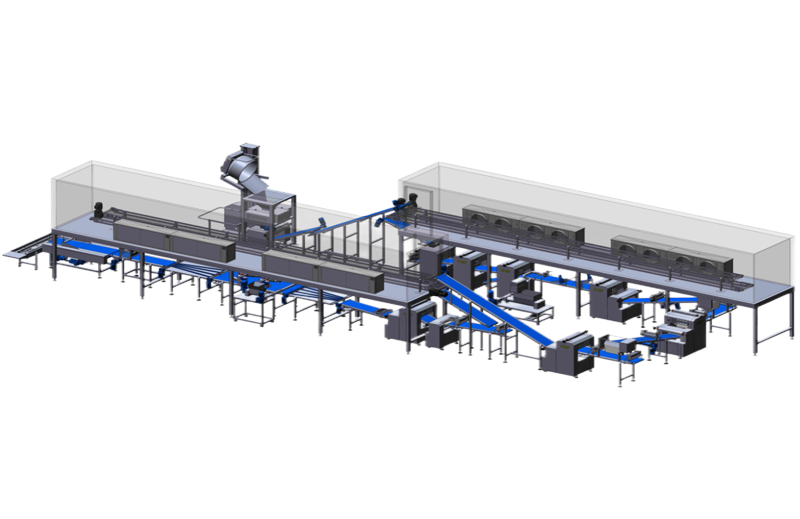
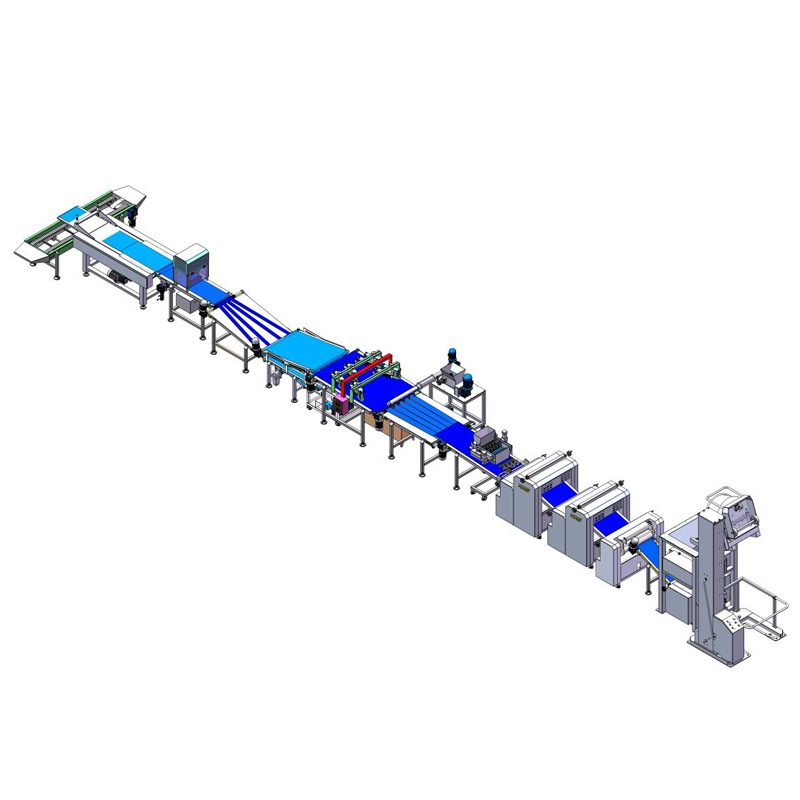
An Automatic Baguette Forming Line integrates multiple bakery processes into a continuous production system. Instead of manually dividing, rounding, moulding, and transferring dough, the line coordinates these operations through conveyors, forming equipment, control systems..
For commercial and industrial bakeries, automation provides a practical way to increase output while reducing repetitive labor and improving production consistency.
An Automatic Baguette Forming Line is a series of interconnected machines designed specifically for the continuous production of baguettes.
Depending on the required configuration, a complete line may include:
Dough Preparation → Dough Dividing → Dough Rounding → Dough Rolling → Dough Moulding
The configuration can be customized according to product dimensions, dough characteristics, production capacity, factory layout, and automation requirements.
In Andrew Mafu, How Does an Automatic Baguette Forming Line Work?
1. Dough Preparation
The production process begins with dough mixing. Flour, water, yeast, salt, and other ingredients are processed according to the bakery’s recipe.
Dough temperature and mixing conditions are important because they affect fermentation, dough strength, and the final bread structure.
For industrial production, consistent formulation and process control help ensure that downstream equipment receives dough with stable characteristics.
2. Automatic Dough Dividing
After mixing and fermentation, the dough is transferred to the dividing section.
The automatic dough divider separates the bulk dough into individual portions according to the required baguette weight.
Accurate dividing is important because variations in dough weight will directly affect:
(1)Baguette length
(2)Final product weight
(3)Baking performance
(4)Product appearance
Automation provides more repeatable portioning than manual weighing and cutting, particularly when production volumes are high.
3. Dough Rounding
After dough dividing, the dough pieces enter the Dough Rounding stage. The rounder gives each dough piece a uniform shape and surface tension, preparing it for the next forming process.
Automatic rounding helps improve:
(1)Consistent dough shape
(2)Stable production spacing
(3)Reduced manual handling
(4)Better forming consistency
4. Dough Rolling
After rounding and resting, the dough enters the Dough Rolling stage. The dough is gradually elongated to achieve the required baguette shape and dimensions.
The rolling system controls dough length, diameter, forming pressure, and conveying speed, helping produce baguettes with consistent size and shape before final proofing and baking.
5. Baguette Moulding
The moulding stage gives the dough its characteristic elongated baguette shape.
A baguette moulding machine gradually forms each dough piece to the required length and diameter.
This stage requires controlled mechanical movement to avoid unnecessary dough damage.
Depending on the product, moulding parameters can be adjusted according to:
(1)Dough piece weight
(2)Baguette length
(3)Dough characteristics
(4)Product diameter
(5)Production speed
Consistent moulding is essential for achieving uniform appearance and stable baking results.
Reference Technical Parameters
The following table provides reference specifications for an industrial automatic baguette Forming solution. Actual parameters should be confirmed according to the customer’s product samples, recipe, required output, and factory conditions.
| Tulaga tau | Reference Specification |
| Mea | Baguette / French Bread |
| Production Mode | Continuous Automatic |
| Dough Weight Range | Approx. 100–800 g |
| Baguette Length | Approx. 200–700 mm |
| Gaosiga gafatia | Approx. 1,500–6,000 pcs/hour |
| Dividing Accuracy | Approx. ±1–2% |
| Moulding | Automatic Dough Moulding |
| Pulea faiga | PLC + HMI |
| Drive System | Motor / Servo Control |
| Conveyor Belt | Food-Grade PU Belt |
| Machine Frame | SUS304 Stainless Steel where applicable |
| Proofing Control | Temperature & Humidity Adjustable |
| Baking System | Tunnel / Continuous Oven Configuration |
| Layout | Straight / Customized |
| Otometi tulaga | Automatic / Fully Automatic |
Advantages of Automatic Baguette Forming
1.Higher Production Efficiency
Continuous processing enables bakeries to produce significantly more baguettes than conventional manual production.
2.Consistent Product Quality
Automatic dividing and moulding help control product weight and dimensions throughout production.
3.Reduced Labor Requirements
Automation reduces repetitive operations such as manual dividing, shaping, and product transfer.
4.Improved Production Management
PLC and HMI control can centralize machine operation and provide a clearer production workflow.
5.Flexible Production
A customized system can support different baguette sizes and production capacities, depending on the equipment configuration.

Hygienic Design and Food Safety
Hygienic equipment design is an important part of modern bakery production. FDA guidance states that food-contact equipment should be designed and maintained so it can be adequately cleaned, while food-contact surfaces should be corrosion-resistant, non-toxic, and suitable for their intended use.
For industrial baguette production, manufacturers can therefore consider stainless-steel construction, food-grade conveyor belts, accessible components, and practical cleaning arrangements when selecting equipment.
Is an Automatic Baguette Forming Line Suitable for Your Bakery?
An automatic line is particularly suitable for:
1.Commercial bakeries
2.Industrial bread factories
3.Supermarket bakery suppliers
4.Central kitchens
5.Foodservice manufacturers
6.Large-scale baguette producers
For smaller artisan bakeries, standalone dividing and moulding equipment may be sufficient. For high-volume manufacturers, an integrated production line can provide greater efficiency and production control.
Faaiuga
An Automatic Baguette Forming Line converts traditionally labor-intensive baguette forming into a coordinated industrial process.
From dough dividing and rounding to moulding and conveying, every stage can be synchronized to improve production efficiency and product consistency.
The best forming line should not simply be selected according to maximum output. Bakery manufacturers should evaluate dough characteristics, baguette dimensions, production capacity, factory layout, automation level, hygienic requirements, and future expansion plans.
With the appropriate equipment configuration, Andrew Mafu Machinery can provide customized baguette production solutions for commercial and industrial bakery manufacturers seeking more efficient and reliable bread production.
FAQ
1. How does an automatic baguette line improve production?
Automation improves production consistency, reduces repetitive labor, and allows multiple processing stages to operate continuously as an integrated system.
2. What baguette sizes can be produced?
Product dimensions can be customized according to the required dough weight, baguette length, diameter, and downstream packaging requirements.
3. What capacity can an automatic baguette line achieve?
Production capacity depends on the machine configuration and product specifications. A reference industrial configuration may range from approximately 1,500 to 6,000 pieces per hour.
4. Can the production line be customized?
Yes. The line can be designed according to product specifications, factory layout, target capacity, automation level, and customer’s production process.
5. Can the baguette line be connected to packaging equipment?
Yes. Cooling and conveying sections can be designed to connect with inspection, counting, slicing, packaging, and other downstream equipment.
References
- U.S. Food & Drug Administration – FDA Food Code
https://www.fda.gov/food/fda-food-code - FDA – Guidelines for Equipment and Food-Contact Surfaces
https://www.fda.gov/food/guidance-documents-regulatory-information-topic-food - FAO / Codex Alimentarius – General Principles of Food Hygiene
https://www.fao.org/fao-who-codexalimentarius/publications/en/ - AIB International – Food Safety and Bakery Resources
https://www.aibinternational.com/ - Bakerpedia – Baking Science and Technology
https://bakerpedia.com/

E ala i le faafanua