Introduction: Improving Hygiene and Efficiency in Bakery Production
In modern bakery factories, baking trays, plastic crates, bread containers and other reusable equipment are used repeatedly throughout the production process. After handling dough, baked products, fillings and other food materials, these containers may accumulate oil, crumbs, flour, grease and other residues.
Manual cleaning can require considerable labor and time. It may also result in inconsistent cleaning quality, especially in factories handling large quantities of reusable trays and containers every day.
To help bakery manufacturers improve their cleaning processes, Andrew Mafu Machinery provides industrial bakery equipment solutions, including tray washing equipment for production environments.
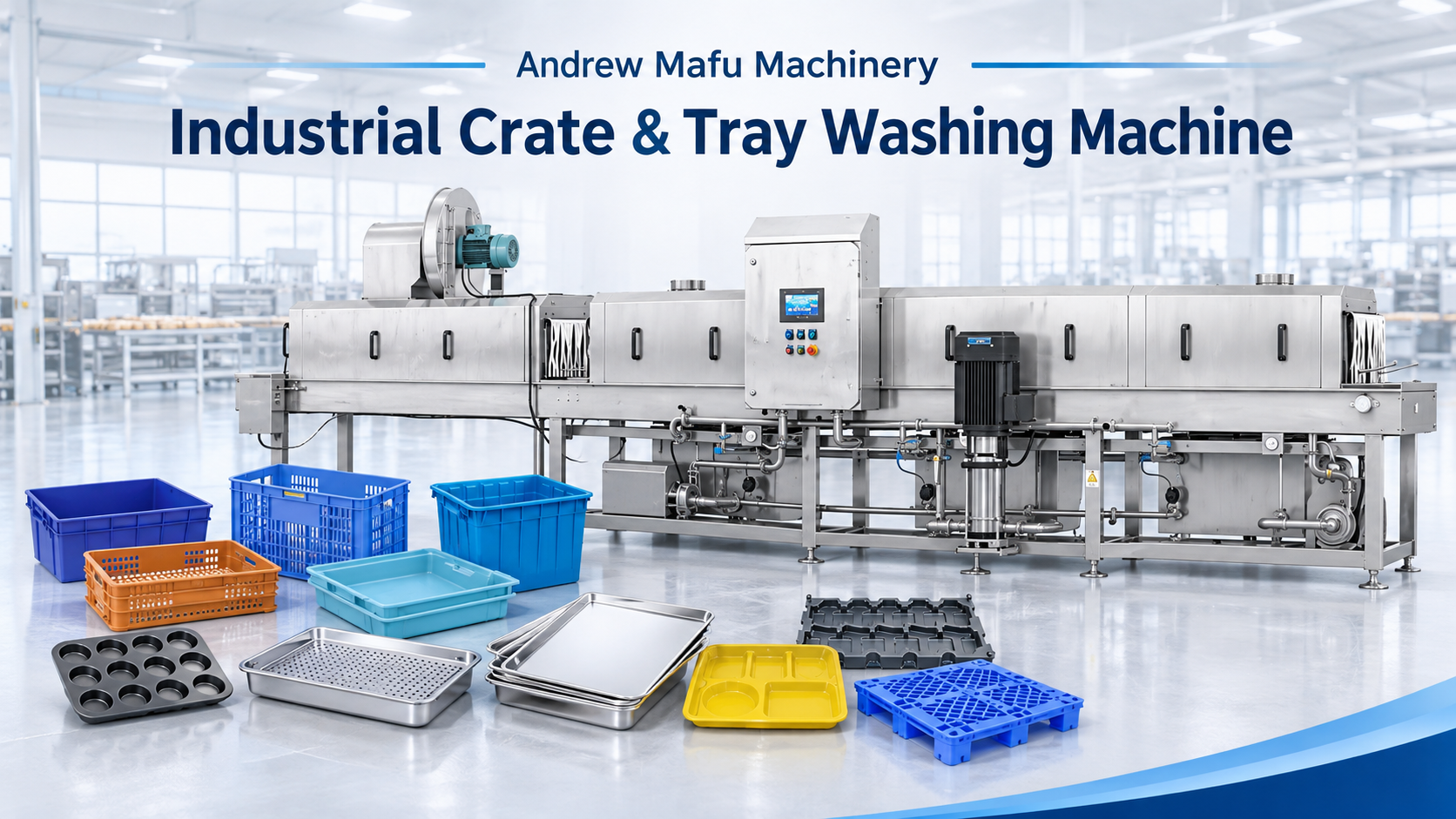
An Industrial Crate & Tray Washing Machine provides a more organized approach to cleaning reusable containers. By combining conveyor transportation, spray washing and circulating water systems, an automated washing solution can reduce repetitive manual work and support more consistent cleaning operations.
Whether used in a bread factory, commercial bakery or food processing facility, an appropriate washing system helps maintain the cleanliness of reusable production equipment and improves the overall workflow.
1. Why Do Bakeries Need an Industrial Washing Machine?
Baking trays and reusable containers move through different production stages. They may come into contact with dough, oil, crumbs, fillings and other food residues.
If cleaning is handled manually, several challenges may arise:
(1)High labor requirements: Workers need to repeatedly wash, rinse and handle large quantities of trays and containers.
(2)Inconsistent cleaning results: Manual washing may produce different results depending on the operator and cleaning method.
(3)Limited processing efficiency: Cleaning capacity may become a bottleneck when production volume increases.
(4)Water management challenges: Unorganized washing processes can result in inefficient water use.
(5)Production workflow interruptions: Insufficient clean trays and containers may affect the circulation of materials between production stages.
An industrial washing machine helps organize these operations through a continuous or batch-based cleaning process, depending on the selected equipment configuration.
2. How Does an Industrial Crate & Tray Washing Machine Work?
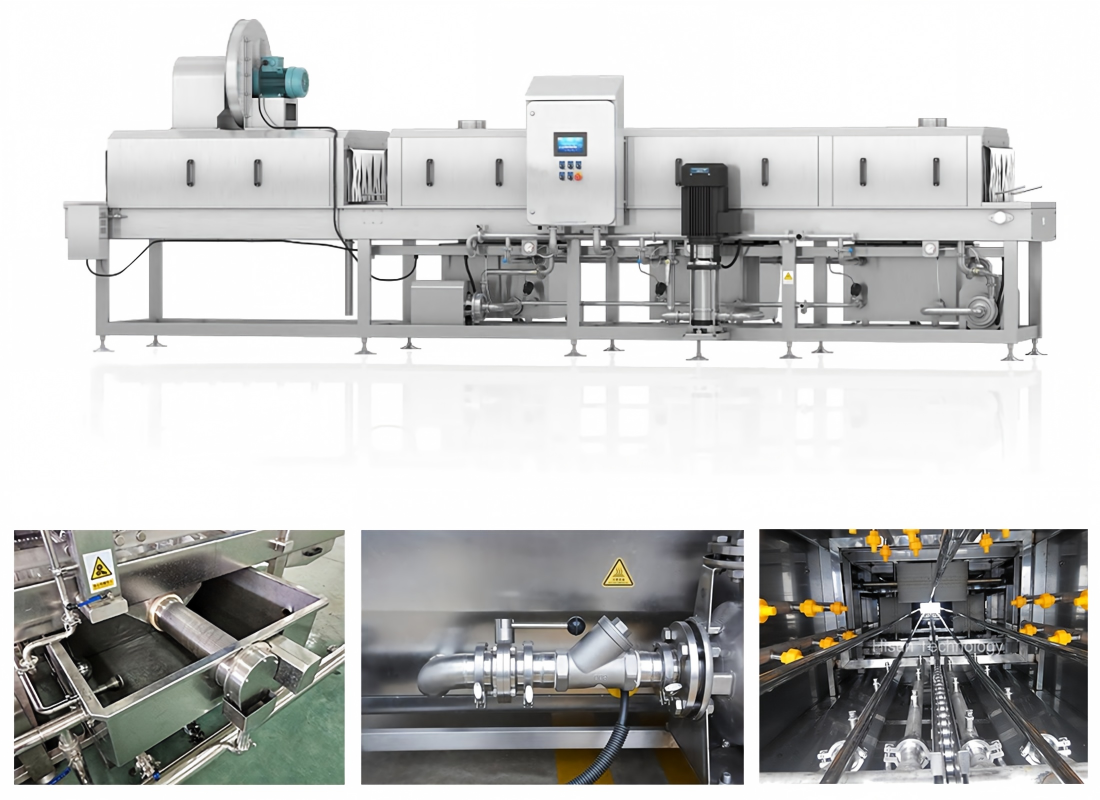
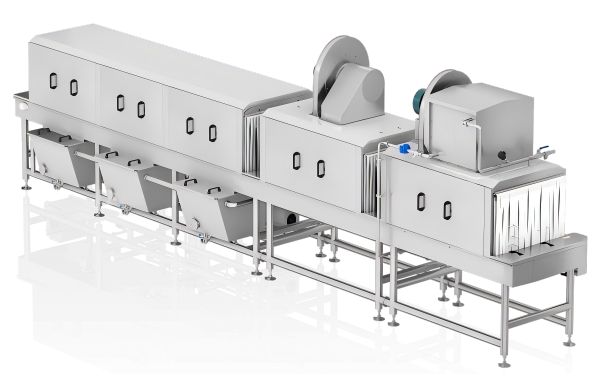
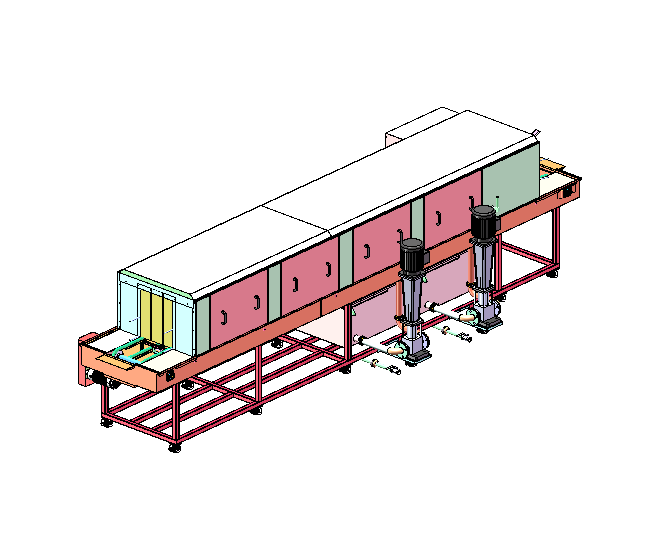
A tunnel-type industrial washing system generally uses a conveyor to transport containers through different cleaning sections. Spray nozzles distribute water across the surfaces of the containers while the conveyor moves them through the machine.
Depending on the selected configuration and cleaning requirements, the washing process may include the following stages.
Stage 1: Pre-Washing
The first stage removes loose crumbs, flour, food particles and other surface residues.
Spray water is directed toward the containers to loosen accumulated dirt and prepare them for the main washing process. Pre-washing helps reduce the amount of residue entering the following cleaning section.
Stage 2: Main Washing
The main washing section uses directed water sprays to remove more persistent dirt, oil and food residues.
The arrangement of spray nozzles is an important consideration. Proper nozzle positioning helps distribute water across different surfaces of the containers, including corners and internal areas.
For applications with heavier contamination, the washing configuration should be selected according to the type of residue, container material and required cleaning result.
Stage 3: Rinsing
After the main washing stage, containers can pass through a rinsing section to remove loosened dirt and remaining washing water.
A separate rinsing stage helps reduce residual contamination on the container surface. Water circulation and fresh-water replenishment can be configured according to the machine design and cleaning requirements.
Stage 4: Final Rinsing and Water Removal
A final rinse may use fresh water to remove remaining residues from the container surface.
After rinsing, an optional air-drying system can help remove surface water before the containers return to production use or storage.
The exact number of washing stages, water temperature, heating method and drying configuration should be determined according to the customer’s application.
3. Key Features to Consider When Selecting an Industrial Washer
Automated Conveyor Transportation
A conveyor-based washing system allows trays and containers to move through the cleaning sections in an organized sequence.
This reduces repeated manual handling and helps establish a more consistent workflow. Conveyor speed can be an important selection factor because it affects the time containers spend in each washing section.
Multi-Directional Spray Cleaning
The cleaning performance of an industrial washer depends on factors such as water pressure, spray volume, nozzle position and washing time.
A well-designed spray arrangement helps water reach different areas of the containers. Adjustable spray angles and nozzle positioning may also be considered for applications involving different container shapes.
Independent Water Tank Configuration
Industrial washing systems may use separate water tanks for different cleaning stages.
A multi-tank arrangement can support water circulation and separation between washing and rinsing operations. Water replenishment and drainage should be planned according to the production volume and cleaning requirements.
Heating System Options
Depending on the application, industrial washing machines may use electric heating or steam heating.
The appropriate heating method depends on the factory’s available utilities, required water temperature and operating conditions. Heating capacity and energy consumption should be evaluated before selecting the final configuration.
Optional Air-Drying System
After washing and rinsing, residual water may remain on the surfaces of trays and containers.
An optional air knife or air-drying section can help remove surface moisture and shorten the time required before containers are reused. The drying result depends on container shape, conveyor speed and the selected air system.
Stainless Steel Construction
Industrial washing machines operate in wet environments and require materials suitable for regular cleaning.
Stainless steel construction is commonly considered for machine frames, water tanks, piping and other components exposed to water. Food-contact and hygiene-related design details should be confirmed according to the specific machine configuration and applicable requirements.
4. Applications in Bakery and Food Processing Industries
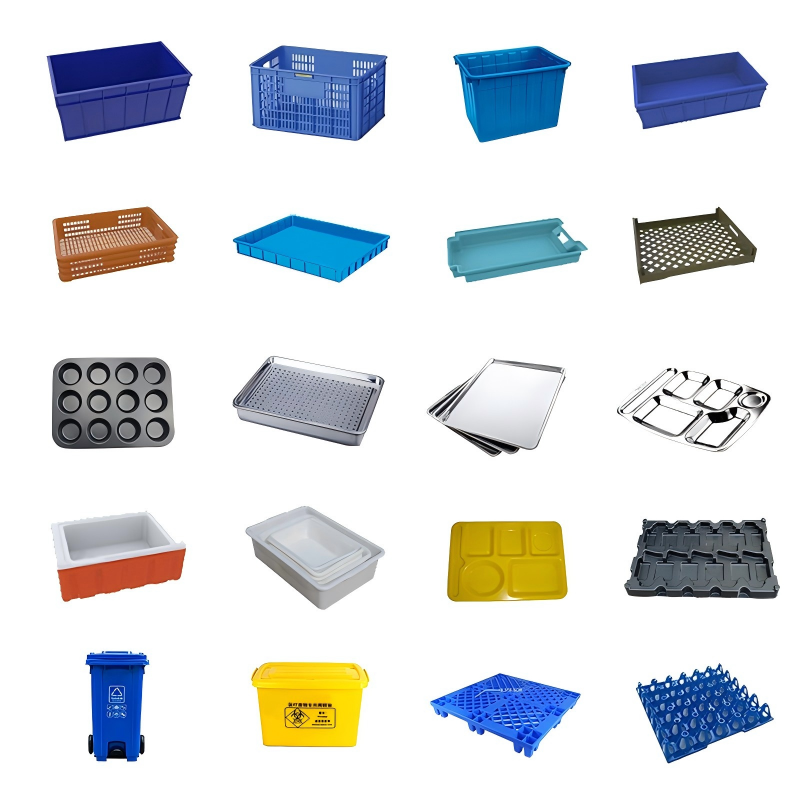
Industrial washing equipment can be used to clean different types of reusable containers and production accessories.
Potential applications include:
Application
Typical Items
Bakery production
Baking trays, bread crates and reusable containers
Bread manufacturing
Bread trays, dough containers and product turnover boxes
Food processing
Food-grade crates and processing containers
Confectionery production
Moulds, trays and reusable product containers
Central kitchens
Food containers and transportation boxes
Industrial food handling
Plastic crates and other compatible reusable equipment
The actual range of suitable items depends on their dimensions, material, weight, shape and resistance to the selected cleaning conditions.
Before selecting a washing machine, customers should provide sample containers or detailed dimensions for compatibility assessment.
5. How to Choose the Right Bakery Tray Washing Machine
Different bakeries have different cleaning requirements. Selecting the right equipment requires more than simply comparing machine dimensions or conveyor speeds.
The following factors should be considered.
1. Container dimensions
Confirm the length, width and height of the trays or crates. The conveyor width and machine opening must accommodate the largest items to be cleaned.
2. Daily cleaning volume
Estimate the number of trays or containers that need to be cleaned per hour or per day. This helps determine the required conveyor speed and washing capacity.
3. Type of contamination
Flour, dough residues, oil and baked-on food particles may require different cleaning conditions. The washing process should be evaluated according to the actual contamination.
4. Heating requirements
Confirm whether the application requires heated washing water and whether electric or steam heating is more suitable for the factory.
5. Drying requirements
Determine whether surface water removal is sufficient or whether a more complete drying process is required before storage or reuse.
6. Factory utilities and layout
Check the available electrical supply, water pressure, drainage, heating utilities and installation space.
7. Cleaning and maintenance access
The machine should allow practical access to water tanks, filters, spray nozzles, pumps and other components that require regular inspection and cleaning.
6. ADMF Industrial Washing Solutions for Bakery Manufacturers
Andrew Mafu Machinery focuses on bakery production equipment and customized machinery solutions for industrial food manufacturers.
In bakery factories, cleaning equipment is an important part of the overall production workflow. A suitable tray or crate washing solution can help connect the cleaning process with the circulation of baking trays, bread containers and other reusable production accessories.
When evaluating a washing machine for a bakery project, ADMF can review the customer’s container dimensions, daily cleaning volume, contamination type, factory utilities and installation layout.
Based on these requirements, the washing system configuration can be assessed to determine suitable conveyor dimensions, washing sections, water management arrangements and optional drying functions.
The objective is to provide equipment that matches the customer’s actual production process rather than applying the same configuration to every factory.
7. Technical Information to Confirm Before Ordering
Because industrial washing machines can be configured for different applications, the following information should be confirmed before finalizing a project:
Technical Item
Information Required
Machine type
Tunnel washer or other washing configuration
Container type
Baking trays, plastic crates, bread boxes or other items
Maximum container size
Length × width × height
Required capacity
Pieces per hour or pieces per day
Washing stages
Pre-washing, main washing, rinsing and final rinsing as required
Heating method
Electric heating, steam heating or other configuration
Drying system
Air knife, air drying or other option
Water supply
Available water pressure and flow
Electrical supply
Factory voltage and frequency
Installation space
Available factory length, width and height
These details help the engineering team evaluate the appropriate equipment arrangement and avoid compatibility issues during installation.
Frequently Asked Questions
1. What can an industrial crate washing machine clean?
Depending on its design, an industrial washer can be used for compatible plastic crates, bread containers, baking trays and other reusable food-processing accessories. Container dimensions and materials should be checked before confirming compatibility.
2. Can the washing machine clean baking trays?
Yes, industrial tray washing equipment can be configured for suitable baking trays. The tray dimensions, material, contamination and required cleaning result should be confirmed first.
3. How many cleaning stages are required?
The number of stages depends on the cleaning application. A multi-stage process may include pre-washing, main washing, rinsing and final rinsing. The final configuration should be based on the actual cleaning requirements.
4. Can the washing machine use hot water?
Heating options may include electric or steam heating, depending on the machine configuration and factory utilities. The required water temperature should be confirmed during technical evaluation.
5. Is an air-drying system necessary?
Not every application requires a drying system. An air knife or air-drying section can help remove surface water and reduce the time needed before containers are reused. The choice depends on the customer’s workflow.
6. Can the machine be customized for different crate sizes?
The machine configuration can be evaluated according to the dimensions and types of containers. Customers should provide drawings, photographs or physical samples to confirm compatibility.
7. What information is needed for a washing machine inquiry?
The most useful information includes container dimensions, daily cleaning quantity, contamination type, required cleaning process, heating preference and available factory utilities.
Conclusion
An industrial crate and tray washing machine plays an important role in maintaining the circulation and cleanliness of reusable containers in bakery and food production facilities.
By combining conveyor transportation, multi-stage spray cleaning, water management and optional drying functions, an automated washing system can help reduce manual handling and improve cleaning workflow efficiency.
Andrew Mafu Machinery provides bakery machinery solutions and can evaluate washing equipment requirements according to container specifications, production capacity and factory conditions.
Contact Andrew Mafu Machinery to discuss your baking tray and crate washing requirements and explore a suitable industrial cleaning solution for your production facility.
Food Safety Magazine – Articles and industry insights on food processing and hygiene.
Note: This article introduces industrial washing equipment and general selection considerations. Specific ADMF machine parameters, cleaning capacity, protection rating, water consumption, heating performance and drying results should be confirmed against the final machine specification.