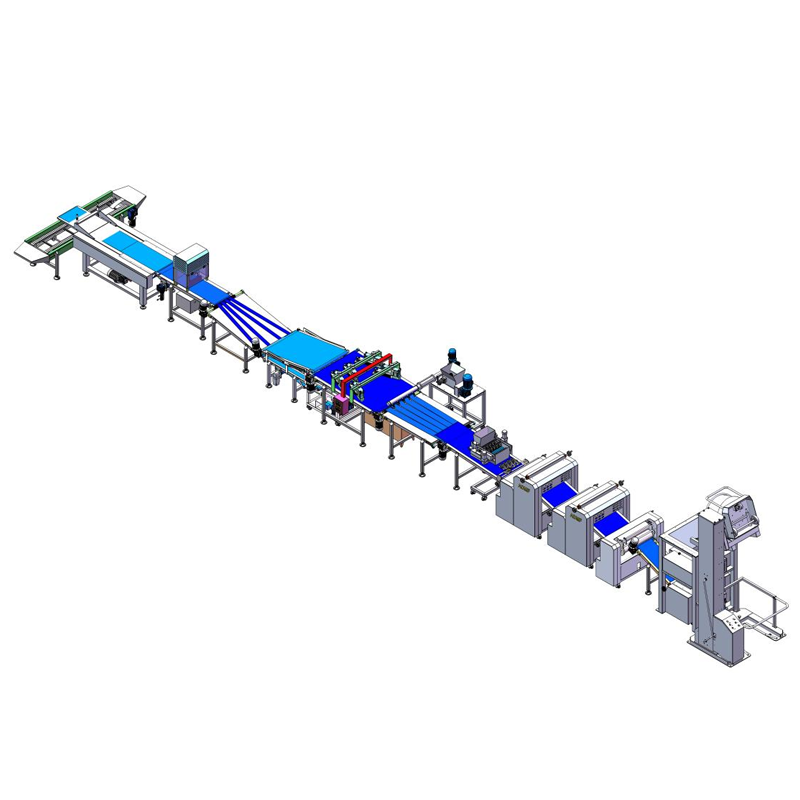
10 Factors to Consider Before Buying a Bread Production Line: A Complete Guide for bakery product manufacturers
2026-07-10
As global demand for industrial bread products continues to rise, investing in a reliable and efficient bread production line has become a strategic priority for commercial bakeries, food manufacturers, and central kitchens. From sandwich bread and toast to artisan loaves and hamburger buns, consumers expect consistent quality, fresh taste, and competitive pricing. Meeting these expectations requires more than skilled bakers—it demands intelligent automation.
However, selecting the right bread production line is not simply a matter of choosing the fastest or least expensive machine. Production capacity, dough characteristics, automation level, factory layout, energy consumption, maintenance requirements, and future scalability all influence long-term profitability.
This guide explores the ten most important factors every bakery should evaluate before purchasing an industrial bread production line.
1. Clearly Define Your Production Capacity
Before contacting equipment suppliers, bakery product manufacturers should determine their current and future production requirements.
Production capacity should be based on:
(1) Daily market demand
(2) Number of production shifts
(3) Product mix
(4) Future expansion plans
Typical industrial capacities include:
Bakery Type
Recommended Capacity
Small Bakery
500–2,000 loaves/hour
Medium Bakery
2,000–6,000 loaves/hour
Large Industrial Bakery
6,000–20,000+ loaves/hour
Purchasing equipment with slightly higher capacity than current demand allows room for business growth without requiring major upgrades.
2. Understand the Types of Bread You Plan to Produce
Not all bread production lines are designed for the same products.
When comparing suppliers, technical specifications should always be evaluated together with actual production performance rather than price alone.
6. Prioritize Food Safety and Hygienic Design
Food safety regulations continue to become more stringent worldwide.
Industrial bread production equipment should feature:
(1) SUS304 stainless steel construction
(2) Food-grade conveyor belts
(3) Open-frame hygienic design
(4) Tool-free cleaning
(5) Smooth welded surfaces
(6) Easy maintenance access
These features reduce contamination risks while shortening cleaning time.
7. Consider Energy Efficiency
Energy costs represent a significant portion of bakery operating expenses.
Modern production lines reduce energy consumption through:
(1) Variable frequency drives (VFD)
(2) High-efficiency servo motors
(3) Heat recovery systems
(4) Intelligent standby functions
(5) Optimized oven insulation
(6) Smart power management
Energy-efficient equipment not only lowers operating costs but also supports corporate sustainability initiatives.
8. Plan for Future Expansion
Many bakeries experience rapid growth after automation.
Selecting modular equipment allows future upgrades without replacing the entire production line.
Expansion options may include:
(1) Additional moulding stations
(2) Automatic tray loading
(3) Automatic depanning
(4) Cooling systems
(5) Packaging integration
(6) Vision inspection systems
Investing in scalable equipment reduces long-term capital expenditure.
9. Evaluate After-Sales Service and Technical Support
Reliable after-sales support is just as important as machine performance.
Manufacturers should provide:
(1) Installation and commissioning
(2) Operator training
(3) Preventive maintenance
(4) Spare parts inventory
(5) Online troubleshooting
(6) Software upgrades
(7) Remote diagnostics
Fast technical support minimizes production downtime and protects long-term productivity.
10. Calculate Total Cost of Ownership (TCO)
The purchase price represents only a portion of the total investment.
A comprehensive evaluation should include:
(1) Equipment cost
(2) Installation expenses
(3) Labor savings
(4) Energy consumption
(5) Maintenance costs
(6) Spare parts
(7) Equipment lifespan
(8) Productivity improvements
(9) Return on investment
Many high-quality automated production lines achieve payback within 18–30 months due to labor savings and increased production efficiency.
Why More Bakeries Are Investing in Automation
Industrial bakery product manufacturers worldwide are facing increasing labor shortages, rising wages, and higher quality expectations.
Automation offers significant advantages:
(1) Up to 70% labor reduction
(2) Improved product consistency
(3) Reduced waste
(4) Better traceability
(5) Enhanced food safety
(6) Faster product changeovers
(7) Higher production capacity
Conclusion
Purchasing a bread production line is a long-term strategic investment that should be based on production requirements, technical capabilities, operational efficiency, and future business growth rather than initial purchase price alone.
By carefully evaluating production capacity, product flexibility, automation level, hygienic design, technical specifications, energy efficiency, scalability, and after-sales support, bakery owners can select equipment that delivers superior product quality and sustainable profitability.
As bakery manufacturing continues to evolve toward intelligent automation, choosing the right production line today will position businesses for long-term success in an increasingly competitive global market.
FAQ
1. What production capacity should I choose?
The ideal capacity depends on current demand and future expansion plans. Most medium-sized industrial bakeries select systems capable of producing 2,000–6,000 loaves per hour.
2. Why is servo control important?
Servo systems improve positioning accuracy, reduce product variation, enable quick recipe changes, and enhance production efficiency.
3. How long does it take to recover the investment?
Most automated bread production lines achieve ROI within 18–30 months, depending on production volume and labor savings.
4. Is a modular production line a better investment?
Yes. Modular systems make it easier to increase production capacity, add new functions, and adapt to future market demands without replacing the entire line.