How to Choose the Best Dough Sheeter Machine for Industrial Bakeries

News

How to Choose the Best Dough Sheeter Machine for Industrial Bakeries

2026-07-14

The global bakery industry is experiencing rapid growth as consumer demand for premium baked goods, frozen pastries, artisan croissants, and ready-to-bake products continues to increase. Products such as croissants, Danish pastries, puff pastries, pie crusts, pizza bases, and laminated dough require precise dough sheeting to achieve consistent thickness, uniform layers, and superior texture.

For commercial bakeries and food manufacturers, investing in an industrial pastry dough sheeter machine is one of the most important decisions when upgrading production capacity. A modern dough sheeter not only improves efficiency but also enhances product quality, reduces labor costs, minimizes dough waste, and ensures repeatable production.

This comprehensive guide explains everything bakery product manufacturers need to know before purchasing an industrial pastry sheeter machine.

What Is an Industrial Pastry Dough Sheeter Machine?

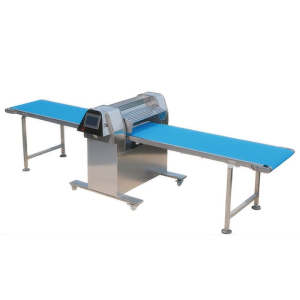
An industrial pastry dough sheeter machine is designed to roll dough into a uniform sheet with precise thickness while minimizing stress on the dough structure.

Unlike manual rolling, automated sheeting ensures consistent thickness throughout the production process, which is essential for laminated dough products requiring hundreds of butter layers.

Typical applications include:

(1) Croissants

(2) Danish pastries

(3)  Puff pastry

(4) Pie crusts

(5) Pizza dough

(6) Frozen dough

(7) Cookie dough

1. Understand Your Product Requirements

Different bakery products require different dough processing characteristics.

For example:

Product Recommended Processing
Croissants Laminating + Multi-stage Sheeting
Danish Pastries Gentle Reduction Rollers
Puff Pastry Precision Thickness Control
Pizza Dough Wide Belt Sheeting
Pie Dough Low Compression Rolling
Frozen Dough Servo Controlled Feeding

Before purchasing equipment, identify:

(1) Dough hydration

(2) Dough temperature

(3) Butter content

(4) Finished product thickness

(5) Production speed

(6) Product dimensions

Choosing equipment specifically designed for your product significantly improves production quality.

2. Determine Your Required Production Capacity

Capacity is one of the most important purchasing considerations.

Typical industrial production capacities include:

Production Scale Capacity
Small Bakery 100–300 kg/hour
Medium Bakery 300–800 kg/hour
Industrial Bakery 800–2,000 kg/hour
Large Food Factory 2,000–4,000 kg/hour

Future production growth should also be considered.

Many manufacturers purchase equipment with 20–30% reserve capacity for expansion.

3. Choose the Appropriate Automation Level

Today’s pastry sheeters range from standalone manual machines to fully automated production lines.

Modern automatic systems often include:

(1) Siemens PLC

(2) Servo motor control

(3) Touchscreen HMI

(4) Automatic recipe storage

(5) Production monitoring

Automation improves consistency while reducing labor requirements.

4. Evaluate Dough Handling Technology

Laminated dough is highly sensitive to mechanical stress.

High-quality pastry sheeters use:

(1) Servo-controlled reduction rollers

(2) Low-pressure sheeting

(3) Multi-stage reduction

(4) Intelligent tension control

(5) Precision conveyor synchronization

These technologies preserve dough integrity throughout processing.

5. Hygienic Design and Food Safety

Food safety has become one of the most important purchasing criteria.

Industrial pastry equipment should include:

(1) SUS304 stainless steel frame

(2) Food-grade conveyor belts

(3) Smooth welded surfaces

(4) Rounded corners

(5) Open-frame construction

(6) Easy cleaning access

A hygienic design reduces contamination risks while shortening cleaning time.

6. Energy Efficiency

Modern pastry sheeters improve efficiency through:

(1) Servo motors

(2) Variable Frequency Drives (VFD)

(3) High-efficiency transmission systems

(4) Low-friction conveyor belts

Energy-efficient equipment reduces operating costs over the machine’s lifetime.

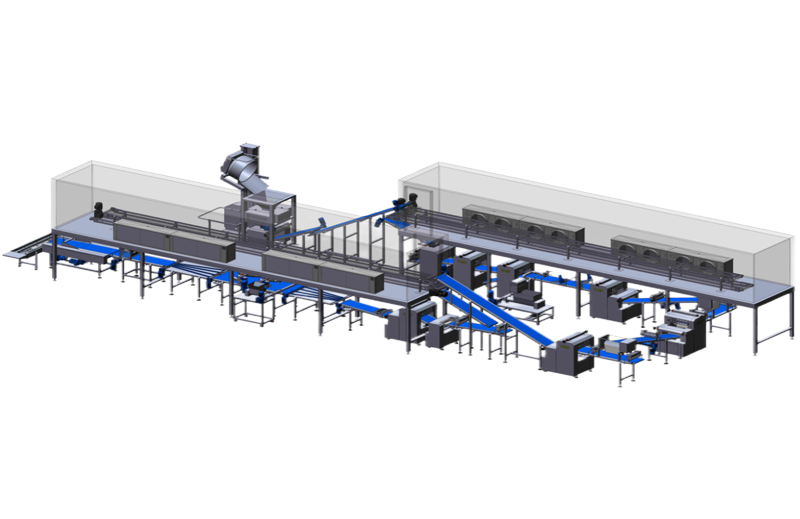
7. Integration with Complete Production Lines

Most industrial bakeries require more than a standalone sheeter.

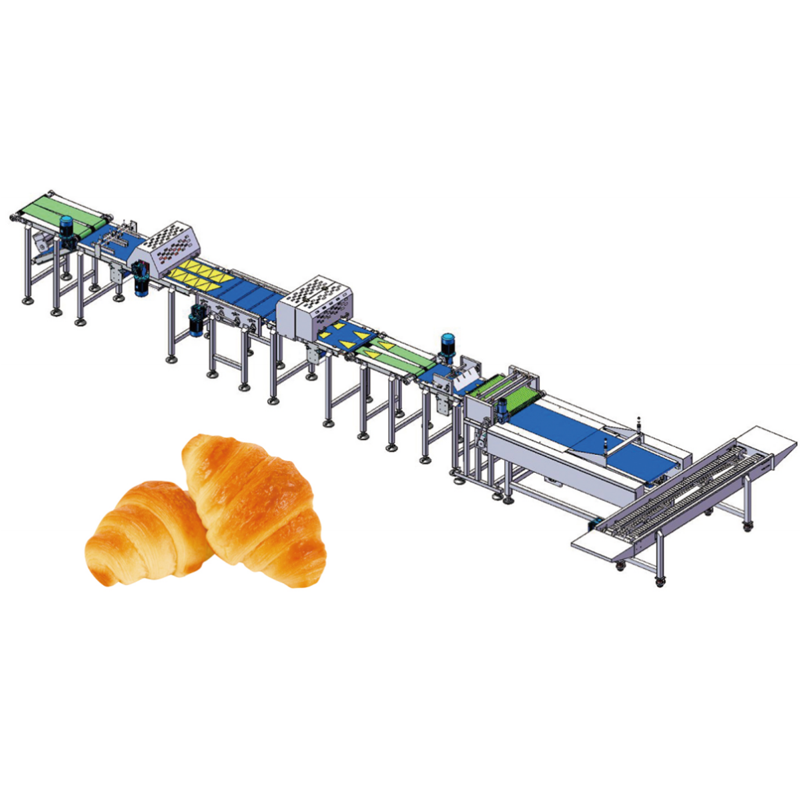
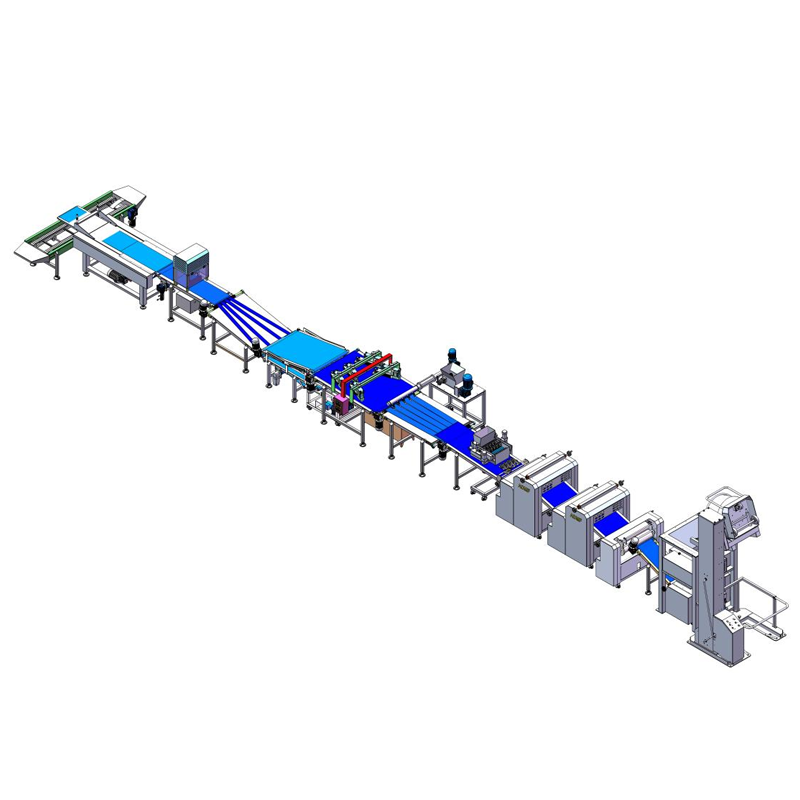
A complete pastry production solution may include:

(1) Dough feeder

(2) Laminator

(3) Pastry sheeter

(4) Cutting machine

(5) Filling machine

(6) Proofing system

(7) Freezing tunnel

(8) Packaging machine

Integrated production lines improve productivity while reducing manual handling.

8. After-Sales Service

Reliable after-sales support minimizes production downtime.

A professional supplier should provide:

(1) Installation

(2) Commissioning

(3) Operator training

(4) Spare parts

(5) Preventive maintenance

(6) Remote troubleshooting

Long-term technical support is essential for maximizing equipment life.

9. Calculate Return on Investment

Although automatic pastry sheeters require higher initial investment, they generate long-term savings through:

(1) Lower labor costs

(2) Higher production efficiency

(3) Better product consistency

(4) Reduced material waste

(5) Faster product changeovers

Conclusion:

Get the Perfect Dough Sheeter Solution with Andrew Mafu Machinery

Pastry Sheeter

A high-quality pastry sheeter integrated into a modern production line can significantly improve manufacturing efficiency, reduce operating costs, and provide the flexibility needed to meet changing market demands. As consumer expectations continue to evolve, investing in advanced pastry sheeting technology will help bakeries remain competitive in both domestic and international markets.

FAQ

1. What products can an industrial pastry sheeter machine produce?

Industrial pastry sheeters are suitable for croissants, Danish pastries, puff pastry, pie crusts, pizza dough, cookie dough, flatbread, laminated dough, and frozen bakery products.

2. Should I choose a standalone sheeter or a complete production line?

For high-volume production, a complete automated pastry production line offers better efficiency, reduced labor costs, and more consistent product quality.

3. How important is servo control?

Servo-controlled systems deliver precise roller adjustment, consistent dough thickness, smoother product changeovers, and lower mechanical wear compared with conventional drive systems.

4. What material should the machine be made from?

Food-contact components should be manufactured from SUS304 stainless steel with food-grade conveyor belts to ensure hygiene, corrosion resistance, and compliance with food safety standards.

References

  1. Bakerpedia – Bakery Knowledge & Technology
    https://bakerpedia.com/
  2. AIB International – Baking Education & Food Safety
    https://www.aibinternational.com/
  3. Baking Business – Industrial Bakery News
    https://www.bakingbusiness.com/
  4. PMMI – The Association for Packaging and Processing Technologies
    https://www.pmmi.org/
  5. European Hygienic Engineering & Design Group (EHEDG)
    https://www.ehedg.org/

Feature Product

Send Your Inquiry Today

    Name

    * Email

    Phone

    Company

    * What I have to say