Automatic Croissant Production Line for Large Scale Bakeries: Increasing Capacity While Preserving Artisan Quality
2026-07-04
The global demand for premium croissants continues to grow rapidly due to the expansion of café chains, supermarket bakery sections, convenience stores, and frozen bakery products. Traditional handmade production methods are no longer sufficient for bakeries aiming to supply thousands or even tens of thousands of croissants every day.
Modern industrial bakeries require production solutions capable of maintaining authentic French-style layers while achieving high output and consistent product quality. This is where fully automatic croissant production lines become essential.
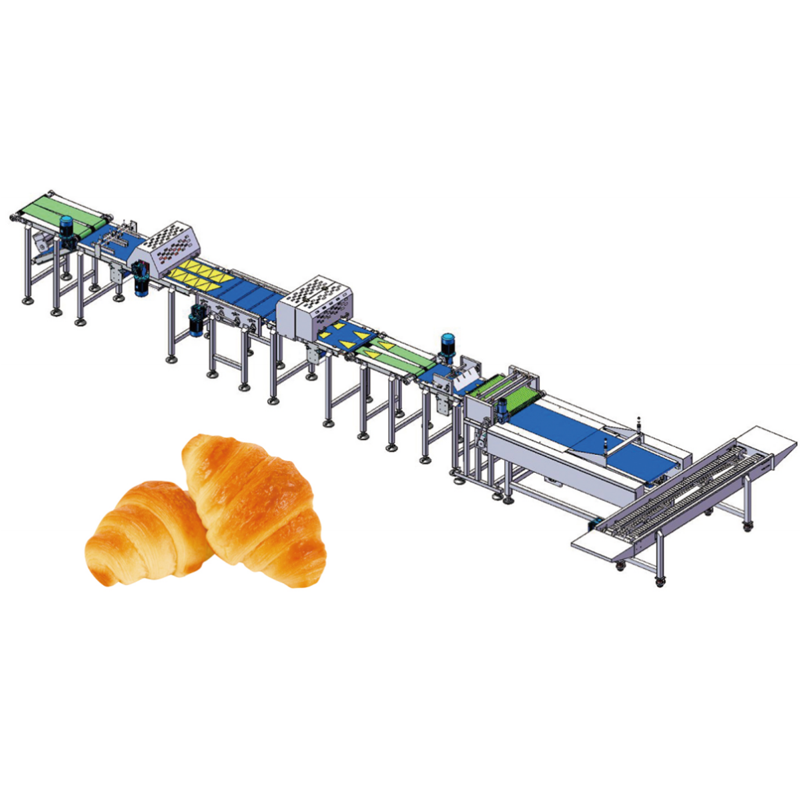
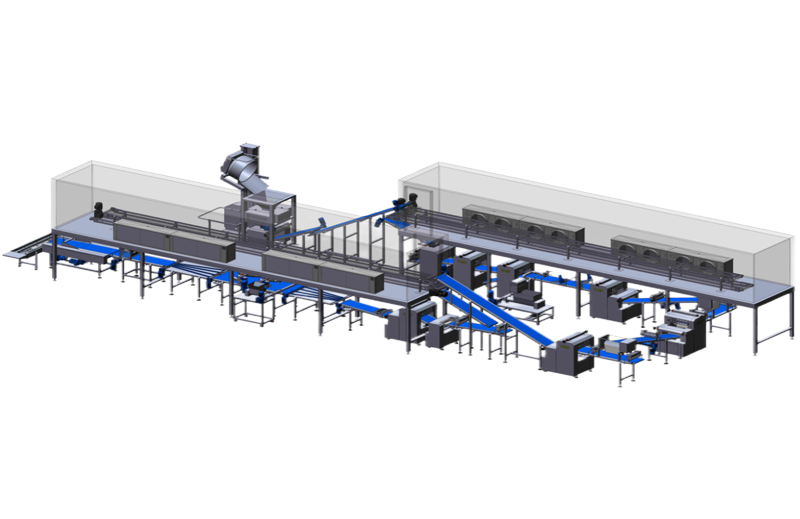
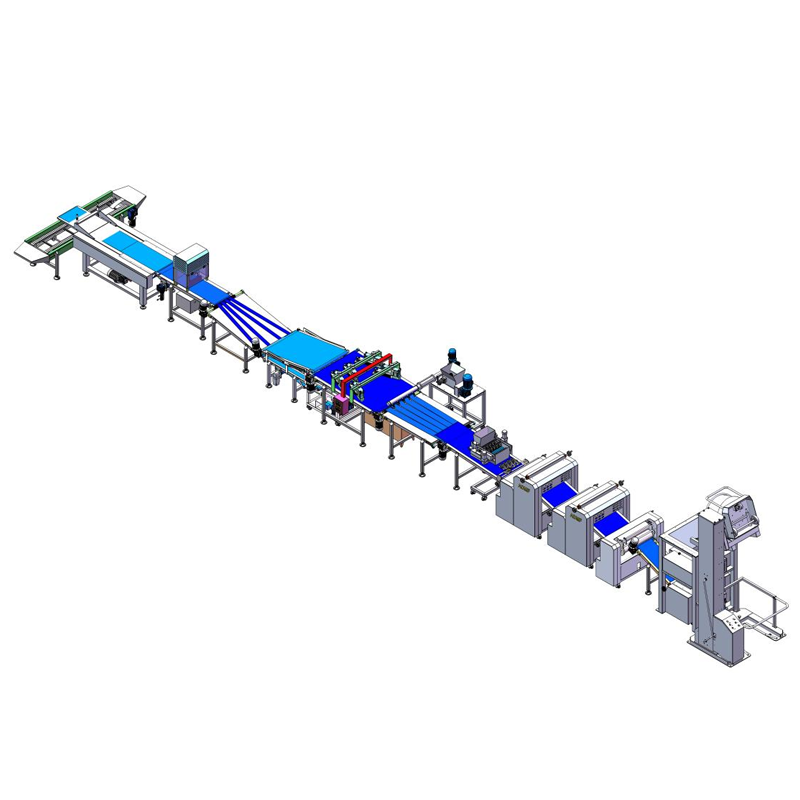
A modern croissant line integrates dough processing, laminating, sheeting, cutting, filling, rolling, proofing, baking, cooling, and packaging into one continuous automated process.
By replacing labor-intensive manual operations with intelligent automation, bakeries can significantly improve productivity while ensuring product consistency across every batch.
Why Industrial Bakeries Are Moving Toward Automation
Croissant production is traditionally one of the most labor-intensive processes in the bakery industry. Manual laminating and shaping require experienced operators and are highly dependent on workforce availability.
Common challenges include:
Rising labor costs
Product inconsistency
Difficulty scaling production
Variations in dough handling
High waste rates
Limited production capacity
Automation solves these issues by standardizing every production stage.
Typical benefits include:
Labor reduction of 50% to 70%
Increased production capacity
Improved weight accuracy
Consistent layer structure
Reduced product waste
Easier production planning
Many industrial bakeries achieve investment payback within 18 to 24 months after implementing a fully automated croissant production line.
Selecting the correct production capacity is critical for maximizing return on investment.
Small industrial bakeries typically require:
2,000 to 4,000 pieces per hour
Medium-sized factories often choose:
5,000 to 8,000 pieces per hour
Large central kitchens and frozen bakery manufacturers generally operate:
10,000 to 20,000 pieces per hour
Capacity planning should consider:
Market demand
Future expansion
Product diversity
Available factory space
Utility consumption
Fresh Croissants VS Frozen Croissants
The rapid growth of frozen bakery products has transformed croissant manufacturing worldwide.
Frozen croissants offer:
Extended shelf life
Reduced logistics complexity
Lower labor dependency at retail locations
Consistent baking quality
As a result, many manufacturers invest in production lines capable of producing both fresh and frozen products.
Modern systems can switch recipes automatically and support multiple product formats without lengthy changeover times.
Maintaining Artisan Quality in Automated Production
One of the biggest concerns among bakery owners is whether automation compromises product quality.
In reality, modern servo-controlled equipment often produces more consistent results than manual production.
Critical quality factors include:
Butter temperature control
Dough resting time
Lamination pressure
Sheeting speed
Proofing humidity
Baking profile
Advanced production lines continuously monitor these parameters using sensors and intelligent control systems.
This ensures that every croissant maintains:
Uniform shape
Consistent volume
Stable weight
Distinct flaky layers
Premium eating quality
Sustainability and Energy Efficiency
Energy efficiency has become a major purchasing factor for industrial bakeries.
Modern croissant production lines feature:
Variable frequency drives
Energy recovery systems
Servo motors
Intelligent standby modes
Automated cleaning functions
These technologies can reduce energy consumption by 15% to 25% compared with older equipment generations.
Future Trends in Croissant Manufacturing
Several trends are shaping the future of croissant production:
AI-assisted production scheduling
Predictive maintenance systems
MES integration
Industrial IoT monitoring
Remote diagnostics
Digital twin simulation
These technologies help manufacturers improve equipment utilization while minimizing downtime.
The bakery industry is moving rapidly toward fully connected smart factories where production data can be monitored in real time.
Conclusion
A fully automatic croissant production line allows industrial bakeries to scale production without sacrificing product quality.
By integrating intelligent dough handling, precision laminating, automated forming, and high-speed tray loading, manufacturers can meet increasing market demand while reducing labor dependency and operating costs.
As consumer demand for premium bakery products continues to grow, investment in automation is becoming a strategic necessity rather than an optional upgrade.
Industrial bakeries that adopt modern croissant production technologies today will be better positioned to compete in the global bakery market tomorrow.
FAQ
What production capacity should a bakery choose?
The ideal capacity depends on market demand, product portfolio, and future expansion plans. Most industrial bakeries select systems ranging from 3,000 to 12,000 croissants per hour.
Can the production line manufacture filled croissants?
Yes. Servo depositing systems can accurately fill products with chocolate, cream, jam, cheese, or custard before rolling.
Is the line suitable for frozen croissant production?
Absolutely. Most modern croissant lines support both fresh and frozen product applications.
What is the average return on investment?
Many industrial bakeries achieve ROI within 18 to 24 months through labor savings and increased productivity.
Can product sizes be changed quickly?
Yes. Recipe management systems and servo adjustments allow fast product changeovers with minimal downtime.