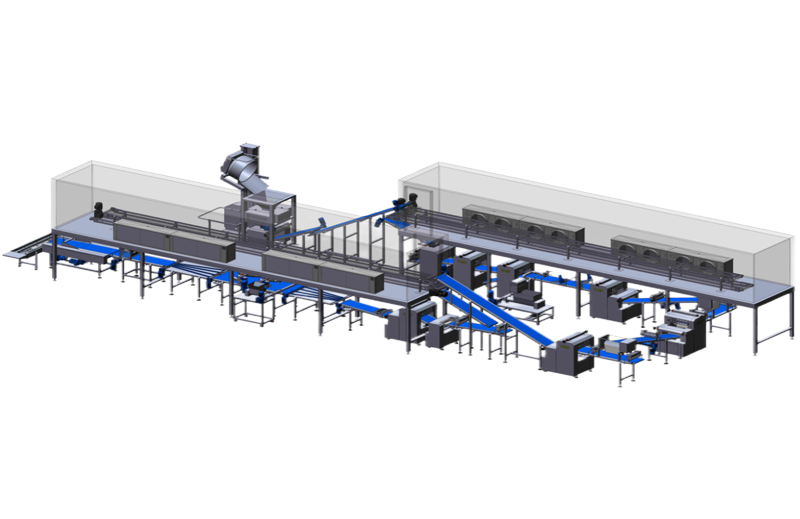
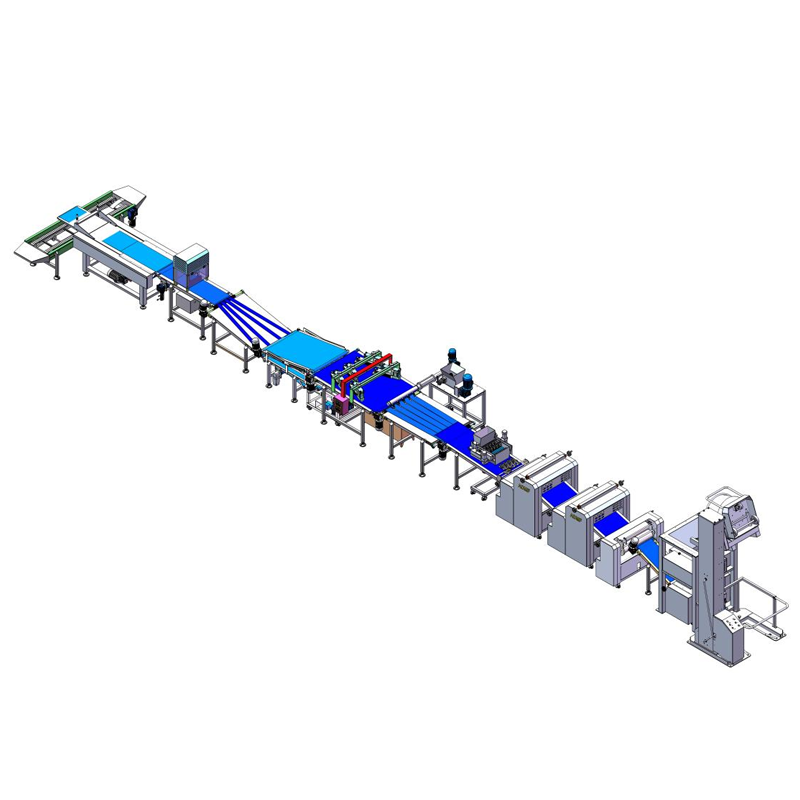
High Moisture Toast Bread Production Line: Advanced Solutions for Soft Bread Manufacturing
2026-08-26
Soft toast bread has become an important product category for commercial bakeries, supermarkets, foodservice suppliers, and industrial bread manufacturers. Consumers increasingly expect bread with a soft texture, uniform crumb, attractive appearance, and consistent freshness.
To achieve these characteristics at industrial scale, manufacturers need more than a conventional bread production system. High moisture toast bread usually requires more careful dough handling, precise forming, controlled fermentation, and stable baking conditions. Higher moisture content can make dough softer and more difficult to process, increasing the risk of sticking, deformation, and inconsistent product weight.
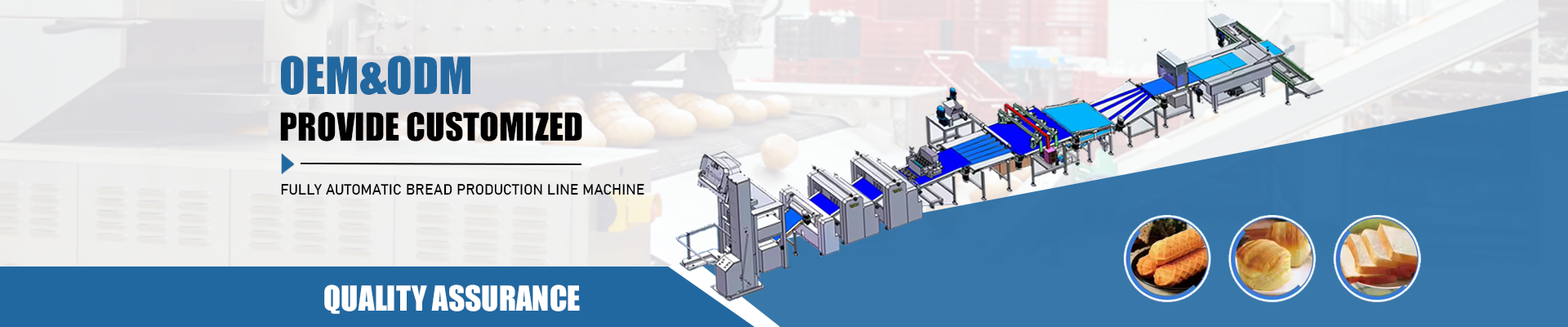
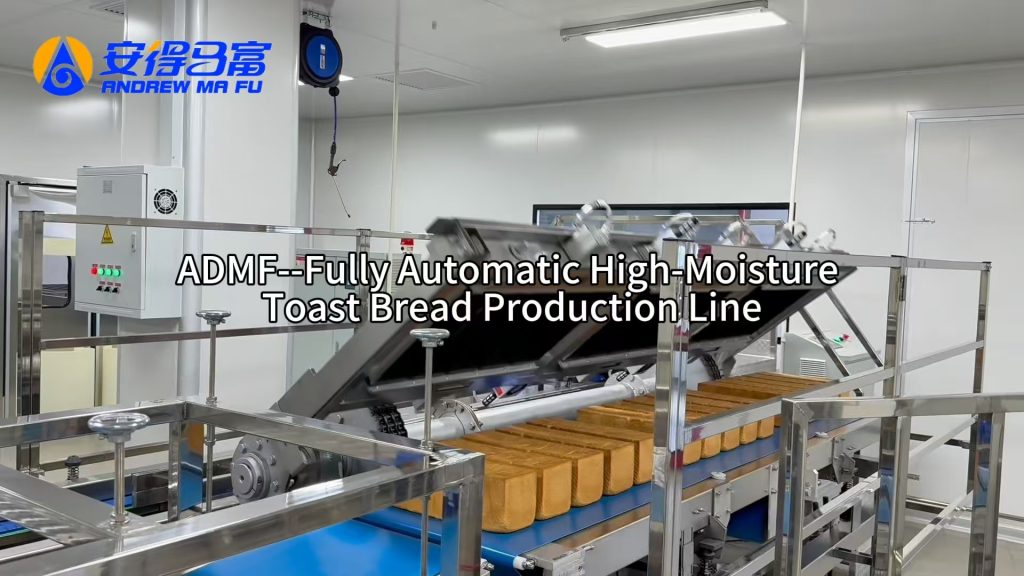
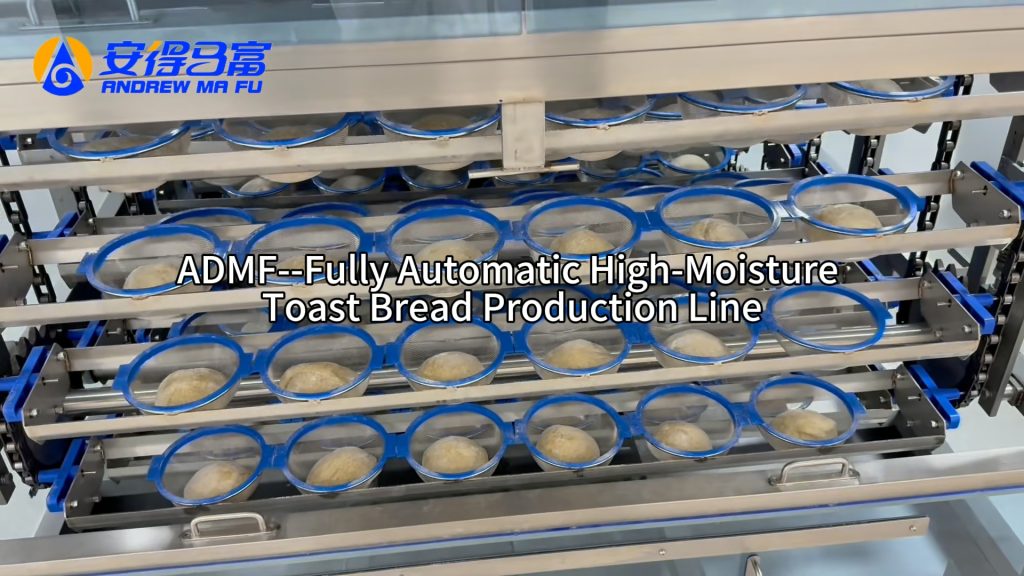
Andrew Mafu Machinery—High Moisture Toast Bread Production Line is designed to address these challenges by integrating automated dough processing, dividing, rounding, resting, moulding, pan handling, proofing, baking, and conveying into a coordinated production system.
High moisture toast bread is formulated with a relatively high water content to achieve a softer crumb and pleasant mouthfeel.
Compared with conventional toast bread, higher moisture levels can provide:
1.Softer crumb texture
2.Improved freshness perception
3.Better eating quality
4.More delicate crumb structure
5.Improved suitability for sandwiches and filled bakery products
However, the softer dough also places higher demands on bakery machinery. Equipment must handle the dough gently while maintaining accurate weight, shape, and production speed.
High moisture dough can be sticky and sensitive to mechanical stress. Excessive compression during dividing or moulding can affect dough structure and final bread volume.
Modern production lines can incorporate controlled dough dividing and forming technologies that reduce unnecessary stress.
2. Consistent Product Weight
When production reaches thousands of pieces per hour, manual weighing and portioning are no longer practical.
Automatic dividing systems help provide consistent dough portions and improve downstream moulding performance.
3. Stable Dough Forming
Soft toast dough needs carefully controlled rounding and moulding. Proper shaping ensures that the dough fits the baking pan correctly and develops a uniform loaf structure.
4. Continuous Production
An integrated production line synchronizes each stage, reducing manual transfer and minimizing production bottlenecks.
Typical Production Process
A high moisture toast bread production line may include:
The exact configuration can be customized according to the customer’s product, factory layout, and target capacity.
Technical Parameters
The following specifications are reference ranges for an industrial high moisture toast bread production solution. Final values should be confirmed according to the product recipe, dough characteristics, loaf size, and required capacity.
Parameter
Reference Specification
Product Type
High Moisture Toast Bread
Dough Weight Range
50–1,000 g
Production Capacity
3,000–12,000 pcs/hour
Weight Accuracy
±1–2%
Dough Hydration
Customized according to recipe
Moulding Method
Automatic / Servo-Controlled
Conveyor Material
Food-Grade PU Belt
Machine Frame
SUS304 Stainless Steel
Control System
PLC
Drive System
Servo / Variable-Frequency Drive
Pan Handling
Automatic / Customized
Proofing Temperature
Approximately 30–38°C
Proofing Humidity
Approximately 60–80% RH
Power Supply
Customized to Customer Requirements
Production Mode
Continuous Automatic Production
Advantages of a High Moisture Toast Bread Production Line
Improved Bread Consistency
Automated dividing, rounding, moulding, and proofing help maintain consistent product dimensions and quality from batch to batch.
Higher Production Efficiency
Continuous production allows bakeries to process large quantities with less manual handling.
Reduced Labor Requirements
Automation reduces repetitive work such as weighing, transferring, shaping, and pan handling, allowing operators to focus on equipment supervision and quality control.
Better Product Quality
Precise dough processing and controlled proofing support stable loaf volume, uniform crumb structure, and consistent appearance.
Flexible Production
A properly designed production line can be adapted to different bread weights, mould sizes, recipes, and output requirements.
Applications
High moisture toast bread production equipment can be used for a variety of commercial bread products, including:
1.Soft Toast Bread
2.Sandwich Bread
3.Milk Bread
4.High Moisture White Bread
5.Premium Toast Bread
6.Bread for Pocket Sandwich Production
7.Bread for Ready-to-Eat Food Manufacturing
This flexibility makes high moisture bread technology valuable for bakeries serving supermarkets, cafés, central kitchens, foodservice companies, and food manufacturers.
Hygienic and Automated Bakery Production
Hygienic design is particularly important for industrial bread manufacturing. Food-contact components should be constructed from appropriate food-grade materials and designed for practical cleaning and maintenance.
A modern production line can incorporate stainless-steel construction, food-grade belts, accessible machine components, and automated control systems to support efficient daily operation.
PLC systems also allow operators to monitor production parameters and store recipes, helping simplify product changeovers and production management.
Conclusion
A High Moisture Toast Bread Production Line provides an effective solution for manufacturers looking to produce soft, high-quality toast bread efficiently at industrial scale.
Because high moisture dough is softer and more sensitive during processing, specialized dough handling, accurate dividing, controlled moulding, and stable proofing are essential for consistent production.
By integrating these processes into an automated system, bakeries can improve productivity, reduce labor dependency, maintain consistent product quality, and prepare their production facilities for future growth.
For manufacturers planning to expand soft bread production, the right equipment configuration should be based on product formulation, dough characteristics, target capacity, factory space, and future automation requirements.
Andrew Mafu Machinery can develop customized bakery production solutions according to specific product and factory requirements.
FAQ
1. What is high moisture toast bread?
High moisture toast bread uses a higher water content in the dough formula to achieve a softer crumb and improved eating quality.
2. Why does high moisture dough require specialized equipment?
Higher moisture makes dough softer and often more difficult to process. Specialized equipment provides gentler handling, accurate dividing, stable moulding, and controlled conveying.
3. What production capacity can theHigh Moisture Toast Bread Production line achieve?
The capacity depends on the product and configuration. Industrial systems can be customized for different output levels, with reference capacities ranging from 3,000 to 12,000 pieces per hour.
4. Can the High Moisture Toast Bread Production line produce different bread weights?
Yes. The production line can be configured for different dough weights, loaf sizes, and mould specifications.
5. Can the production line be connected to slicing and packaging equipment?
Yes. Downstream slicing, cooling, packaging, and other bakery equipment can be integrated according to the complete production plan.
References
The following authoritative resources can be used as external references for bakery technology, food hygiene, and food-processing equipment: