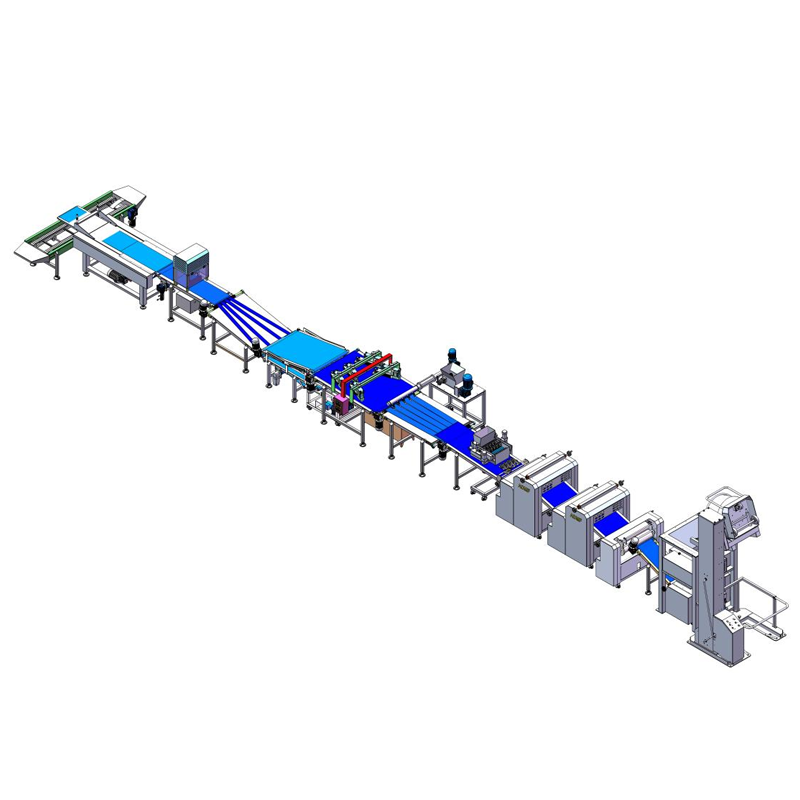
Why High Hydration Bread Requires Specialized Bakery Equipment: A Guide for Bread Production
2026-07-24
In recent years, high hydration bread has become increasingly popular among consumers. While high hydration dough creates unique sensory characteristics, it also introduces significant challenges during industrial production. Dough with high water content is softer, stickier, more delicate, and more difficult to process using conventional bakery equipment.
However, for industrial bakeries producing thousands of loaves per day, specialized bakery equipment is essential to maintain product quality, production efficiency, and consistency. A modern high hydration bread production line is designed specifically to manage these challenges through advanced dough dividing technology, gentle transportation systems, intelligent fermentation control, and precise automation.
This article explains why high hydration bread requires specialized bakery equipment and what technologies manufacturers should consider when investing in an industrial production solution.
High hydration bread refers to bread formulas containing a high percentage of water compared with the flour weight.
The hydration percentage is calculated as:
Water Weight ÷ Flour Weight × 100 = Hydration Percentage
For example:
(1) Traditional sandwich bread: 55–65% hydration
(2) Artisan bread: 70–80% hydration
(3) High hydration bread: 80–100% hydration
At Andrew Mafu Machinery, you can know more about high-hydration bread. Higher hydration creates: larger irregular air pockets, softer internal texture, more complex flavor, longer freshness. However, these advantages also make the dough significantly more difficult to process.
The biggest challenge with high hydration dough is its sticky texture. Traditional dough processing equipment is designed for firmer dough structures. When exposed to high moisture dough, problems may occur: dough sticking to machine surfaces, uneven dividing, product deformation, increased waste, frequent cleaning requirements.
Specialized equipment uses:
(1) Non-stick surfaces
(2) Gentle pressure systems
(3) Food-grade conveyor belts
(4) Controlled flour dusting systems to maintain smooth production
2. High Hydration Dough Requires Gentle Handling
Unlike low hydration dough, high moisture dough has a weaker structure. Excessive mechanical pressure can:destroy gluten networks, remove gas cells, reduce loaf volume, affect final texture.
Industrial high hydration bread production lines therefore focus on gentle processing.
Key technologies include:
(1) Vacuum dough dividing
(2) Servo-controlled portioning
(3) Low-pressure moulding
(4) Smooth transfer conveyors
(5) Automatic alignment systems
These technologies preserve dough structure throughout the production process.
3. Specialized Dough Dividing Technology
Dough dividing is one of the most critical stages in high hydration bread production. Traditional mechanical dividers may create excessive pressure, causing: dough damage, weight inconsistency, poor fermentation performance.
Modern vacuum dough dividers provide:
(1) Accurate weight control
(2) Lower mechanical stress
(3) Better dough preservation
(4) Higher production stability
Technical Parameters of High Hydration Bread Production Equipment
Parameter
Standard Industrial System
High Hydration Bread System
Dough Hydration Range
60–75%
75–100%+
Dough Weight Range
50–800 g
80–1500 g
Weight Accuracy
±2%
±1%
Dividing Technology
Mechanical
Vacuum Dividing
Dough Handling
Standard Pressure
Gentle Pressure Control
Production Capacity
2,000 pcs/hour
5,000–12,000 pcs/hour
Conveyor Material
PU Food Grade Belt
Anti-Stick PU Belt
Control System
PLC
PLC + Servo Control
Dough Temperature Control
Optional
Integrated System
Cleaning Design
Manual
Easy Cleaning Structure
Machine Material
SUS304
SUS304 Stainless Steel
4. Fermentation Control Is Essential
High hydration bread depends heavily on fermentation quality. Because the dough contains more water, fermentation conditions directly influence: dough strength, gas retention, final volume, internal structure. Industrial production requires precise control of: temperature, humidity, fermentation time, dough resting conditions.
Modern production lines integrate:
(1) Automatic proofing chambers
(2) Humidity regulation
(3) Temperature sensors
(4) Digital monitoring systems
This ensures consistent results throughout large-scale production.
5. Automation Improves Production Consistency
Manual production of high hydration bread requires experienced operators. However, human variation becomes a challenge when production volume increases.
Automated systems provide:
(1) Consistent dough weight
(2) Stable product shape
(3) Reduced labor dependence
(4) Lower production waste
(5) Better quality control
Advanced bakery automation includes:
(1) PLC operation systems
(2) Touchscreen interfaces
(3) Recipe storage
(4) Automatic parameter adjustment
(5) Remote monitoring
These features allow bakeries to maintain artisan-quality products at industrial scale.
6. Hygienic Design for High Moisture Dough
High moisture environments increase cleaning requirements.
Specialized bakery equipment should include:
(1) SUS304 stainless steel construction
(2) Smooth contact surfaces
(3) Easy dismantling components
(4) Food-grade conveyor belts
(5) Reduced dead corners
A hygienic design helps:
(1) Prevent contamination
(2) Reduce cleaning time
(3) Improve production safety
(4) Meet international food standards
7. Energy Efficiency and Production Cost Control
Although specialized equipment requires higher initial investment, it provides significant long-term benefits.
Energy-efficient systems reduce: electricity consumption, labor costs, material waste, maintenance expenses.
Modern equipment uses:
(1) Servo motors
(2) Variable frequency drives
(3) Intelligent standby modes
(4) Optimized transmission systems
These technologies improve overall production efficiency.
How to Choose the Right High Hydration Bread Equipment
Before purchasing equipment, manufacturers should consider:
1. Production Capacity
Determine daily output requirements and future expansion plans.
2. Dough Formula
Analyze:
(1) Hydration percentage
(2) Flour type
(3) Dough temperature
(4) Fermentation method
3. Automation Requirements
Evaluate whether you need:
(1) Semi-automatic systems
(2) Fully automatic production lines
(3) Smart factory integration
4. Supplier Experience
Choose manufacturers with experience in:
(1) High hydration dough
(2) Industrial bakery solutions
(3) Customized production lines
Future Trends in High Hydration Bread Manufacturing
The bakery industry is moving toward smarter and more flexible production.
Future technologies include:
(1) AI-based production optimization
(2) Smart sensors
(3) Automated quality inspection
(4) Industrial IoT systems
(5) Digital production management
These innovations will allow manufacturers to produce premium artisan bread with greater efficiency.
Conclusion
High hydration bread offers significant market opportunities, but producing it on an industrial scale requires specialized bakery equipment. Unlike traditional dough, high moisture dough demands gentle handling, precise dividing, controlled fermentation, and advanced automation technology.
By investing in a dedicated high hydration bread production line, manufacturers can achieve:
(1) Consistent product quality
(2) Higher production efficiency
(3) Reduced labor costs
(4) Improved food safety
(5) Greater market competitiveness
As consumer demand for premium artisan bread continues to grow, specialized bakery equipment will become increasingly important for industrial manufacturers seeking to combine traditional bread quality with modern automation.
FAQ
1. Why can’t traditional bread equipment process high hydration dough?
Traditional equipment often applies excessive mechanical pressure, causing sticky dough problems, poor dough structure, and inconsistent products.
2. What hydration level requires specialized equipment?
Generally, dough above 75% hydration benefits from specialized processing systems, especially for industrial production.
3. What type of dough divider is suitable for high hydration bread?
Vacuum dough dividers are recommended because they reduce mechanical stress and maintain dough structure.
4. What materials should high hydration bakery equipment use?
Food-contact components should use SUS304 stainless steel and food-grade conveyor materials to ensure hygiene and durability.
5. Is investing in high hydration bread equipment worthwhile?
For bakeries producing premium bread products, specialized equipment improves efficiency, reduces waste, and provides better long-term profitability.