How Does an Automatic Bread Production Line Work? A Complete Guide to Modern Industrial Bakery Automation | Andrew Mafu Machinery
2026-07-03
How Does an Automatic Bread Production Line Work?
The global bakery industry is experiencing rapid transformation as manufacturers seek higher productivity, improved product consistency, and lower operating costs. Whether producing sandwich bread, toast bread, hamburger buns, hot dog buns, or artisan loaves, modern bakeries are increasingly replacing manual operations with fully automated production systems.
An Automatic Bread Production Line integrates every major production stage—from ingredient mixing to final packaging—into one continuous manufacturing process. This approach improves hygiene, minimizes labor requirements, reduces waste, and ensures consistent product quality.
At Andrew Mafu Machinery, we specialize in designing intelligent bakery production solutions that combine advanced mechanical engineering with PLC-based automation. Our systems are customized to meet the production requirements of industrial bakeries worldwide, delivering reliable performance, stable product quality, and excellent long-term return on investment.
Why Industrial Bakeries Choose Automatic Production Lines
Traditional bread manufacturing often depends heavily on manual handling, making it difficult to maintain consistent product quality while increasing production capacity.
An automated production line provides several significant advantages:
Consistent dough weight and product dimensions
Reduced labor costs
Continuous production with minimal interruption
Improved food safety and hygiene
Higher production efficiency
Easier production management through centralized control
Better energy utilization
Lower production waste
These advantages make automation an essential investment for bakeries facing growing market demand.
Complete Bread Production Process
A modern bread production line follows a carefully controlled sequence of manufacturing stages.
The process begins with precise weighing of flour, water, yeast, sugar, salt, shortening, and other ingredients.
Horizontal mixers or spiral mixers combine the ingredients until the dough reaches the required gluten development. Modern mixing systems automatically control:
Mixing speed
Mixing time
Dough temperature
Water addition
Ingredient ratio
Maintaining proper dough temperature is critical for stable fermentation and consistent bread quality.
2. Dough Resting
After mixing, the dough enters a resting chamber.
During this stage:
Gluten relaxes
Dough becomes easier to process
Internal stress decreases
Dough extensibility improves
Typical resting time ranges from 10 to 30 minutes depending on the recipe.
3. Dough Dividing
The dough divider accurately portions the dough into equal weights.
High-precision servo-controlled dividers help maintain product consistency while minimizing weight deviation.
Typical accuracy:
±1–2 grams.
4. Dough Rounding
Rounded dough pieces develop a smooth surface that helps retain gas during fermentation.
Benefits include:
Better fermentation performance
Improved product appearance
Uniform internal structure
Stable dough handling
5. Intermediate Proofing
Intermediate proofing allows the gluten structure to relax before forming.
Temperature and humidity are precisely controlled to optimize dough performance.
6. Dough Sheeting and Forming
This stage determines the final product shape.
Different forming modules can produce:
Sandwich bread
Toast bread
Hamburger buns
Hot dog buns
Long loaves
Specialty bakery products
Andrew Mafu Machinery offers flexible forming systems capable of accommodating multiple product sizes with quick recipe changes.
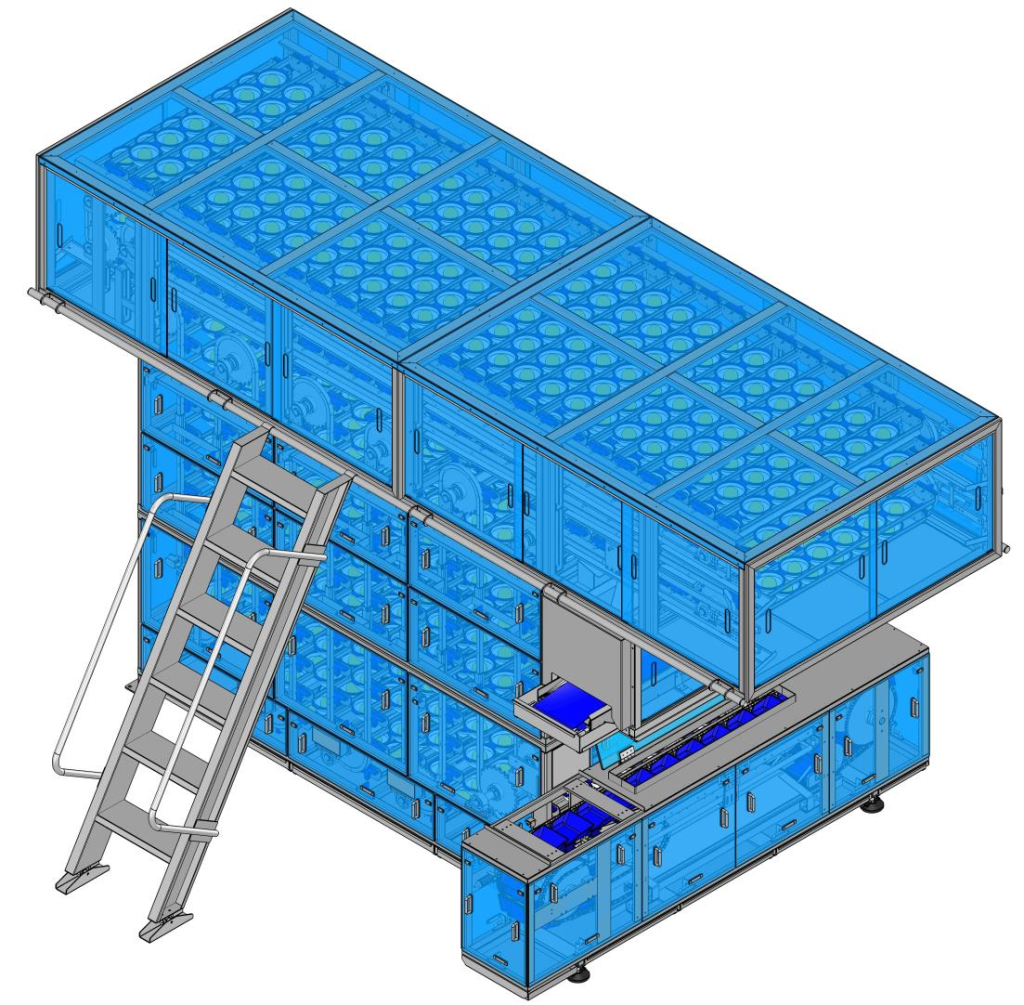
7. Final Proofing
The dough enters a controlled proofing chamber where yeast activity expands the dough to its target volume.
Typical conditions include:
Temperature: 35–40°C
Relative Humidity: 75–85%
Accurate proofing significantly influences loaf volume, texture, and crust quality.
8. Baking
Tunnel ovens provide continuous baking under carefully controlled conditions.
Heating options include:
Electric
Natural Gas
LPG
Diesel
Thermal Oil
Independent heating zones enable operators to optimize baking profiles for different bread products.
9. Cooling
Freshly baked bread must cool before slicing or packaging.
Cooling conveyors reduce product temperature gradually while preventing condensation inside packaging.
10. Slicing and Packaging
Depending on customer requirements, bread may be:
Unsliced
Half sliced
Fully sliced
Automatic packaging systems complete the production process while maintaining product freshness and hygiene.
Typical Technical Specifications
The following table illustrates common technical parameters for a medium-capacity industrial bread production line supplied by Andrew Mafu Machinery.
Parameter
Typical Specification
Production Capacity
2,000–8,000 pcs/hour
Dough Hydration
55–85%
Product Weight Range
30–800 g
Conveyor Belt Material
Food-grade Blue PU Belt
Machine Material
SUS304 Stainless Steel
Control System
Mitsubishi PLC + Touch Screen
Servo Motor
Mitsubishi / Delta
Inverter
Schneider Electric
Sensors
Autonics
Electrical Voltage
220V / 380V / 415V / Customized
Frequency
50Hz / 60Hz
Baking Temperature
180–260°C
Proofing Temperature
35–40°C
Proofing Humidity
75–85% RH
Production Control
Fully Automatic PLC Control
Safety Standard
CE Design Concept & Food Machinery Safety Requirements
These specifications may be customized according to bakery capacity, product type, factory layout, and local electrical standards.
Intelligent Automation with Andrew Mafu Machinery
Andrew Mafu Machinery integrates advanced automation technologies into every production line.
Key features include:
Intelligent PLC control
Servo-driven positioning
Human-machine interface (HMI)
Recipe storage
Automatic fault diagnosis
Real-time production monitoring
Quick product changeover
Energy-efficient operation
These technologies help industrial bakeries achieve consistent quality while reducing downtime and operating costs.
Applications
Automatic bread production lines can manufacture a wide variety of bakery products, including:
Sandwich Bread
Toast Bread
Hamburger Buns
Hot Dog Buns
Milk Bread
Brioche
High-Hydration Bread
Sweet Bread
Dinner Rolls
Specialty Bakery Products
The modular design allows bakeries to expand production capacity as market demand grows.
Conclusion
As labor costs continue to rise and consumers demand higher-quality bakery products, automation has become the foundation of modern bread manufacturing.
A well-designed automatic bread production line not only increases production efficiency but also ensures product consistency, food safety, and long-term profitability.
With years of experience in industrial bakery equipment manufacturing, Andrew Mafu Machinery provides customized automatic bread production solutions tailored to different factory sizes, product requirements, and production capacities. From dough preparation to final packaging, our engineering team works closely with customers to deliver reliable, efficient, and future-ready bakery systems that support sustainable business growth.
FAQ:
1. What products can an automatic bread production line produce?
It can produce sandwich bread, toast bread, hamburger buns, hot dog buns, milk bread, artisan loaves, brioche, sweet bread, and many other bakery products.
2. What production capacity is available?
Depending on the configuration, capacities typically range from 2,000 to over 20,000 pieces per hour.
3. Can one production line manufacture different bread sizes?
Yes. Modular tooling and programmable recipes allow quick changeovers between different product sizes and shapes.
4. Is PLC automation important?
Absolutely. PLC systems improve production stability, reduce operator error, store recipes, monitor equipment status, and simplify maintenance.
5. Does Andrew Mafu Machinery provide customized solutions?
Yes. Every production line is engineered according to the customer’s product specifications, factory layout, production capacity, and local electrical standards.